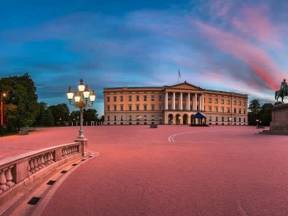
Ahead of us is the legendary Norwegian Royal Palace. It is owned by the state and placed at the disposal of the head of state.
It is where the daily work of the monarchy is conducted and where the King and Queen live. It is also where the King presides over the Council of State, grants audiences and holds official dinners. Foreign heads of state who visit Oslo stay at the Palace.
Most of the members of the Royal Court have their workplace here.
The Royal Palace is open to the public during the summer season.
Stortinget (Norwegian Parliament)
Now you have arrived The Storting and the Norwegian Parliament. It is the supreme arena for political debate and decision-making in the Kingdom of Norway.
The Storting represents the ultimate expression of the sovereignty of the Norwegian people. Through the Storting, it is the people who govern the country, introduce legislation, authorize public spending, impose taxes and control the work of the Government.
There are 169 elected Members of the Storting. Parliamentary elections take place every four years. There are no by-elections, nor is there any constitutional provision to dissolve the Storting between elections.
Visitors can take guided tours to explore its chambers, learn about the legislative process, and appreciate the art and history displayed throughout the building.
You are now in front of Norsk Folkemuseum. The museum shows how people lived in Norway from 1500 to the present through its collections from around the country.
Norsk Folkemuseum is Norway’s largest museum of cultural history. The 160 buildings in the Open-Air Museum represent different regions in Norway, different time periods, as well as differences between town and country, and social classes.
The Gol Stave Church dating from 1200 is one of five medieval buildings at the museum.
The contemporary history is presented through exhibitions and documentation projects.
Permanent indoor exhibitions include folk art, folk costumes, toys and Sami culture. There is also a variety of temporary exhibitions and audience programs all year round.
Here, on beautiful Bygdøy, and perhaps in stark contrast, we find The Norwegian Center for Holocaust and Minority Studies. It is a vital institution dedicated to research, education, and remembrance of the Holocaust and minority issues.
They offers exhibitions, educational programs, and events that highlight the experiences and histories of minorities in Norway.
The center aims to promote understanding, tolerance, and human rights, providing a comprehensive perspective on past atrocities and contemporary issues facing minorities today.
They offer guided tours in the Holocaust exhibition, the bunker and in the exhibition on everyday racism in Norway.
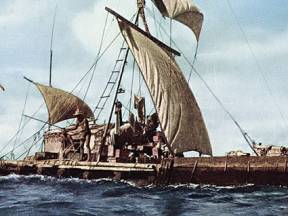
Here we are at the famous Kon-Tiki Museum, dedicated to the thrilling expeditions led by the Norwegian adventurer Thor Heyerdahl.
The museum houses the original Kon-Tiki raft, used in the famous voyage across the Pacific Ocean in 1947. Through fascinating exhibitions and artifacts, visitors can learn about Heyerdahl's journeys, maritime discoveries, and his contributions to the understanding of cultural exchanges between early civilizations.
The museum offers a unique insight into adventure, research, and storytelling.
We now arrive at the FRAM - The Polar Exploration Museum, which celebrates Norway's proud history of polar exploration.
The centerpiece of the museum is the Fram, perhaps the strongest wooden ship ever built, but certainly, the most famous, used by famous explorers such as Fridtjof Nansen and Roald Amundsen.
Visitors can explore the ship, experience life aboard during epic polar expeditions, and discover exhibits on the challenges and triumphs of Arctic and Antarctic exploration. The museum provides an immersive experience into the bravery and ingenuity of polar explorers.
Norwegian Maritime Museum
We have now arrived the Norsk Maritimt Museum, wich is dedicated to Norway's rich maritime heritage.
Here, you will find a vast collection of maritime artifacts, ship models, and exhibits showcasing the country's seafaring history.
The museum offers interactive displays and detailed presentations on shipbuilding, fishing, and maritime trade.
Visitors can also explore the beautiful maritime paintings and learn about Norway's relationship with the sea, making it a captivating destination for maritime enthusiasts.
Now you have reached Filipstad Hjortneskaia, a bustling port area known for its scenic waterfront views and vibrant atmosphere. It serves as a key hub for ferry services, connecting travelers to various destinations.
The area is characterized by its modern infrastructure, busy docks, and the constant movement of ships and passengers. It's a perfect spot to observe maritime activities, enjoy a stroll along the waterfront, or simply relax and watch the ships go by.
Ahead of you is Aker Brygge, a lively district renowned for its blend of modern architecture and historic charm. This popular area features a mix of upscale shops, restaurants, and cultural attractions, all set along a picturesque waterfront.
Visitors can enjoy dining with a view, shopping in trendy boutiques, or simply soaking in the vibrant atmosphere.
Aker Brygge is also home to various events and festivals, making it a dynamic and must-visit destination.
Aker's mechanical workshop
In the old days there were no restaurants and no apartments here, but there were just as many people. They didn't have as nice clothes, and the good smell of food was replaced by diesel, burnt steel and old coffee grounds.
Aker Brygge is built on what used to be the shipyard, Aker's mechanical workshop.
The shipyard was established in the middle of the 19th century and gradually gained a large and central position in the Norwegian industrial environment which lasted for over 140 years.
The shipyard was closed in 1982 and the old factory buildings were demolished or converted into modern housing. And suddenly the sounds that had characterized the center for just as long also disappeared.
The banging against steel, the trucks and the countless signals for shift start, break or stop, ceased overnight.
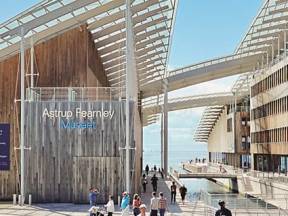
This striking building is the Astrup Fearnley Museum, a leading institution for contemporary art. Located on the waterfront, the museum boasts a stunning design by renowned architect Renzo Piano.
Inside, you'll find an impressive collection of modern artworks from both Norwegian and international artists.
The museum's dynamic exhibitions and installations offer a thought-provoking experience. Its scenic surroundings and innovative architecture make it a cultural highlight worth exploring.
Akershus Fortress, entrance north
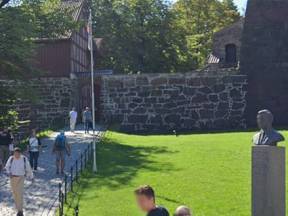
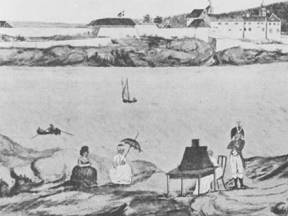
Now you have reached the northern entrance of Akershus Fortress, a historic fortress that dates back to the late 13th century. This entrance leads you into the heart of the fortress, where you can explore its medieval architecture, historic buildings, and well-preserved defensive structures.
The northern gate offers a perfect starting point for a journey through Norway's rich military history and the stunning views over the harbour.
Akershus Fortress, entrance east
Welcome to the eastern entrance of Akershus Fortress, an iconic symbol of Norway's heritage. Entering from the east, you'll find yourself near the fortress's ancient walls and lush green areas.
This route takes you past some of the oldest parts of the complex, allowing you to delve into the stories of past battles and sieges. Don't miss the chance to visit the various museums and memorials within the fortress grounds.
Akershus Fortress, western entrance
During the summer months, you can access Akershus Fortress through the western entrance, by taking this path up the small hill to the gate which is open seasonally. This entrance provides a unique perspective of the fortress, with easy access to the waterfront and gardens.
The western gate is perfect for a leisurely stroll, offering picturesque views of the surrounding landscape. It's an ideal spot to enjoy the scenic beauty and historical ambiance of the fortress during the warmer months.
This is the Nobel Peace Center, a significant cultural landmark dedicated to the prestigious Nobel Peace Prize and its laureates. The center offers a wealth of interactive exhibits, multimedia displays, and engaging stories that highlight the achievements of those who have contributed to world peace.
Visitors can explore the inspiring journeys of past laureates, participate in educational programs, and reflect on the ongoing quest for global harmony. The center is a beacon of hope and learning, emphasizing the importance of peace and diplomacy.
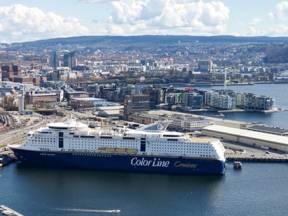
We now approach the DFDS terminal, a bustling hub for ferry services to various destinations.
This terminal is the gateway for travelers embarking on voyages across the North Sea. The modern facilities ensure a smooth and comfortable departure experience, with amenities such as waiting lounges, dining options, and shops.
Whether you're heading off on a scenic cruise or returning from an adventure, the DFDS terminal provides a convenient and efficient start or end to your journey.
Before you stands Oslo City Hall, the city's iconic town hall, renowned for its distinctive architecture and rich historical significance.
The building is the venue for the annual Nobel Peace Prize ceremony, attracting visitors from around the world. Inside, you will find beautifully decorated halls, featuring stunning murals and artworks that depict Norway's history and culture. Guided tours offer insights into the building's architecture, its role in civic life, and the stories behind its artistic treasures.
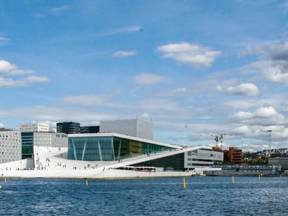
In front of you rises the Oslo Opera House, resembling a shimmering iceberg in the Oslo fjord, an architectural marvel and a cultural powerhouse.
The opera house, or Den Norske Opera & Ballett, is a cultural landmark known for its striking modern architecture and world-class performances. The building's innovative design, with its white marble roof that slopes into the water, invites visitors to walk up and enjoy panoramic views of the city.
Inside, the opera house boasts exceptional acoustics and hosts a variety of operas, ballets and concerts. With its blend of architectural beauty and artistic excellence, it's a must-visit destination for culture enthusiasts.
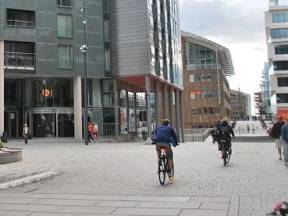
In front of you are the Barcode buildings, a distinctive series of high-rise structures that form a unique skyline in Oslo. Known for their modern and varied architectural styles, these buildings house offices, apartments, shops, and restaurants.
The innovative design of the Barcode project aims to create a vibrant urban space with a blend of work, living, and leisure.
As you walk through this area, you can admire the sleek lines and contemporary aesthetics that define Oslo's commitment to modern urban development.
The beautiful building that rises before you is Munch museum, which is a tributea tribute to the life and work of Norway's most famous artist, Edvard Munch.
The museum houses an extensive collection of Munch's masterpieces, including his iconic painting "The Scream." With its modern architecture and comprehensive exhibitions, visitors can explore Munch's artistic development, personal life, and influence on contemporary art.
The museum also hosts temporary exhibitions, workshops, and events, making it a dynamic cultural hub.
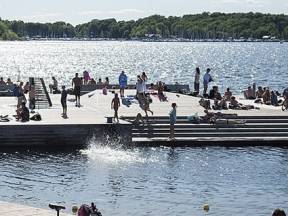
You are now at Sørenga Sjøbad, a popular urban swimming area offering a unique blend of relaxation and activity.
This seaside bath features a spacious wooden deck, swimming pools, and direct access to the fjord, making it perfect for sunbathing, swimming, and socializing.
The area also includes green spaces and is surrounded by modern architecture, providing a scenic and refreshing escape in the heart of the city. It's a favorite spot for both locals and visitors to enjoy the summer sun and the beautiful waterfront views.
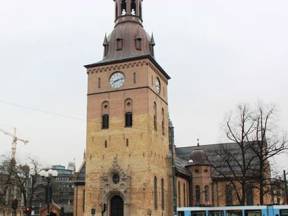
Now you stand before Oslo Cathedral, the city's grand cathedral and a center of spiritual life. This historic church, dating back to the late 17th century, showcases stunning Baroque architecture and intricate interior designs.
Inside, you can admire beautiful stained glass windows, exquisite altarpieces, and the majestic organ.
The cathedral also hosts concerts and events, making it a vibrant cultural venue.
The church is an open space in the center of Oslo for both the good and the difficult periods in life. A room for light, reflection, silence and prayer, and is open for visitors.
You are now at Oslo Central Station, the central hub of Norway's rail network and the busiest train station in the country. This modern transport hub connects Oslo with destinations across Norway and beyond. Inside, you'll find a wide range of amenities, including shops, restaurants, and services to ensure a comfortable travel experience.
The station's architecture blends historic and contemporary elements, making it a vital and vibrant part of Oslo's infrastructure. Whether you're arriving, departing, or simply passing through, Oslo Central Station is a gateway to the city's bustling urban life.
Welcome to Oslo City, one of the largest and most popular shopping centers in the city. This vibrant mall offers a diverse range of stores, from high-end fashion boutiques to well-known international brands, catering to all shopping preferences.
With numerous dining options, cafes, and entertainment facilities, Oslo City provides a comprehensive shopping experience. The central location makes it easily accessible, inviting both locals and tourists to enjoy a day of retail therapy in the heart of Oslo.
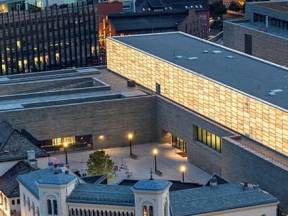
We now arrive at the National museum, Norway's largest museum of art, architecture, and design. This impressive institution houses an extensive collection of works, ranging from classical paintings to contemporary art.
Visitors can explore exhibitions that include masterpieces by Edvard Munch, as well as international artists. The museum's modern facilities provide a rich cultural experience, offering educational programs, interactive displays, and special exhibitions.
A visit to the National museum is a journey through Norway's artistic heritage and its contributions to global culture.
You are now outside the old Østbanehallen, and inside you will find Oslo Visitor Center, Oslo's official tourist information and your gateway to exploring the vibrant city of Oslo.
Located conveniently here in the heart of the city, this center provides essential information, maps, and brochures to help you make the most of your visit. Friendly staff are available to offer personalized recommendations, book tours, and answer any questions you may have.
The center also offers tickets for public transportation and various attractions, ensuring a smooth and enjoyable experience as you discover all that Oslo has to offer.
Enter a world where the past meets the future here at The Viking Planet. It is an immersive digital museum dedicated to bringing the Viking Age to life through cutting-edge technology.
Here, you can experience the world of the Vikings through virtual reality, interactive exhibits, and 3D reconstructions. Explore detailed replicas of Viking ships, participate in engaging games, and delve into the rich history and culture of the Norse seafarers.
The Viking Planet offers a unique and modern way to connect with Norway's ancient heritage, making it a must-visit attraction for history enthusiasts and adventurers alike.
In front of you stands the statue of Henrik Wergeland, one of Norway's most celebrated poets and a key figure in Norwegian literature and culture.
The statue captures Wergeland's dynamic spirit and his contributions to the country's national identity.
Located here in the cultural centre, the monument invites visitors to reflect on Wergeland's literary works and his advocacy for human rights and social justice. It's a fitting tribute to a man who left an indelible mark on Norwegian history.
You now stand before the statue of Crown Princess Märtha, a tribute to one of Norway's most beloved royal figures. Crown Princess Märtha is remembered for her significant contributions during World War II and her efforts to strengthen ties between Norway and the United States.
The statue captures her grace and compassion, symbolizing her enduring legacy.
Crown Princess Märtha was born as a Norwegian-Swedish princess in Stockholm in 1901. She had poor health and died aged just 53.
The statue of King Haakon VII honors Norway's first modern monarch after the union with Sweden was dissolved in 1905, and he played a pivotal role in the nation's history.
King Haakon VII is celebrated for his leadership and steadfastness during World War II, when he became a symbol of Norwegian resistance against the Nazi occupation.
The statue portrays him with dignity and strength, capturing his enduring legacy as a unifying figure and a champion of democracy. He was borned in Denmark in 1872 and served as a monarch until his death in 1957.
The statue of Henrik Ibsen pays tribute to one of Norway's most renowned playwrights and poets, often referred to as the "father of modern drama." Ibsen's works, such as "A Doll's House" and "Hedda Gabler," have had a profound impact on literature and theatre worldwide.
The statue captures his thoughtful and intense demeanor, reflecting his deep influence on the world of drama and his critical insights into society.
He was born in 1828 and died here in Oslo in 1906. This monument stands as a celebration of Ibsen's enduring legacy and his contributions to Norwegian and global cultural heritage.
The statue of King Olav V honors Norway's beloved monarch, who reigned from 1957 to 1991.
Known as the "People's King," Olav V is remembered for his down-to-earth nature and deep connection with the Norwegian people.
The statue portrays him with a sense of dignity and approachability, capturing his genuine and caring spirit.
He was born in 1903, he was born in 1901 and will be remembered for his a legacy of dedication and service to his country. His slogan was, All for Norway, which he kept until his death in 1991.
Bjørnstjerne Bjørnson, Statue
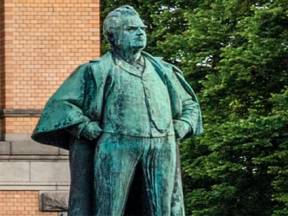
You now stand before the statue of Bjørnstjerne Bjørnson, one of Norway's most distinguished literary figures and a key contributor to the country's cultural heritage.
Bjørnson was a celebrated poet, playwright, and novelist, known for his passionate advocacy of human rights and national independence. The statue captures his commanding presence and intellectual vigor, symbolizing his profound influence on Norwegian literature and society.
Born in 1832, Bjørnson passed away in 1910, leaving a legacy that includes the lyrics to the Norwegian national anthem.
Here we are at the statue of Gunnar Sønsteby, a legendary figure in Norwegian history and a prominent member of the Norwegian resistance during World War II. Sønsteby, also known by his code name "Kjakan," is celebrated for his extraordinary bravery and leadership in the fight against Nazi occupation.
The statue captures his determined and resolute spirit, reflecting his significant role in Norway's struggle for freedom. Born in 1918, he lived a long life and passed away in 2012.
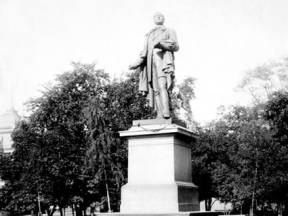
Before you stands the Carl Johan Monument, a grand tribute to King Carl III Johan. He was the lawyer's son from Pau in France who became king of Norway and Sweden from 1818 to 1844. He had a significant role in the union between the two countries.
As king, he took the election language "People's love, my reward".
King Carl Johan was often in Norway and it was he who took the initiative to build the Royal Palace in Oslo, but he never had the pleasure of living there. He died four years before the castle was finished.
King Christian IV, Statue
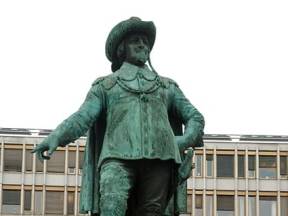
In front of you is the statue of King Christian IV, a notable monarch who ruled Denmark and Norway from 1588 to 1648.
King Christian IV is remembered for his significant contributions to the development and modernization of Oslo, then known as Christiania, which was named in his honor.
The statue captures his dynamic and visionary leadership, embodying his efforts to fortify and expand the city. He was born in 1577, and he was very efficient and productive, having a total of 24 children before he died in 1648.
Here you see the statue of Queen Maud, a beloved queen consort of Norway who served from 1905 until her death in 1938. Born in 1869, Queen Maud was known for her grace, dignity, and deep commitment to charitable causes.
The statue reflects her elegance and compassionate spirit, highlighting her role in supporting various social initiatives and her influence in Norwegian society.
She passed away in 1938, leaving behind a legacy of kindness and dedication to the welfare of others.
King Christian Frederik, Statue
This statue honors King Christian Frederik, born in 1786, who played a pivotal role in Norway's history during the early 19th century.
Known for his efforts in leading Norway during the tumultuous period of 1814, he was instrumental in the drafting of the Norwegian Constitution and served as king before returning to Denmark, where he later became King Christian VIII.
The statue captures his statesmanship and dedication to Norwegian sovereignty and democratic principles. It stands as a testament to his significant contributions to Norway's national identity and constitutional heritage.
This beautiful sculpture of Wenche Foss, honors of Norway's most beloved actresses and cultural icons.
Renowned for her outstanding contributions to theater, film, and television, Wenche Foss captivated audiences with her talent and charisma.
Born in 1917, she enjoyed a prolific career that spanned several decades, earning her numerous accolades and a special place in the hearts of the Norwegian people.
The statue captures her dynamic presence and enduring legacy in the performing arts, serving as a tribute to her remarkable achievements and the joy she brought to countless fans.
Here you see the statue of Christian Krohg, a prominent Norwegian painter, illustrator, and writer who played a crucial role in the realist art movement.
Krohg is celebrated for his socially conscious works that often depicted the lives of ordinary people, bringing attention to social issues and the human condition. Born in 1852, he became a central figure in the Norwegian art scene until his death in 1925.
The statue captures his thoughtful and observant nature, honoring his contributions to art and literature.
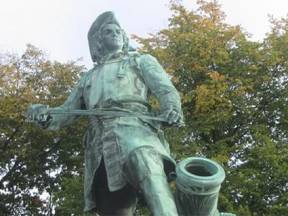
You are now standing before the Tordenskiold Monument, dedicated to Peter Wessel Tordenskiold, one of Norway's most famous naval heroes. Known for his daring exploits and strategic brilliance during the Great Northern War,
Tordenskiold's legacy is celebrated in this striking monument. Born in 1690, he rose to prominence in the Danish-Norwegian navy before his untimely death in 1720.
The monument captures his courageous and adventurous spirit, serving as a reminder of his significant contributions to naval warfare and his enduring place in Norwegian history.
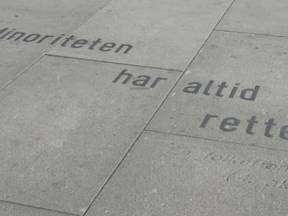
You are now at Ibsen Sitat, also known as Sitatgaten, a work of art consisting of texts from Henrik Ibsen's poems, dramas, letters, and speeches embedded in the pavement in downtown Oslo.
The quotes are distributed along the route between Ibsen's residence in Arbins gate and the Grand Café on Karl Johans gate. "The minority is always right" is one of the quotes embedded in the street, taken from the work "An Enemy of the People."
You have now arrived at Egertorget, situated in the middle of Karl Johans street between Oslo S and the Royal Palace. The square was named after the Eger family, who owned one of the buildings here, including the one where you see WB Samson's patisserie.
This old and venerable patisserie was established in 1894 and still has an outlet here. If you look up now, you will see the giant neon sign for the Freia chocolate factory.
It was Freia that inspired Roald Dahl's "Charlie and the Chocolate Factory," and Freia was the first to put up a neon sign in Oslo.
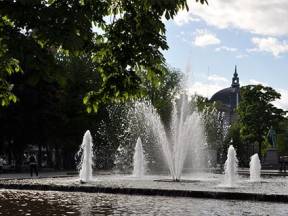
You are now at Spikersuppa. During winter, Spikersuppa is a vibrant part of Oslo's city life, hosting various events and activities throughout the year, contributing to the dynamic and lively atmosphere of the capital.
Spikersuppa transforms into a charming ice skating rink, offering a delightful spot for both locals and tourists to enjoy skating in the heart of the city. In the summer months, the park features fountains and green spaces, making it a pleasant area for relaxation and leisure.
It was a nail factory that funded the park, which is how it got the nickname "Spikersuppa," or nail soup, among the locals.
You have reached Fridtjof Nansens place. Nansen was one of Norway's most versatile and internationally famous people of all time. He was a pioneering naturalist, polar expedition leader, writer and artist, diplomat and philanthropist. He was awarded the Nobel Peace Prize in 1922 and is one of the country's most decorated people.
To the east, you can see the stairs leading up to the entrance to the Town Hall, where the Nobel Peace Prize is awarded each year. In the opposite direction, the road named after another famous Norwegian polar explorer, Roald Amundsen, stretches up to Karl Johans gate, the Palace and the Stortinget.
Aker Brygge and the National museum are located to the right of the town hall.
Watch out! Renowned contemporary artist Brendan Murphy has brought his iconic Boonji Spaceman series to Oslo with the 7-meter high installation titled What's Next.
This matte blue statue matches the Norwegian flag's color, symbolizing Oslo's dynamic future and rich history. Weighing 1,360 tonnes, it required extensive transport across the ocean.
The sculpture, installed in collaboration with Norwegian Property and Fine Art, stands as a beacon for Oslo's exciting transformation.
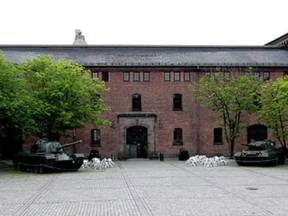
You are now entering The Defense Museum area, which is located in an old arsenal building, and is the main museum of the Norwegian Armed Forces. It showcases the history of the Norwegian armed forces from the 15th century to today.
The exhibitions highlight military development and its links to technological, economic, and political changes. With thematic displays from all defense branches, the museum provides a historical perspective on defense issues and the role of the Armed Forces.
Activities are available for all ages.
Now you have arrived at Tjuvholmen, which is connected to Aker Brygge by two small bridges.
Once an abandoned part of Oslo, it has been transformed into a vibrant, modern, and artistic urban area.
Here, you can explore numerous art galleries, a sculpture park, striking modern architecture, a five-star hotel, and a variety of excellent restaurants and cafes.
The highlight is the Astrup Fearnley Museum, a contemporary art museum situated right by the water's edge.
Tjuvholmen, or the thief islet, is a beautiful pearl today, but in the very old days, in the 17th century, the view that met the seafarers was probably a little different. The area was once a haven for the city's stray birds, and we're not talking about pigeons and seagulls.
The name Tjuvholmen originates from the time when the city's thieves were taken to court on the island and hanged.
There were also many thieves who buried their loot out here on the island.
If there is still a buried treasure here? Nobody knows, but as we say, he who seeks, he finds.
You've now reached Bjørvika, a bustling waterfront neighborhood known for its modern architecture and cultural landmarks.
Once an industrial area, it has transformed into a vibrant urban hub. Here, you can visit the iconic Oslo Opera House, which appears to rise from the fjord, and the striking Barcode Project, a series of unique high-rise buildings. Bjørvika is also home to the Munch Museum, dedicated to the famous Norwegian painter Edvard Munch.
Welcome to Sørenga, a lively district known for its modern residential buildings and inviting waterfront.
This area, transformed from an industrial zone, now offers a refreshing escape with its popular seawater pool, ideal for swimming and sunbathing.
Sørenga boasts an array of restaurants and cafes, providing a perfect spot to relax and enjoy the scenic views of the Oslo Fjord.
Whether you're here to swim, dine, or simply stroll along the boardwalk, Sørenga's vibrant atmosphere has something for everyone.
You have arrived at Sukkerbiten, translated to the sugar cube, a charming and lively spot in Oslo’s waterfront area.
Once used for industrial purposes, it’s now a popular hangout known for its relaxed atmosphere.
Sukkerbiten features open spaces perfect for social gatherings, seasonal events, and art installations.
Enjoy the stunning views of the Oslo Fjord, grab a bite at one of the food trucks, or just relax by the water.
Sukkerbiten offers a unique blend of urban culture and natural beauty.
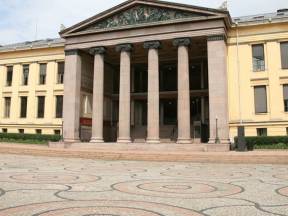
Welcome to Universitetsplassen, the central square of the University of Oslo. Flanked by the historic university buildings, this square is a focal point for academic and cultural events.
The grand architecture, including the iconic Aulaen building, creates an impressive backdrop. Universitetsplassen often hosts public lectures, ceremonies, and outdoor concerts, making it a vibrant part of Oslo's cultural scene.
Whether you're here to attend an event or simply admire the architecture, Universitetsplassen offers a glimpse into the academic heart of the city.
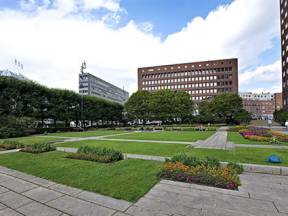
You've arrived at Studenterlunden, a beautiful park located in the heart of Oslo. This green oasis is a favorite spot for both students, tourists and locals, offering a peaceful retreat from the bustling city.
The park is close to the National Theatre, picturesque fountains, and numerous statues, including a notable one of Henrik Ibsen. With its well-manicured lawns and charming walkways, Studenterlunden is perfect for a leisurely stroll or a relaxing break.
You are about to enter the Slottsplassen, the grand square in front of the Royal Palace in Oslo. This impressive open space is surrounded by beautiful gardens and offers stunning views of the palace.
Slottsplassen is a key location for royal ceremonies and events, including the annual Constitution Day celebrations. Visitors can witness the changing of the guard, enjoy the serene atmosphere, or explore the nearby Palace Park.
Whether you're here for the history or the scenery, Slottsplassen is a must-see landmark in Oslo.
Welcome to Eidsvolls plass, a historic and central square situated in front of the Stortinget, Norway’s Parliament building.
This significant location is often the heart of political rallies, public demonstrations, and national celebrations.
The square is surrounded by beautifully landscaped gardens and statues of notable Norwegian figures.
Eidsvolls plass is not only a symbol of democracy but also a popular gathering spot for locals and tourists alike, offering a perfect blend of historical importance and vibrant city life.
You've arrived at Rådhusplassen, the bustling square in front of Oslo City Hall. This vibrant area is a hub of activity, known for its stunning views of the Oslo Fjord and the iconic twin towers of the City Hall.
Rådhusplassen hosts various events, including festivals, markets, and concerts, making it a lively spot throughout the year. The square is also home to several statues and fountains, adding to its charm.
Step into Kontraskjæret, a picturesque park nestled between Akershus Fortress and Oslo's vibrant waterfront.
This green space offers a perfect blend of history and leisure, providing stunning views of the fortress and the Oslo Fjord. Popular for picnics, outdoor sports, and public events, Kontraskjæret is a lively spot, especially during summer.
The park also hosts concerts, festivals, and various cultural events, making it a dynamic gathering place.
Crown Princess Märtha's place
You've arrived at Crown Princess Märtha place, a charming square in Oslo named after Crown Princess Märtha of Norway.
She was admired for her compassion and support during World War II. She was born in 1901, but unfortunately, she died far too early of illness, in 1954.
This serene spot offers a peaceful retreat with its lush greenery and well-maintained gardens. The square is adorned with sculptures and benches, making it a perfect place to relax and enjoy the surroundings.
the Memorial to the Deported Jews of Norway
You are now at the Memorial to the Deported Jews of Norway, a poignant tribute to those who suffered during the Holocaust. The sculptures here, crafted by artist Anthony Gormley, evoke a deep sense of loss and remembrance.
Each figure represents the individuals deported from Norway, standing as silent witnesses to their history.
This memorial serves not only as a reminder of past atrocities but also as a call for reflection and vigilance against intolerance and hatred in our present and future.
Welcome to Normandieplassen, a tranquil square in Oslo named in honor of the Allied landings in Normandy during World War II. This serene area is surrounded by lush greenery and offers a peaceful spot for reflection.
The square features a commemorative plaque and sculptures, paying tribute to the bravery and sacrifice of those involved in the historic event.
Normandieplassen is a place of remembrance and gratitude, providing a quiet retreat where visitors can honor the past while enjoying the natural beauty of the surroundings.
You've reached Vippetangen, a historic and lively area at the tip here at the Oslo harbor.
Known for its maritime heritage, this area is where ferries and cruise ships dock, bringing a bustling energy to the waterfront.
Vippetangen offers stunning views of the Oslo Fjord and is home to the popular seafood market, where you can enjoy fresh catches of the day. Whether you're here to catch a ferry, enjoy the sea breeze, or savor local seafood, Vippetangen is a vibrant spot worth exploring.
Welcome to Vippa, a vibrant and eclectic food hall located here at the waterfront. Vippa is housed in a earlier warehouse, but has transformed into a bustling hub for street food and cultural events.
The venue hosts a variety of food stalls offering diverse international cuisines, making it a culinary hotspot. With its lively atmosphere, stunning fjord views, and regular music and art events, Vippa is the perfect place to enjoy delicious food, socialize, and soak in the dynamic urban vibe of Oslo.
You are now entering SALT, a unique cultural venue. This distinctive space combines art, music, and sauna experiences in a striking setting of wooden structures and Arctic-inspired architecture. SALT hosts a variety of events, including concerts, art exhibitions, and wellness activities, creating a dynamic and eclectic atmosphere.
Visitors can enjoy a refreshing sauna with views of the Oslo Fjord, relax in the outdoor seating areas, or attend one of the many cultural events. SALT offers a truly memorable experience, blending relaxation and creativity in the heart of Oslo.
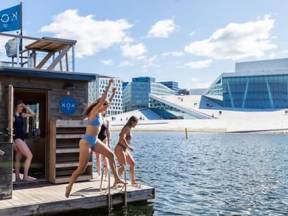
You've arrived at KOK Oslo Sauna, a unique floating sauna experience located here at Langkaia.
This innovative venue offers the perfect blend of relaxation and stunning fjord views. KOK Oslo Sauna features wood-fired saunas on boats, allowing guests to enjoy the warmth while floating on the water. After a soothing sauna session, you can take a refreshing dip in the Oslo Fjord.
KOK Oslo Sauna provides a memorable and invigorating way to experience Oslo's waterfront.
Step into the paradise of books here at Deichman Bjørvika, Oslo's stunning new main library.
This state-of-the-art facility offers more than just books; it’s a cultural hub with modern architecture, reading rooms, creative workshops, and multimedia resources.
Visitors can enjoy panoramic views of the Oslo Fjord from the upper floors or relax in the inviting public spaces. Deichman Bjørvika is a vibrant community center, hosting events, lectures, and exhibitions, making it a must-visit destination for both knowledge seekers and casual visitors.
Your legs are now firmly planted the iconic rooftop of the Oslo Opera House. This unique public space offers panoramic views of the Oslo Fjord and the city skyline. The sloping marble roof invites visitors to walk up and experience its architectural beauty firsthand.
Nearby attractions include the vibrant Bjørvika district, the striking Barcode Project, and the Deichman Bjørvika library.
This is a perfect place for a well-deserved break, study the vibrant nightlife or smell the sea smells that seep up when the sun rises.