0
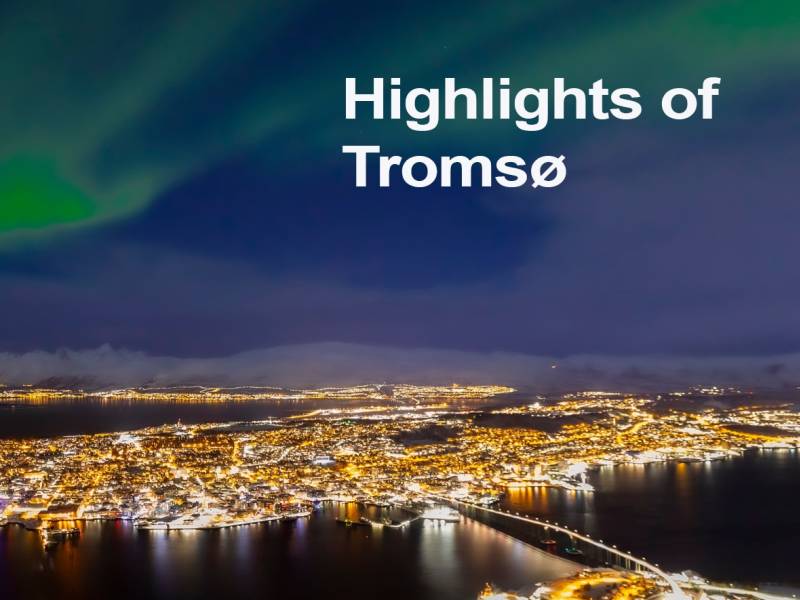
Highlights of Tromsø – The Ultimate Arctic Experience Step into Tromsø, the gateway to the Arctic, where breathtaking nature, polar history, and vibrant city life merge in a truly unique way. Once a hub for Arctic explorers and seafarers, Tromsø is now a lively cultural center with rich traditions, stunning architecture, and spectacular views. This GPS-guided walking tour, created in collaboration with GuideToGo, takes you on an immersive journey through Tromsø’s fascinating history, landmarks, and Arctic heritage. With professional storytelling and high-quality audio, you’ll discover the hidden gems of this northern wonder—available in 10+ languages. HIGHLIGHTS 🛶 Tromsø Harbor & The Arctic Explorers Begin your journey along Tromsø’s historic waterfront, where Arctic explorers, whalers, and traders once set sail into the icy unknown. 🍻 Ølhallen & Magic Ice Bar Visit Tromsø’s oldest pub, Ølhallen, a legendary meeting place for locals, and step into the frozen world of Magic Ice Bar, where everything—walls, furniture, and even your glass—is made of ice. ⛪ Tromsø Cathedral & Kirkeparken Marvel at Norway’s only wooden cathedral and explore the peaceful Kirkeparken, where traces of Tromsø’s medieval past remain. 🏰 Skansen – The Medieval Fortress Discover Tromsø’s oldest structure, a historic fortress dating back to the 1200s, once protecting the city from northern invaders. ❄️ Polaria & MS Polstjerna Encounter Arctic marine life at Polaria and step aboard MS Polstjerna, one of Norway’s best-preserved seal hunting vessels. ⛪ The Arctic Cathedral – A Symbol of the North Admire the stunning Arctic Cathedral, inspired by icebergs and northern landscapes, with its striking stained-glass window and unique architecture. ⛰️ Fjellheisen – The Best View in Tromsø Take a cable car ride to 421 meters above sea level and enjoy a breathtaking panoramic view of Tromsø, the fjords, and the Arctic mountains. 🌌 Northern Lights & Arctic Wonders Depending on the season, Tromsø offers a chance to witness the stunning aurora borealis or bask in the endless light of the midnight sun. ABOUT THE TOUR Start your self-paced walking tour from any location in Tromsø city center and explore the city's top attractions at your own speed. Listen to captivating stories as you stroll through Tromsø’s historical streets, harbors, and cultural landmarks. INCLUDED ✔️ GPS-guided narration with high-quality professional voice-over in Norwegian and English. ✔️ Available in 10+ additional languages with the best AI voices available. ✔️ Self-paced tour – start, pause, and resume whenever you like. NOT INCLUDED ❌ Entrance fees to museums or attractions. ❌ Food, drinks, or personal guide services. PRACTICAL INFORMATION 📍 Duration: Approx. 90+ minutes. 📍 Starting point: Anywhere in Tromsø city center. 📍 Languages in english 📲 Ready to explore Tromsø? Download the GuideToGo app and experience the Arctic capital with a premium audio guide!

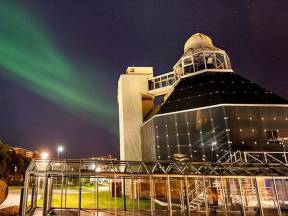
Have you ever wanted to understand the mysteries of the universe, explore the laws of nature, or experiment with technology? If so, Nordnorsk Vitensenter (the Northern Norwegian Science Center) is the place for you! This is one of the most exciting experiences in Tromsø, perfect for both children and adults. Here, you can explore science, technology, and space through interactive exhibits and hands-on experiments—designed to make learning fun and engaging. The center features a variety of hands-on installations where you can test the laws of physics, experiment with light and sound, and learn about climate, weather, and the northern lights. One of the main attractions is the planetarium, the largest digital planetarium in the Nordic region, where you can travel through space or witness a breathtaking display of the northern lights on a massive dome screen. The Science Center is designed for all ages, allowing you to try, fail, and explore at your own pace. Whether you’re looking for a family-friendly activity, an exciting school visit, or simply a way to challenge your mind, you’ll find something here that fascinates you. This is not just a museum—it’s a space for exploration, discovery, and pure excitement. No matter your age, you’ll leave the center a little wiser—and perhaps even more curious about the world around you.

You have now arrived at Roald Amundsen Square, a central and historically significant place in Tromsø. The square is named after the legendary polar explorer Roald Amundsen, who had a strong connection to the city. His statue stands here, but your attention may also be drawn to another monument—one that tells a much darker story. The Memorial to the Jews of Tromsø stands as a silent reminder of the fate that befell the city's Jewish residents during World War II. The contrasts here are striking. On one hand, we have Amundsen, a man who defied the frozen wilderness, driven by adventure and scientific curiosity. On the other, we have the Holocaust memorial, a stark reminder of a time when people were stripped of their freedom, persecuted, and murdered simply for who they were. While Amundsen embarked on journeys of discovery by choice, the Jews of Tromsø and the rest of Norway were forcibly taken to their deaths, with no chance of escape. This square holds both triumph and tragedy. It reminds us of humanity’s ability to reach new heights, but also of how low we can fall. As you stand here, surrounded by these memories, ask yourself: How do we want future generations to remember our time?

You are now at the Tromsø Arctic-Alpine Botanical Garden, one of the world’s northernmost botanical gardens. This is not just a place for research and plant conservation—it is also a beautiful space for walking, whether you’re looking for fresh air, learning, exercise, or simply a peaceful moment in nature. The garden, part of the University of Tromsø, was established in 1994 and features an impressive collection of plants from Arctic, alpine, and Antarctic regions. Here, you can explore mountain plants from the Himalayas, South America, and the Caucasus, as well as rare species from Svalbard and Greenland. One of the highlights is the Himalayan blue poppy, known for its striking blue petals. The paths are universally accessible, making it easy to enjoy a short stroll or a longer walk. Children can discover colorful flowers, and dogs are welcome on a leash. On pleasant days, you can take a break on a bench or visit the café, which offers a cozy atmosphere and light refreshments. With the midnight sun bringing the garden to life in summer, this is a place where anyone can find relaxation, inspiration, and knowledge—one of Tromsø’s most beautiful outdoor spaces.

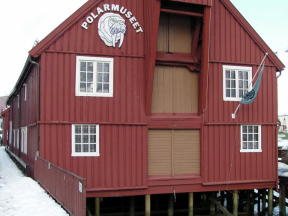
Join us on a journey back in time with the Polar Museum, one of Tromsø’s most fascinating museums. Housed in an old customs warehouse from the 1830s, the museum takes you on a journey through the city’s rich polar history. For over a century, Tromsø has been known as the “Gateway to the Arctic”, and here you’ll get a glimpse into the lives of trappers, adventurers, and polar explorers who set out on expeditions to the Arctic. The exhibitions showcase everything from the harsh living conditions at trapping stations to the dramatic expeditions led by men like Roald Amundsen and Fridtjof Nansen. You can see original artifacts, models of hunting cabins, and real equipment used in the unforgiving ice fields. The museum doesn’t just tell a story of adventure but also of survival in one of the world’s most extreme climates. What was it like to spend months alone in the Arctic wilderness? Here, you get a sense of what polar life was really like.

Now you are standing in front of the statue of Roald Amundsen, one of history’s greatest polar explorers. His determined gaze and firm stance capture the spirit of a man who braved the harshest conditions on Earth, leading the first expedition to the South Pole in 1911. The statue is a tribute to Amundsen’s deep connection to Tromsø, a city he often used as a starting point for his Arctic expeditions. From here, he set out on daring voyages into the unknown, relying on skill, innovation, and sheer willpower. As you look at the statue, imagine the icy winds of the polar regions and the immense challenges he faced. What drove him to push beyond the limits of human endurance? Perhaps, like Amundsen, we are all searching for our own frontiers to explore.

Here, in the heart of Tromsø, lies the city hall park, a small green oasis, at least during the summer months. At the center of the park stands the statue of King Haakon VII, a monument to a king who became a unifying figure for Norway during World War II. It serves as a reminder of resistance, freedom, and national pride. Nearby, you’ll find Tromsø City Hall, a symbol of the city's modern administration and democratic governance. It represents the voice of the people in a city that has grown from a small trading post to a vibrant Arctic capital. Behind the statue, you can see the charming music pavilion, a place that has fostered culture and community for generations. Music has filled the air here during celebrations and events, and the pavilion is still used today for concerts and public gatherings. As you stand here, you can see how the city hall park connects past and present. The king’s statue, the music pavilion, and the city hall each represent a different aspect of Tromsø—its history, its culture, and its democracy.

In front of you stands the Hunting and Fishing Monument, a tribute to the many who have made the sea their workplace. Unveiled in 1984, it symbolizes Tromsø’s long history as a key center for fishing and hunting in the northern regions. For centuries, fishermen, Arctic seafarers, and hunters have set sail from Tromsø, heading into the rich yet treacherous waters of the Arctic. The sculpture depicts a fisherman and a hunter, both engaged in their work, their faces marked by toil, harsh weather, and years of experience. They represent the generations of men and women who have made their living from the sea and helped shape the city. Tromsø was long known as the “Gateway to the Arctic”, playing a crucial role in Norwegian maritime and polar history. As you look at the monument, imagine the harsh conditions these people endured—freezing storms, long months away from their families, and the constant dangers of the sea.

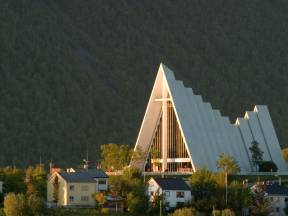
Towering before you is the Arctic Cathedral, one of Tromsø’s most iconic landmarks. With its sharp lines and distinctive shape, it stands out prominently in the cityscape. Officially named Tromsdalen Church, it was inaugurated in 1965 and designed by architect Jan Inge Hovig. Its diagonal architecture gives a sense of movement, as if the structure is reaching towards the sky. The Arctic Cathedral is more than just a church. Its design draws inspiration from various elements associated with Tromsø and the Arctic—its sharp mountain peaks, traditional fish-drying racks, lavvu tents, the northern lights, and glaciers. It was built around the same time as Tromsø Bridge, and the two structures may have been deliberately designed to create a visual connection between the city and Tromsdalen. One of the church’s most striking features is the massive stained-glass window by Victor Sparre, which dominates the eastern wall. It depicts the hand of God, from which three beams of light emerge—one through Jesus, one through the woman, and one through the man. This dramatic artwork fills the church interior with vibrant colors, adding to the unique atmosphere the Arctic Cathedral is known for. With its location at the foot of Tromsdalen and its expressive design, the Arctic Cathedral is more than a place of worship—it is a symbol of Tromsø’s identity, a meeting point of nature, culture, and architecture.

In front of you stands the Latham Monument, erected in memory of the French flying boat Latham 47 and its six crew members, including the Norwegian polar explorer Roald Amundsen. The aircraft vanished without a trace in 1928 during a rescue mission for the Italian explorer Umberto Nobile, whose airship Italia had crashed while returning from the North Pole. Despite extensive search efforts, neither the aircraft nor its crew was ever found. The initiative for the monument came from the French newspaper Le Temps in Paris, which sought to honor the two Norwegians and four Frenchmen who disappeared. The newspaper financed the memorial, which was unveiled six years after the tragedy, in 1934, by its editor-in-chief, J. Chatenet.

Are you ready for one of the best views in Tromsø? Fjellheisen takes you 421 meters above sea level to Storsteinen, where you can enjoy a spectacular panoramic view of Tromsø, the fjords, and the majestic mountains surrounding the city. The cable car opened in 1961 and has since been one of Tromsø’s top attractions. On the way up, you can watch the city shrink below you, but the real magic happens at the top. The viewing platform offers a postcard-perfect view in every season. In winter, you might see the northern lights dancing above the city, while in summer, the midnight sun bathes the landscape in golden light. At the summit, you’ll also find a restaurant where you can enjoy food and drinks with the city’s best view. For the more adventurous, several hiking trails lead further up the mountain. Whether you want to enjoy the silence, capture stunning photos, or simply take in nature’s beauty, Fjellheisen is an experience you won’t want to miss.

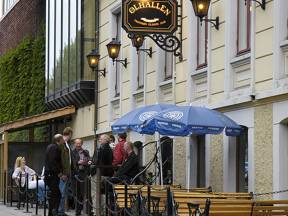
Thirsty? You’ll definitely find something to quench your thirst here at Ølhallen, Tromsø’s oldest pub and an iconic gathering place for both locals and visitors. Ølhallen opened its doors in 1928 and for many years served as a meeting spot where fishermen, trappers, and the city’s residents could enjoy a well-earned beer after long days at sea or in the Arctic wilderness. The traditional pub has retained its authentic atmosphere, with dark wood, sturdy furniture, and a rustic charm that takes you back in time. Here, you can enjoy an impressive selection of beers from Mack, the world’s northernmost brewery, located just nearby. With over 70 different beers on tap, Ølhallen is a paradise for beer enthusiasts. The atmosphere is often lively, and the pub has evolved from a rough seafarers’ haunt into a welcoming meeting place for all. Whether you’re looking for a taste of local brews, a historic experience, or just a friendly conversation, Ølhallen is a spot you won’t want to miss.

Now you stand before the statue of King Haakon VII, one of Norway’s most respected monarchs and a key figure in the nation’s history. Born as Prince Carl of Denmark in 1872, he was elected as Norway’s king in 1905 following the dissolution of the union with Sweden. By accepting the throne, he not only took on a crown but also embraced a people who welcomed him as their own ruler. Throughout his reign, from 1905 until his death in 1957, he was a unifying figure for Norway. His leadership was especially crucial during World War II. When Germany invaded Norway in 1940, he refused to cooperate with the occupying forces and was forced into exile in Britain. From there, he led the resistance and upheld the hope of a free Norway through his famous radio speeches. When he returned in 1945, he was met by a jubilant people who had never forgotten his steadfastness. The statue here in Tromsø stands as a symbol of his courage, integrity, and deep love for Norway.

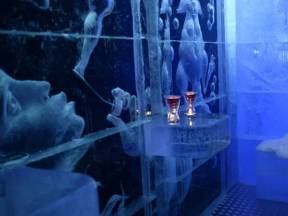
Are you ready for a truly unique experience? Welcome to Magic Ice Bar, an ice bar that transports you into a magical world of ice and light. Here, everything—from the walls and seating to the artwork and glasses—is made of ice, crafted by artists inspired by Northern Norwegian nature and history. Upon entering, you’ll receive a warm cape and gloves, as the temperature is kept below freezing at all times. Light dances through the intricately carved ice sculptures, creating an almost fairy-tale-like atmosphere. Enjoy a signature drink served in an ice glass while admiring the artwork that reflects the Arctic, the northern lights, and Norway’s seafaring history. Magic Ice Bar is an experience for all the senses—a fusion of art, culture, and a cool, refreshing ambiance you won’t forget. So step into this frozen world and enjoy a drink in a bar where art and nature quite literally melt together.

On June 17, 1941, the Jewish man Herman Smith was deported and sent to Auschwitz, where he was killed on his own birthday in 1943. The memorial before you stands as a reminder of the 17 Jews from Tromsø who became victims of the Holocaust during World War II. The monument, as you can see, is a simple yet powerful marble pillar with a bronze plaque engraved with their names. At the top, a Star of David shines, and below the names, an inscription in Hebrew is accompanied by the words: "In memory of the Jews from Tromsø who were killed in German concentration camps. Raised in deep reverence by their countrymen. We must never forget." The memorial was unveiled on June 17, 1995, exactly 54 years after Herman Smith was arrested. His children and other descendants were present at the moving ceremony. In addition to this monument, you can find 14 Stolpersteine—or stumbling stones—scattered throughout Tromsø. These small brass plaques are embedded in the pavement in front of the homes of deported Jews, each engraved with a name and fate. They serve as an eternal reminder of the lives that were taken—and as a call to never forget.

Do you believe in trolls? No matter what you think, Troll Museum will take you into a world of Norwegian folklore, mythology, and magical creatures. This is Norway’s first and only museum dedicated to trolls, where you can explore how these mysterious beings have been a part of Norwegian culture for centuries. The museum combines interactive exhibits, art, and modern technology to tell the stories of trolls—ranging from the fearsome creatures of old folktales to the more humorous versions we know today. Here, you can learn how trolls were perceived in different parts of Norway and discover which myths still live on. Through exciting holograms, AR technology, and visual effects, the fairytales come to life around you. But be careful! They say trolls still roam the forests and mountains of the north—perhaps you’ll meet one on your way today?

Are you ready for an Arctic experience? The building in front of you, with its distinctive slanted architecture, is Polaria—one of Tromsø’s most unique landmarks. Its facade is inspired by large ice blocks, or ice floes, that have drifted ashore, reminding us of the proximity to the Arctic and the harsh climate that defines this region. Polaria opened in 1998 and is more than just an aquarium—it is an Arctic experience center that shares knowledge about the nature and wildlife of the northern regions. Here, you can watch seals swim in specially designed pools, explore exhibitions on climate and the environment, and learn about research conducted on Svalbard. One of the main attractions is the panoramic cinema, where spectacular films showcase the dramatic Arctic landscape. Located near the Polar Institute, Polaria plays an important role in communicating Arctic research. No matter what you think about climate and the environment, Polaria challenges us to reflect on our role in preserving the fragile northern regions.

You have now arrived at MS Polstjerna, one of Norway’s best-preserved seal hunting vessels. Launched in 1949, the ship had a long and successful career in Arctic waters, hunting over 97,000 seals during 33 seasons. Polstjerna was built to withstand the extreme conditions of the Arctic, and here you can get a unique glimpse into the lives of the seal hunters and crew who spent long months in the icy wilderness. Today, the ship is preserved inside a modern glass hall, allowing you to study its original hull and the equipment used on board. The exhibitions surrounding the ship tell the story of the seal hunting industry’s significance for Northern Norway, both economically and culturally. You’ll also gain insight into the ongoing debate surrounding hunting traditions and how they have evolved over time. MS Polstjerna is more than just a ship—it is a floating cultural monument that brings you closer to an important part of Northern Norway’s history.

Have you ever seen the world through someone else’s eyes? That is exactly what Perspektivet Museum aims to offer—new perspectives on history, culture, and society. As you can see, the museum is housed in a beautiful townhouse from 1838 and is known for its engaging exhibitions that challenge, enlighten, and inspire. Here, you’ll encounter both local and global stories through photography, art, and documentaries. The exhibitions often focus on social issues, cultural encounters, and identity, creating space for reflection. The museum is particularly renowned for its photography exhibitions, which provide insight into Tromsø’s past as well as people’s lives around the world. Interestingly, the well-known author and artist Cora Sandel once lived in an apartment in this very building. Perspektivet Museum is not just about the past—it’s about how we understand the world today. Feel free to step inside and explore!

You have now arrived at one of Northern Norway’s most important art institutions. The Nordnorsk Kunstmuseum is housed in an elegant building and holds a rich collection of art—ranging from classical paintings to modern installations. The museum showcases works by both Norwegian and international artists, with a particular focus on art from northern regions. Through its exhibitions, you can explore everything from Sámi art and traditional handicrafts to contemporary pieces that reflect life and nature in the north. The museum is known for its ability to challenge traditional perspectives and create engaging exhibitions that question identity, culture, and history. Whether you are an art enthusiast or simply curious, the museum offers a visual journey through time and artistic expression. Here, you can experience how northern art tells stories of the landscape, the people, and the unique conditions of life in the Arctic.

The tower and spire rising before you belong to Tromsø Cathedral, one of the northernmost cathedrals in the world and the only one in Norway built of wood. Though the church may seem modest in size, it is a significant symbol of Tromsø and its history. The cathedral was consecrated in 1861 and, as you can see, is built in a neo-Gothic style, characterized by pointed arches and tall, narrow windows. Inside, you will find beautiful stained-glass windows and a carved altar created by the sculptor Eilif Petersen. Over the years, the church has witnessed both joy and sorrow, from royal visits to memorial services for fishermen and hunters who never returned home. Today, the cathedral remains a vibrant gathering place for both locals and visitors. As you stand here, think of all the people who have passed through these doors—in faith, hope, or simple curiosity. What role does the church play in a modern city like Tromsø? Perhaps, as before, it remains a meeting place, a space for reflection and community in a world that is constantly changing.

Now you are standing in Storgata, between Stortorget, which you can see towards the sea, and Erling Bangsund Square, named in honor of the local trade unionist and politician. Stortorget is Tromsø’s natural gathering place, surrounded by kiosks, restaurants, nightlife, and shops. For generations, people have come here to trade, socialize, or take part in various events. At times, the square comes alive with markets and festivals, bringing energy and activity to the heart of the city. At the center of the square stands the Hunting and Fishing Monument, a tribute to the many who have made the sea their workplace. Tromsø has long been a hub for Arctic fishing and hunting, and this monument serves as a reminder of the city’s deep maritime roots. Here you will also find Løkkekiosken, today known as Rakettkiosken, means a spaceship kiosk, a distinctive building from 1911, famous for its hot dogs and as a classic meeting place for the people of Tromsø. With its unique architecture and long history, it has become a small yet cherished symbol of the city.

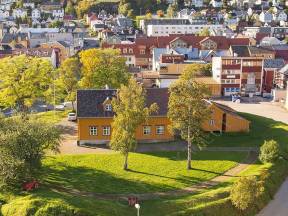
A thousand years ago, you would have been standing in the middle of a moat, surrounded by water and earthen ramparts protecting one of the oldest fortresses in Northern Norway. Now, you have arrived at Skansen, one of Tromsø’s most valuable cultural heritage sites. This fortification is the oldest preserved medieval structure in the city. Likely built in the 13th century to defend the trading post from attacks, it originally stood on a small island in the Tromsø Sound. A moat separated it from the mainland, but due to land uplift, Skansen now lies well inland. The fortress is a circular structure with a diameter of about 50 meters, surrounded by a high earthen wall. Originally, it likely had a palisade on top and has served various roles over the centuries, from defense to trade and administration. The yellow buildings you see today date back to the late 18th century and have been used as a customs house, school, hospital, and museum. Today, Skansen stands as a bridge between past and present—a place where history still whispers through the landscape around you.

Here, at the foot of Tromsø Bridge, you will find Fridtjof Nansen Square, a small yet significant place in the heart of Tromsø. Standing here is the bust of Fridtjof Nansen, one of Norway’s greatest explorers, scientists, and humanitarian leaders. Nansen is best known for his Arctic expeditions, including his daring attempt to reach the North Pole with the Fram expedition from 1893 to 1896. Nansen was not only a polar explorer but also a renowned scientist and diplomat. He played a crucial role in refugee relief efforts after World War I and was awarded the Nobel Peace Prize in 1922 for his humanitarian work. The bust is a tribute to his life and legacy, reminding us of the spirit of exploration, scientific curiosity, and human compassion.

You are now in Kirkeparken, a beautiful green oasis surrounding Tromsø Cathedral, creating a peaceful atmosphere around the historic wooden church. But did you know that this area was once a burial ground? From the Middle Ages until the first half of the 19th century, the city's inhabitants were laid to rest here. On the northeastern side of the church, you can still see some of the oldest graves, silent witnesses to generations who found their final resting place in this very spot. Today, Kirkeparken is a place for recreation and reflection. The large leafy trees provide cool shade in the summer, while in winter, the snow covers the park like a quiet, white blanket. For centuries, people have gathered here—for grand events as well as quiet moments of contemplation. As you stand here, think about how this place has transformed over time. From burial ground to meeting place, Kirkeparken remains a space where life and history come together.