Fishing
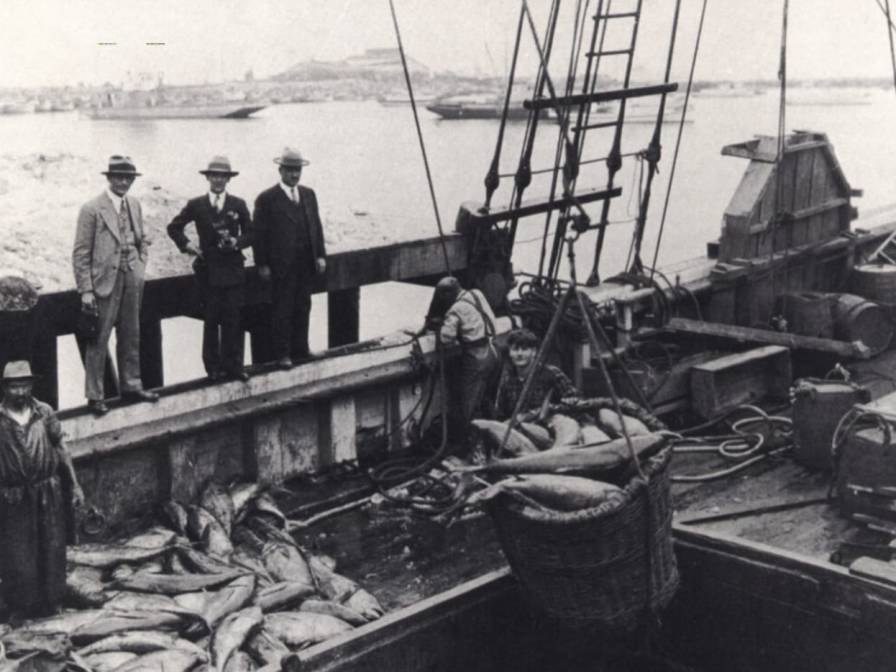
If someone came to Komiža in past centuries, the first thing they would notice would be the smell of fish and the wooden boats lined up along the waterfront. Almost every family lived from the sea, and sardines were the main food and main source of income. A special boat, the gajeta falkuša, gave fishermen an advantage over everyone else on the Adriatic – with it they could go to the open sea and return with catches that were unimaginable elsewhere. The most important place for fishing was Palagruža, an island in the open sea, closer to Italy than Vis. For centuries, the people of Komiža went there and fished in its rich sea. It was precisely thanks to their constant presence that Palagruža remained Croatian. There are also records from 1553 that say that in one day they caught as much as 120 tons of oily fish. All this led to Komiža becoming the main fishing center on the Adriatic. Fish was salted and exported in large quantities, and in 1870 the first fish canning factory on the Adriatic was opened in the town. Later there were as many as seven, which was a huge number for a small town on the island. Komiža was thus known as the center of the fish industry until the end of the 20th century. However, many Komiža residents did not stay on the island. In the late 19th and early 20th centuries, they began to emigrate to California, where they continued to do what they knew best – catch and process fish. In 1917, they founded a small canned fish factory in San Pedro. At first it was modest, but thanks to the knowledge and perseverance of the Komiža residents, it soon grew. By the middle of the century, it became the largest fish canning factory in the USA, and for a time in the entire world. For most immigrants from Komiža, working in that factory was their first job in America. That is why today there are several times more people of Komiža origin living in San Pedro than in Komiža itself on the island of Vis.