Gajeta Falkuša
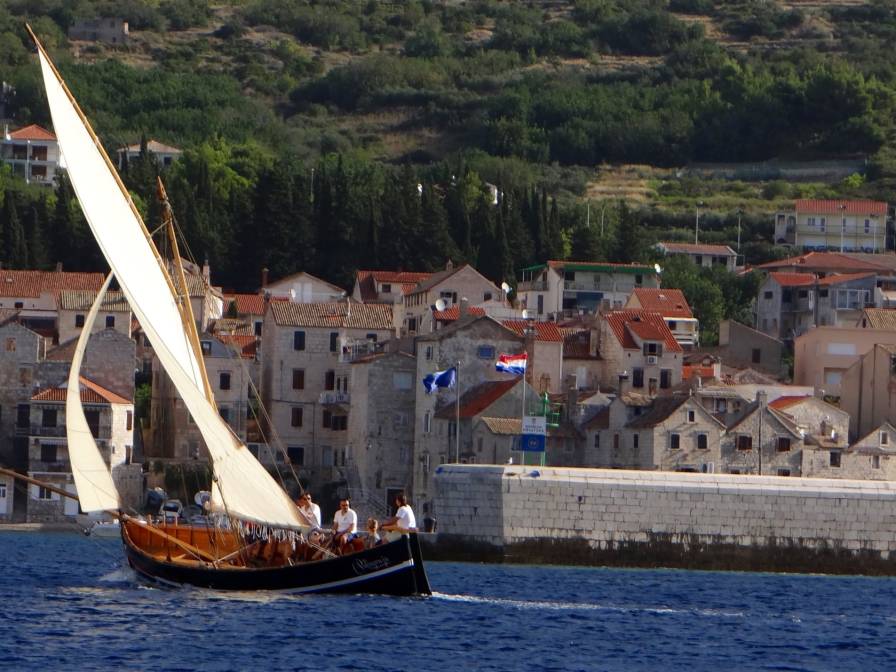
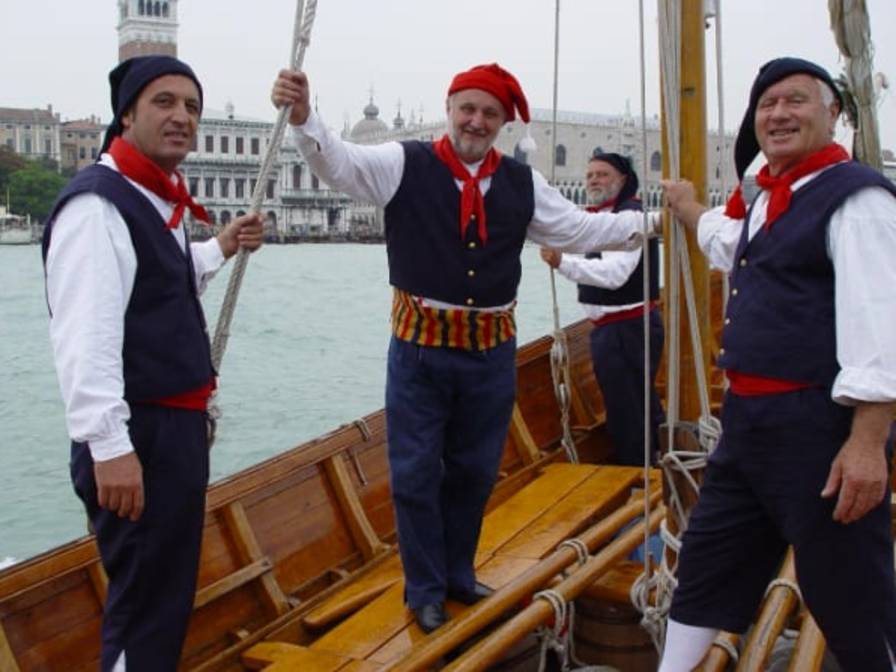
Among all the ships of the eastern Adriatic, one has taken a special place in the hearts of the people of Komiža – the gajeta falkuša. This unique fishing boat, created out of the need to survive on the open sea, has become a symbol of the courage and skill of the fishermen of Vis. The people of Komiža were the first fishermen of the open sea. Their lives were tied to the sea, which brought them both bread and danger – from sudden storms to pirates lurking in the dark nights. In order to cope with the sea, they needed a ship that was fast, strong and reliable, but also agile enough to carry a larger load of catch. Thus was born the falkuša – a ship that hides two souls within itself: a low fishing boat for hunting and a tall ship for sailing and transport. It owed its uniqueness to the folkes, the side panels that enabled it to transform into this miraculous vessel. However, fate was not kind to this pearl of shipbuilding. The last original falkuša, “Cicibela”, sank on a stormy night in 1986 near Biševo. It seemed that centuries of knowledge, craftsmanship and tradition would disappear with it. But thanks to the persistence of Professor Joško Božanić and the collaboration with Professor Velimir Salomon, a great rescue was launched – research that included not only the ship and its construction, but also the language of the fishermen, their stories, place names, customs and even recipes. After eleven years of hard work, in 1997 a new falkuša was launched in Komiža – “Comeza-Lisboa”. It was the first after a decade of silence, built precisely to show the strength and beauty of this heritage to the world audience in Lisbon. That moment was not just the launching of the ship, but also the return of an entire culture from oblivion. Today, four falkušas sail in Komiža: “Comeza-Lisboa”, “Mikula”, “Palagruža” and “Molo”. The last of them is a small falkuša, intended for children, so that they can learn from a young age what it means to be a fisherman and inherit the skills of their ancestors. This way, the falkuša remains a living symbol – a ship that has survived centuries, storms and oblivion, and which continues to tell the story of Komiža and its sea.