Blue Cave
0
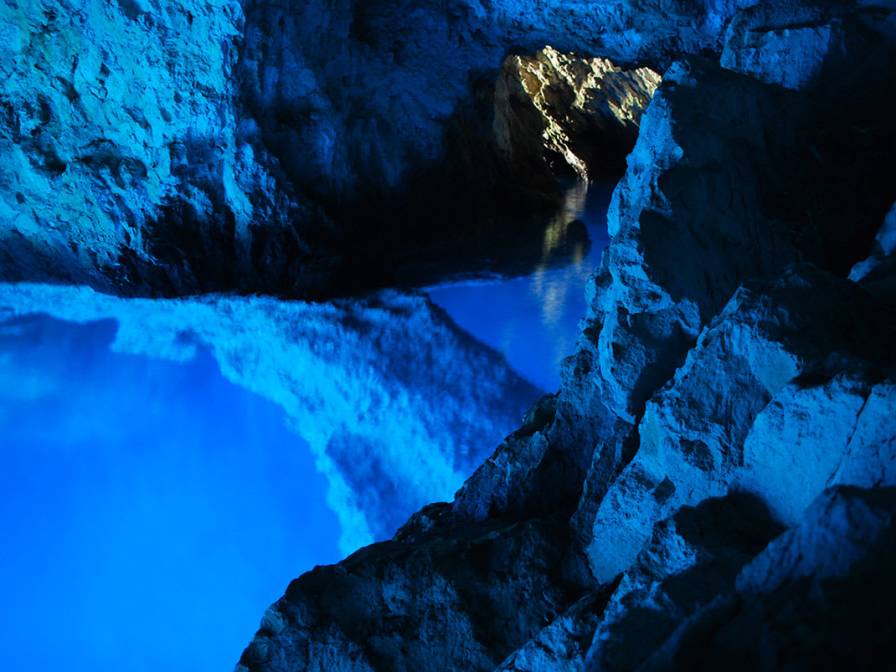
The Blue Cave is located on the eastern side of the island of Biševo and is one of the most famous natural features of the Adriatic. It was introduced to the world in 1884 by the Viennese painter Eugen Baron Ransonnet. Since then, it has become one of the most visited places on the sea, and in 1951 it was declared a geomorphological monument of nature. Today's entrance to the cave was subsequently dug and adapted for visitors, while the original entrance was not the same. The cave is entered by organized boats from the nearby Mezoporat bay. The biggest special feature of the cave is the light phenomenon. There is light yellow sand at the bottom. When the sun shines on the submerged opening in the morning hours, the light reflects off the sand and illuminates the interior of the cave. Because of this, the rocks and water in the cave take on an intense blue color, which is how it got its name. Inside the cave, it is possible to notice another interesting feature - the natural shape of a white heart in the rock can be clearly seen on the ceiling. The cave is protected and is a UNESCO World Heritage Site. Swimming inside the cave is not permitted, in order to preserve its natural balance and protect the sensitive marine community. During the 2019 survey, 119 species of marine organisms were recorded in the cave, including five strictly protected ones. Today, the Blue Cave is an example of how natural beauty and scientifically explainable phenomena can attract great interest, but also a reminder that conservation should be more important than exploitation.