Munkegata
0
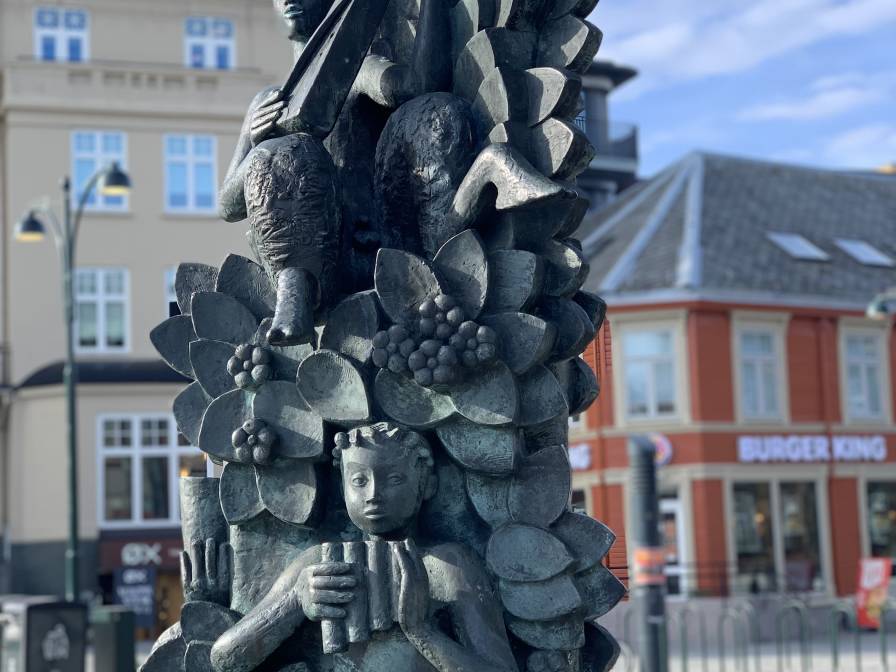
We find ourselves in the heart of Munkegata, nestled between the Nidaros Cathedral, a prominent church built over the burial site of Norway's patron saint, King Olav II, and Ravnkloa, a renowned fish market by the fjord. This is one of a few streets in Norway that embodies the distinct character of an avenue. Originally planned as the city's primary artery, Munkegata was a central feature in the urban blueprint of 1681 designed by the well-known city planner, Cicignon. An avenue, characterized by a wide road with trees or greenery lining each side, is designed to guide one's gaze towards a significant building - in Trondheim's case, this is the Nidaros Cathedral. Munkegata, which translates to 'Monk's Street', was named in homage to the monks, or canons, associated with the Cathedral, and those living on Munkholmen, a small islet north of Trondheim. A canon was in the Roman Catholic Church the designation for priests connected to a cathedral. Every summer, Munkegata comes alive with a bustling market set within its historical surroundings. Known as "Martnan", this vibrant festival holds long-standing traditions that date back to the medieval era! It's fair to say that the "Martnan" might feature a fair amount of beer consumption. Legend has it that the German monks in the 1600s followed a diet consisting solely of beer! While we can't say for certain if the monks of the Nidaros Cathedral or Munkholmen shared such a diet, it's safe to assume they had a clear avenue between them if they did indulge in a similar lifestyle.