This adventure takes you along the heart of the Coastal Route (Kystriksveien), between Vennesund, Brønnøysund, and Nesna. You’ll travel through a landscape where mountains meet the sea, where history whispers just beneath the surface, and where every turn reveals breathtaking new vistas. Along the way, you’ll pass idyllic places like Vevelstad and Sandnessjøen, discover cultural treasures, and might even catch a glimpse of the rich wildlife that thrives along this rugged coast.
As you drive, we’ll guide you through the stories of these fascinating places—from ancient coastal traditions to dramatic natural wonders. Sit back, relax, and let the landscapes and tales turn this trip into an unforgettable experience.
You can listen to the guide before your journey for inspiration and planning—or revisit the stories later, to relive the magic from home.
Audio guides available in:
Dansk, Français, 中文, Español, Deutsch , 日本語, русский, Arabic, 한글 , Svenska, Italiano, Polski, Nederlands, Українськa, Português, Suomalainen, English (British), Norsk bokmål
To find more content and listen to free audio guides, download the Guide To Go app.
The Costal Highway Middle section
Points of interest
Petter Dass and Alstahaug church
We are now approaching the Petter Dass museum,, Alstahaug church and Alstahaug farm.
Petter Dass Museum, here at Alstahaug, is dedicated to the famous 17th-century Norwegian poet and priest, Petter Dass.
The museum showcases his life, works, and the cultural heritage of the region. Nearby,
Alstahaug Church is a medieval stone church built in the 12th century, known for its beautiful architecture and historical significance.
Here, you will also find Alstahaug Gård, the old vicarage, adds to the historical atmosphere, offering a glimpse into the traditional Norwegian farm life.
Together, these sites provide visitors with a rich experience of Norway’s cultural and religious history, set in the scenic surroundings of Alstahaug.
Ferry Holm Vennesund
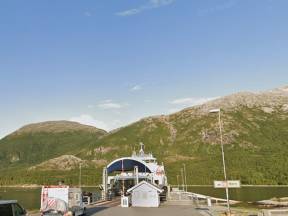
We are now arriving at Holm ferry terminal, an important hub along the Coastal Highway. From here, the ferry to Vennesund takes just 20 minutes and offers stunning views of the archipelago.
Only a few hundred meters from the terminal is Solstad Church, a beautiful wooden church from 1888 with a picturesque location by the fjord. The church is known for its simple yet harmonious architecture and is a popular spot for both visitors and locals.
Vevelstad Museum, and Bygdetun
We are now passing Ristning – Tjaalege, Vevelstad Museum, and Bygdetun, with Vevelstad Church as its neighbor. The new museum offers fascinating exhibitions on rock art, geology, archaeology, and local history. Here, you can create your own rock art and learn about Iron Age burial customs and longhouses.
At the Bygdetun, you’ll find a beautiful museum garden and an engaging "barn" for children, where they can care for wooden animal figures.
Vega
Out in the open sea, just a short ferry ride from the mainland, lies Vega – a unique archipelago that is part of the UNESCO World Heritage List. The Vega Archipelago consists of over 6,000 islands, islets, and skerries, renowned for its rich coastal culture and stunning natural beauty.
Vega has a long tradition of eiderdown production, where the eider ducks have been cared for by locals for generations. This harmonious relationship between people and nature is one of the key reasons the area earned its World Heritage status. Visit the Vega World Heritage Center to learn more about this unique tradition.
The island also offers great hiking opportunities, fishing, and breathtaking views of the surrounding archipelago. On Vega, you’ll experience how nature, culture, and history come together to create something truly special.
You can reach Vega by ferry from Horn or Tjøtta, or by express boat from Brønnøysund, or Sandnessjøen.
Helgeland Bridge
You are now driving over the Helgeland Bridge, a majestic landmark connecting Sandnessjøen on Alsten Island to the mainland. Completed in 1991, the bridge spans 1,065 meters with 12 sections, including a main span of 425 meters. Its slender pillars rise to a height of 138 meters, making it a marvel of engineering and a stunning addition to the landscape.
The Helgeland Bridge is more than just a transport route – it’s an experience. From the bridge, you’ll enjoy breathtaking views of the Helgeland coastline’s fjords, islands, and mountains, including the Seven Sisters on the horizon. It has become a symbol of connection and unity in the region, turning any journey along the Coastal Route into something truly memorable.
Levang ferry terminal
We are now arriving at Levang ferry terminal. From here, the ferry to Nesna takes approximately 25 minutes. The ferry crosses the beautiful Ranfjorden, surrounded by majestic mountains and lush landscapes. This is a short but scenic journey along the Helgeland coast.
Junction FV78/ FV17
We are approaching a junction for County road 17 and 78. County Road 78 takes you to the E6 towards Mosjøen or Mo I Rana. From here, it’s about 40 kilometers south to Mosjøen or approximately 85 kilometers north to Mo i Rana. It is ten kilometers from the junction county road 17 to Levang and 24 kilometers to Sandnessjøen.
Brønnøysund
Here in beautiful Helgeland you will also find the lovely coastal town, Brønnøysund. You can soon take off to the charming coastal town, known for its breathtaking natural scenery and maritime culture.
One of its most famous landmarks is Torghatten, a mountain with a distinctive hole through its center, which offers stunning views after a short hike.
The town serves as a gateway to the Helgeland coast, offering easy access to nearby islands and fjords. Brønnøysund is also home to the Brønnøysund Register Centre, which plays a key role in business administration in Norway. The town combines natural beauty with modern services, making it a great destination for visitors.
Horn Ferry terminal
The next stop is Horn ferry terminal, connecting County Road 17 to Andalsvåg ferry terminal and Vevelstad. The crossing takes approximately 20 minutes. Other destinations accessible from this terminal include the islands of Ylvingen and Vega.
Vega is a stunning island that is part of the UNESCO World Heritage List, celebrated for its unique cultural landscape. The island is renowned for its eider duck tradition, where the birds are protected in exchange for their valuable down. Vega also offers excellent hiking trails, pristine white beaches, and rich birdlife.
Ferry Tjøtta - Forvik
We are now arriving at Tjøtta ferry terminal. From here, the ferry to Forvik takes 70 minutes, offering beautiful views of the Helgeland coast's archipelago.
Tjøtta has a rich history, once home to one of the most important Viking chieftain farms. It is closely associated with the saga of Hårek of Tjøtta, one of Norway’s most renowned chieftains.
Close to the ferry terminal is Tjøtta Gjestegård, known for its peaceful atmosphere and blend of history and hospitality.
Vevelstad gjestegård
By the fjord, you can now see Vevelstad Gjestegård, located on the historic grounds of Vevelstad Farm, with roots dating back to the 15th–16th century. The main house from 1907 was restored into a guesthouse in 2017, offering hospitality and tranquility with delightful food and farm experiences.
The guesthouse features 9 rooms, locally inspired meals on request, and a farm shop selling local products. By the sea, high-standard cabins and boats are available for rent.
Trollpikken
You are now approaching Trollpikken, or the The troll dick, an iconic formation that is part of the mountain Hestmannen, The Horse Man, one of the most famous landmarks along the Coastal Highway. Hestmannen, with its distinctive profile, has inspired legends and myths for generations.
Trollpikken is part of this mountain formation and stands out with its unique shape. The geology here tells a story of millions of years of erosion, shaping the mountains along the coast.
Trollpikken is a popular photo spot, so take a moment to stop and soak in the landscape. The surrounding area offers spectacular views of fjords and the sea – an experience that leaves a lasting impression.
Sandnessjøen
You can soon take off to Sandnessjøen, also called the gateway to The Seven Sisters and a key hub on the Helgeland Coast. This town is as you see, surrounded by majestic mountains, with The Seven Sisters forming an iconic backdrop. Sandnessjøen has a long maritime tradition and today serves as an important center for transportation and trade.
In the heart of town, you’ll find a lively center, with schools, churches, hospital, all playing vital roles in the local community. The town is also known for its excellent dining options, featuring fresh local seafood as the centerpiece.
Take note of the marina and coastline, which invite you to enjoy a peaceful walk and offer views of the archipelago beyond. There’s always something to discover here, no matter the season.
Trælvikosen rest area and viewpoint
We are now approaching the rest area and viewpoint at Trælvikosen, a place to marvel at nature's ever-changing scenery. Here, 55 stepping stones, or wading stones, lead to a small islet with views of the iconic Torghatten mountain. These stones mark the tide levels, visible at low tide and fully submerged at high tide.
The sandy seabed reveals intricate details: tiny pyramids from lugworms, snail trails, flatfish, and rounded stones in unique formations, all unveiled as the sea retreats and hidden again with the rising tide.
Trælvikosen, part of the Helgelandskysten National Scenic Route, now features a new parking area, picnic tables, benches, and a pathway leading to the stepping stones.
Torghatten
Now you can see the famous Torghatten mountain on the other side of the fjord, one of Norway's most iconic landmarks. The mountain is known for its distinctive hole, which stretches 160 meters through its top.
According to legend, the hole was created when the Horseman (Hestmannen) shot an arrow at the Maiden of Leka (Lekamøya). The King of Sømna threw his hat to block the arrow, and the hat became Torghatten.
You can hike a well-marked trail up to the hole and enjoy breathtaking views of the Helgeland coast's spectacular archipelago.
Torghatten is part of the Helgelandskysten National Scenic Route and a popular destination for both history enthusiasts and nature lovers. It’s a place where myths, nature, and culture come together in unforgettable ways.
Sundshopen Rest Area
We are approaching Sundshopen Rest Area, a scenic stop along the Helgeland coast, nestled in the lush agricultural landscape of Sømna. This rest area features a unique stone pier, or "vorr," stretching approximately 65 meters from the beach into the tidal zone.
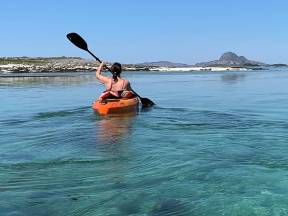
The vorr provides shelter from easterly winds, a dry path to deeper waters for activities like swimming, fishing, kayaking, or boat access. Its design makes Sundshopen an inviting spot for both locals and travelers.
The rest area is equipped with a modern service building and a spacious parking lot, making it ideal for picnics or a refreshing break. Sundshopen perfectly blends natural beauty with practicality for a memorable stop.
Vik
Have you ever wondered how people lived here centuries ago? We are now arriving in Vik, where you can visit Sømna Bygdetun, an open-air museum that showcases how fishermen-farmers and their families lived and evolved from 1800 to 1950. The museum is located next to Sømna Church, a historic church site that has been in use since the medieval period. The present church, built in 1876, is a beautiful neo-Gothic wooden structure featuring an exquisite altarpiece created by Even Ulving.
At the museum, you can explore exhibitions, traditional buildings, and a reconstructed garden from 1912. The kitchen garden displays ancient grain varieties, herbs, and vegetables.
Every July, Sommerdagan, a summer celebration, takes place with exhibitions, traditional baking, hay harvesting, and open buildings at the museum. The museum is open during the summer, cultural events, and upon request.
While in Vik, you can also enjoy local hospitality at Sømna Kro og Gjestegård, offering delicious meals and comfortable accommodations.
Tjøtta War Cemetery
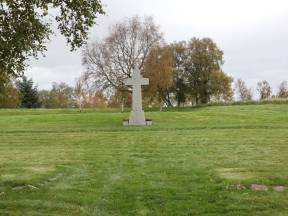
We are now approaching Tjøtta War Cemetery, an important memorial from World War II. The cemetery is closely connected to the tragic sinking of the freighter MS Rigel in November 1944.
MS Rigel was used by the German occupying forces to transport prisoners of war and soldiers. Unaware of the prisoners on board, British aircraft attacked the ship, resulting in over 2,500 deaths, making it one of the worst maritime disasters in Norwegian waters. Many of the victims are buried here.
The war cemetery is a serene and respectful site, a memorial that invites reflection on the horrors of war and the importance of peace.
Photo: Karl Ragnar Gjertsen
Petter Dass
Have you heard of Petter Dass, one of Norway’s most renowned hymn writers? He lived in the 17th century and is celebrated for his powerful texts that captured both faith and the harsh life along the Helgeland coast.
Petter Dass was born on Herøy, the island just across the fjord, and later spent much of his life as a pastor in Alstahaug. He was not only a spiritual leader but also a talented writer whose hymns and poems are still cherished today. His most famous work, "Nordlands Trompet", vividly portrays the nature, culture, and daily life of Northern Norway.
Today, you can learn more about his life and legacy at the Petter Dass Museum in Alstahaug, a modern cultural site honoring his memory and contributions to Norwegian heritage.
the Seven Sisters
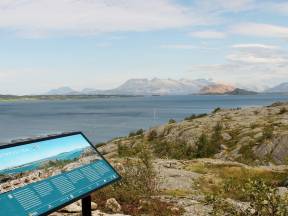
We are now passing the Seven Sisters mountain range, one of the most iconic landmarks along the Helgeland coast. You’ll soon have the opportunity to turn off to a parking area, where you can lace up your hiking boots for an adventure or simply enjoy the breathtaking view.
The Seven Sisters consist of seven majestic peaks stretching along the coastline, with the highest summit rising over 1,000 meters. The range has inspired many legends, including the tale of the seven sisters turned to stone.
The area offers fantastic hiking opportunities for both beginners and experienced adventurers, with well-marked trails and panoramic views of Helgeland’s stunning archipelago. Even if you don’t hike to the top, the landscape surrounding these peaks is an unforgettable experience. The Seven Sisters blend adventure, nature, and mythical history perfectly.
Photo: Bjørn Christian Tørrissen
Torolvstein Viking House
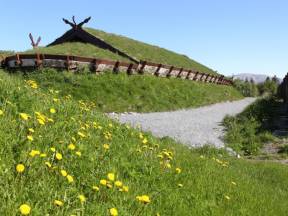
We are soon passing Torolvstein Viking House, a fascinating reconstruction project that brings the Viking Age to life. This Viking house is located in Sandnes, Alstahaug, and is built using traditional materials and techniques, based on archaeological findings and historical sources.
The house is named after Torolv Kveldulvsson, a powerful Viking chieftain from this area, known from Norse sagas. Torolv played a significant role in the history of Northern Norway and was a close ally of King Harald Fairhair.
Today, Torolvstein serves as a vibrant cultural venue, offering exhibitions, guided tours, and activities that provide insight into Viking-era living, crafts, and cuisine. It’s a place where history and culture come together, offering an experience you won’t want to miss.
Forvik ferry termina
The next stop is the Forvik ferry terminal, connecting you to Tjøtta and Sandnessjøen. The crossing takes about 70 minutes.
Just a few hundred meters from the ferry terminal, you’ll find Handelsstedet Forvik, one of Northern Norway’s oldest trading posts, with over 200 years of history. Here, you can enjoy a cup of coffee from the local roastery or visit Naustloftet Café and Restaurant for a delicious meal.
You can also find information about Lomsdal-Visten National Park, known as "The Forgotten Land." This pristine area can be explored by express boat or ferry from here.
A bit further away, you can follow Vistnesstien, a well-marked hiking trail that leads through a rock carving site from the Stone Age, dating back around 4000 BC.
Anadalsvæg ferry terminal
The next stop is Andalsvåg ferry terminal in Vevelstad, connecting County Road 17 to Horn ferry terminal and Brønnøysund. The crossing takes approximately 20 minutes.
From Horn, a separate ferry departs to the islands of Ylvingen and Vega, the latter recognized as part of the UNESCO World Heritage List.