Tollerodden – Discussions about the Location
0
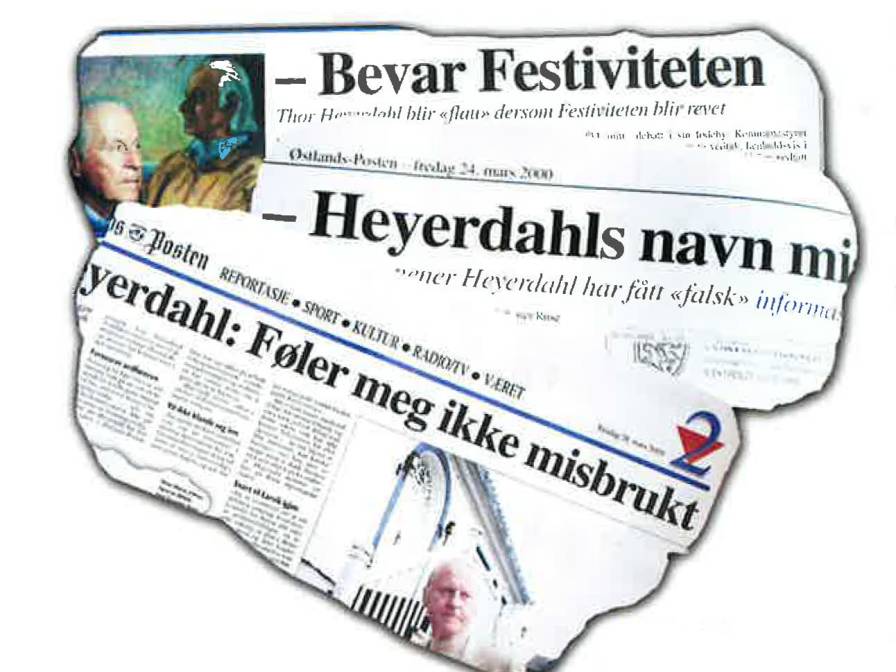
The debate about a location for the Heyerdahl monument became heated at times before this area east of Krabbedammen was chosen in 1989. There are still people today who think the seafarer has been given a somewhat humble position. The debate surrounding the Heyerdahl monument never reached the levels that Picasso and Carl Nesjar’s Sylvette sculpture did. The sculpture was meant to be placed on the highest mound here at Tollerodden, at Gryteberget, west of the pool here known as Krabbedammen. It was going to be set up in time for the town’s 300-year jubilee in 1971, but the project was abandoned at the time due to strong local opposition just as it faced when the idea was re-launched in 1996. Heyerdahl did find his place in spite of this sculpture also creating a few waves. Some people thought that Heyerdahl’s head was stylised to such an extent that it was unrecognisable, but the debate was mostly about the location. Larvik Borough Council took the decision to place the monument on Ballastberget Hill in June 1987. That is the mound at the southernmost point of Tollerodden. Here, the town’s great adventurer and discoverer could look towards the horizon and the monument would depict his need for exploration and adventure as well as being a visible marker from the sea. There were two alternatives: Bøkkerfjellet in the centre of town and the area around the Maritime Museum came up as suggestions, as well as Flåfjellet on the western side of Tollerodden. From there, Heyerdahl would have been visible from half the town. The only location missing from the debate was the one which the artist, Nice Widerberg, thought was best and he got his way, although that didn’t end the discussions. The year after the monument was unveiled, in October 1990, a local body carried out an informal survey in the town and the result was a slim majority who thought that the monument should remain in its present location. The argument was that Tollerodden is an important environment for marine culture and that Heyerdahl belonged here. Another of Larvik’s honorary citizens, the composer Arne Nordheim, had this reaction to the choice of location: “The first thing to strike me when I looked at the monument was that it should be turned around so that Heyerdahl is looking out over the fjord.” After further consideration, Nordheim saw the significance of the artist’s well thought out composition: It was inspired by the statues on Easter Island and Heyerdahl’s journey home from his expeditions, being drawn towards his hometown. The discussions continued, however, and Østlands-Posten again raised the question in 1997 and argued for moving the monument to a more central location. Heyerdahl made the following comment on the location: “If the monument had stood up in Steinane, where I used to look out over the fjord from my bedroom as a boy, then it should have been facing the sea. But not down at Tollerodden. It would have had it’s back to people on their way down through the park.” The monument remains in the location preferred by the artist. After this stop, we continue up through the park, past the shipbuilder Colin Archer’s house. He built the polar ship Fram – known internationally through the journeys undertaken by Fridtjof Nansen and Roald Amundsen. We go further down and past the red brick building which today houses the town’s maritime museum and over to Storgata and Munken, a cultural centre.