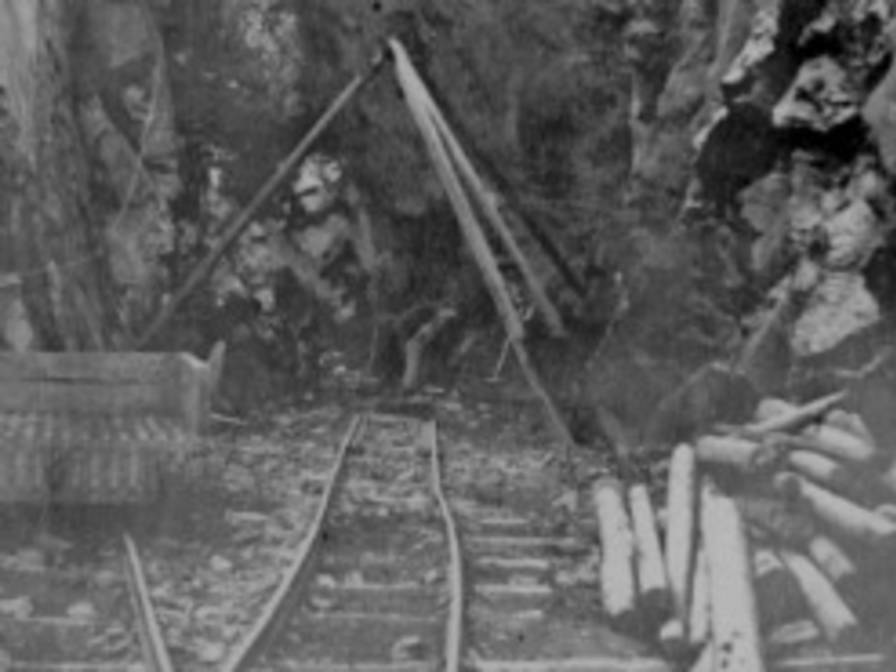
Geology along the railway line
0
The most common rocks in Nore and Uvdal are quartzite, granite, gabbro, biotite granite and mica slate. And of them granite was the preferred because it was the easiest to work with. One technique that was often used by stone masons was to wedge out the stone. If you look carefully along the railway line, you can still see the boreholes. Where retaining walls, bridges, culverts and stream and river outlets have been built you can also see drill holes in the blocks of stone. After several such holes were drilled one after the other where the stone was to be split, a wedge was driven into the holes until the stone split. The landscape around the Numedal line is also very special. When you get all the way up to Nore and Uvdal a U shaped valley will appear. The reason for this, is that during the ice age, the ice slowly but surely drilled downwards creating a U shape. It is also possible to find fossils in several locations in the mountains.