
Nore Stave Church
0
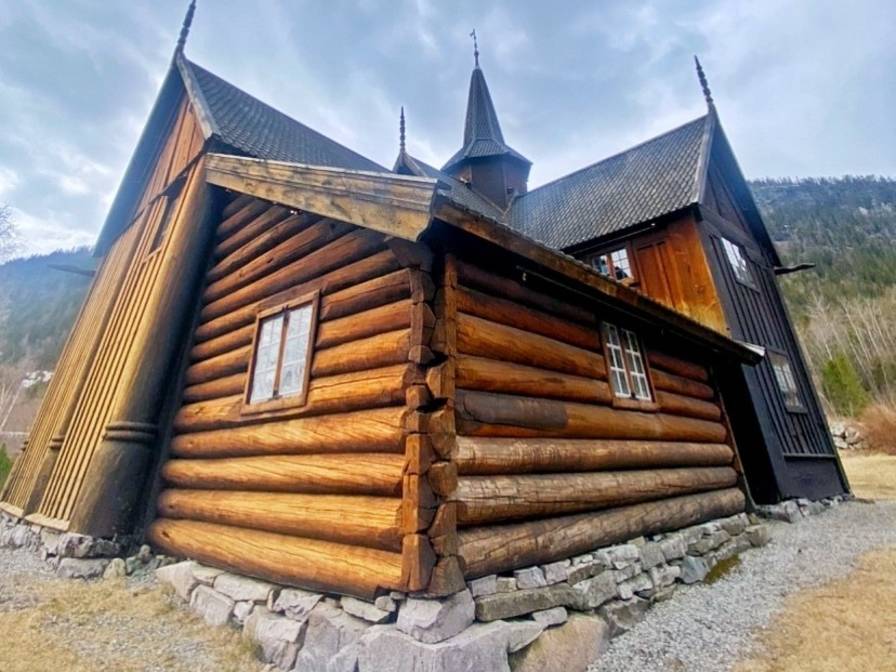
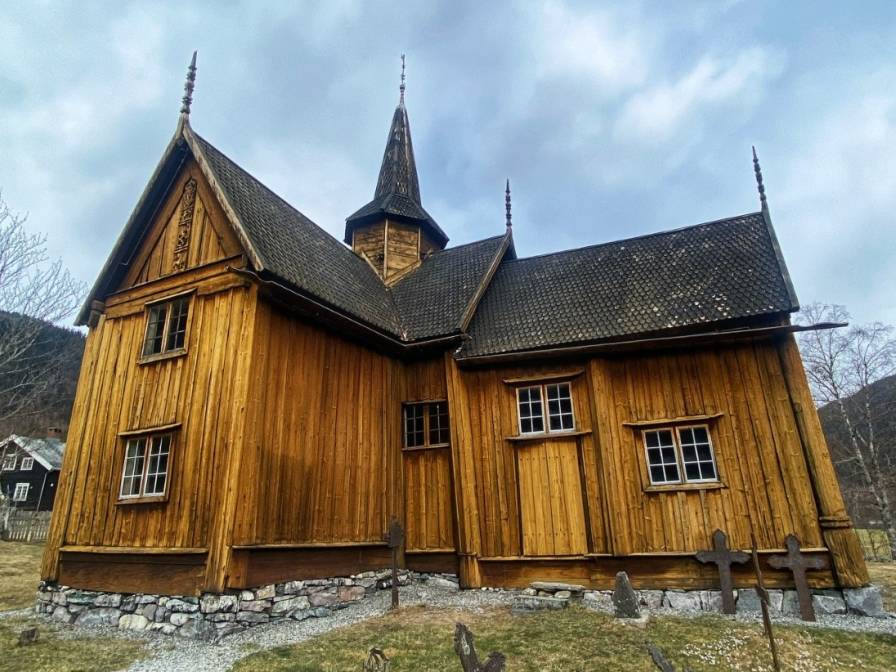
Welcome to Nore Stave church. This little stave church next to the Nore Fjord holds a special position in Norwegian Architectural History. It was built around 1167 and originally had galleries, a chancel and cross naves. Whilst excavating the floor under the Stave Church a number of graves that were older than the Church were found. This indicates that there was also a church here in the past. Nore Stave Church is one of few that had cross naves prior to the reformation in 1537. The arms of the cross are small, not suitable for seating, but there is place for a small altar. The church building stood untouched for more or less 400 years. In 1683 the chancel was demolished and a new chancel built in staves erected. For this old wooden planks from an apse in the chancel were used, they can clearly be seen by their curved shape. The planks were reshuffled so that the renaissance inspired decoration is no longer completely coherent. Inside, the church is elaborately decorated. The paintings on the walls in the arms of the nave probably date from 1731 and are painted as large wooden medallions with text and pictures taken from a book printed in Copenhagen in 1710. The Church has never been subjected to attempts of reconstruction or vigorous restauration and has therefore preserved its historical period. There are three different runic phrases carved into the church. The most famous rune was deciphered to mean “Treat us well”. Later, it was believed that it meant “Love me, I love you”. It is estimated that there could be between 5000 to 7000 people buried here. The Church was in use for several hundred years until the new Nore Church was built in 1880. Even though the Church has required extensive renovation, it has never been demolished and is now owned by the Society for the preservation of ancient Norwegian monuments. If you would like to explore the church, it is open to visitors from June to August.