


Second round of the spiral path
0
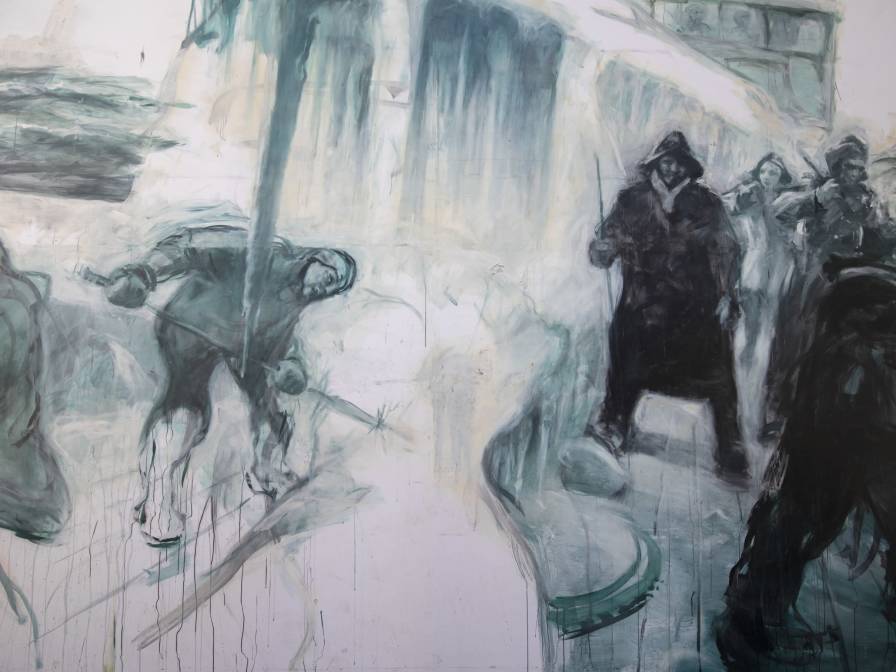
We move further into the second round of the spiral path. Here we first encounter the war sailors in the painting "Winter." The war sailors and merchant fleet were referred to as Norway's most significant contribution to the Allied victory during World War II. About half of Norwegian merchant ships were torpedoed during the war, and approximately 1 in 10 Norwegian war sailors perished at sea. They lived with a constant threat from the torpedoes. Next, we see "London Radio." Norwegians listened clandestinely to Norwegian radio broadcasts transmitted from the BBC in London. Great Britain was a crucial ally during the war. The king and the government led the resistance from exile in London, and many Norwegian soldiers received military training. War sailors also sought refuge here, while the British relied on fuel deliveries from Norwegian tankers. Later on the round, we also notice the pianist amidst the inferno. This painting is inspired by a myth that circulated after the burning of Hammerfest in 1944. This was part of the "scorched earth" tactic, where the Nazis burned down large parts of cities and houses, destroying vast amounts of infrastructure in Northern Norway. The myth claimed that as Hammerfest burned, there was a German officer who sat down at a grand piano and played Mozart while watching the city burn. This image struck Vebjørn so profoundly that he painted this piece to highlight the madness of the "scorched earth" tactic.