The Rauma Railway - Europe's most beautiful train journey
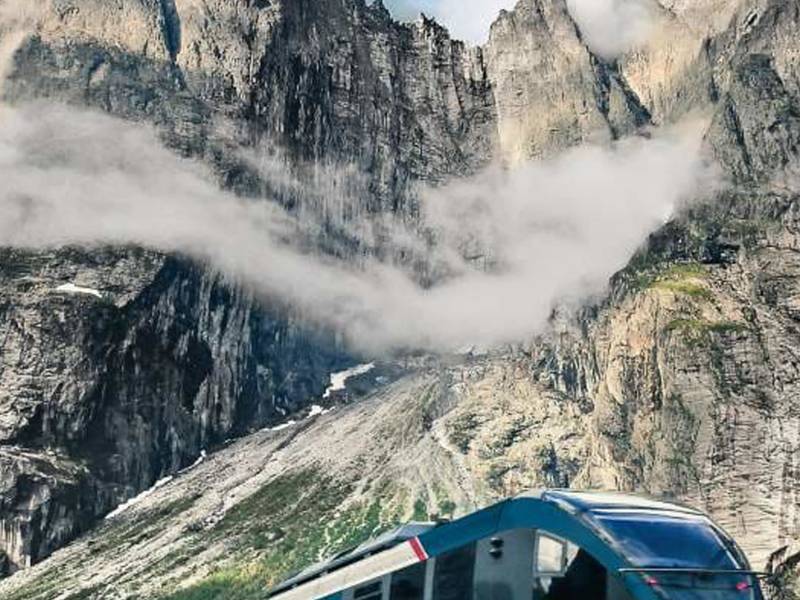
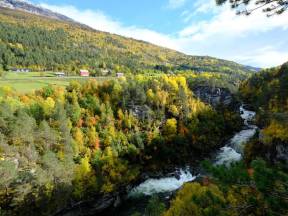
Welcome to Europe’s most beautiful stretch of railway, the Rauma railway. The 114 km long track will take you between Dombås and Åndalsnes, through precipitous and majestic mountainsides divided by wild rivers and waterfalls. People set down roots here thousands of years ago and many small idyllic villages sprung up in the area.
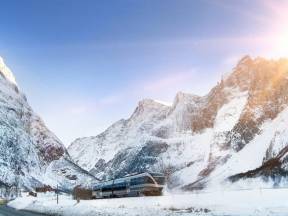
The lush green vegetation of the summer months transforms into a crystal white landscape in the winter with snow-capped mountain tops, valley sides, and plateaus where icicles glisten in frozen waters, rivers, and waterfalls.
The Rauma line has chronicled 100 years of beautiful moments since its opening on the 19th of November 1924.
Now you can get to know about some of these moments, stories, and the nature, as you pass by, by using the text, sound, and supplementary pictures on your telephone.
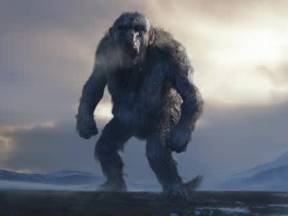
And if you should see a scary troll or two. Don’t Fear! Just smile and ask for a selfie but remember to turn the flash on….trolls crack in bright light.
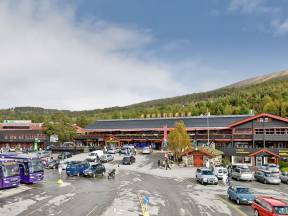
We are now in Dombås which is the traffic hub between Trondheim, Oslo and Ålesund, it is a central hub for both cyclists, cars, and the railway line.
The town centre has been well developed with comfortable hotels, a shopping centre, and exciting shops, you can also find several activities on offer, restaurants, and other overnight accommodation options.
In addition to its commercial centre, Dombås is encompassed by beautiful natural surroundings, it is just a short way to Dovrefjell and Rondane, downhill slopes, cross country skiing tracks, musk ox safaris and other exciting activities.
Winter is an adventurous time in Dombås. The snow arrives earlier here and stays for longer. Dombås is a classic ski destination with unique offerings.
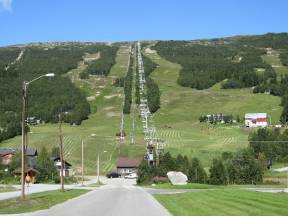
The Dombås ski lifts are known for their ski park which has produced many X games athletes. The park is one of the best in Norway and is used for both training and competition by some of the world’s best skiers and snow boarders.
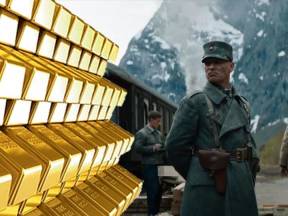
80 years ago, another train passed by here, right where you are now sitting, it was carrying the entire Norwegian gold reserve.
When the Nazis arrived in Oslo on the 9th April 1940, they had 3 goals: to take control of the monarchy, the government and the Norwegian gold reserve of 50 tonnes.
The gold was evacuated from Oslo to Lillehammer in 26 lorries just hours before German soldiers marched into the streets of Oslo, it was loaded onto trains and transported to Åndalsnes a few days later.
At the same time physical battles were taking place in this area and they became known as the battle of Dombås. Eventually, the allies gained control of the land, and the train carrying the gold reserves passed through here on the night of the 20th April 1940, with the enemy hot on its heels.
The gold arrived in Åndalsnes and was divided up, part was transported by boat to England and the rest went to Molde by car.
The Monarchy, the government, and the gold reserves all narrowly escaped much to the chagrin of Hitler and his companions.
We are now approaching the charming little mountain village of Lesja. And you might think that little means boring, but there are myriad experiences awaiting you here, whether you just want to enjoy the fresh mountain air or join some of the fantastic cultural and outdoor activities that can be found here.
In Lesja there are an abundance of cultural experiences that you will not forget, regardless of your age, gender or fitness.
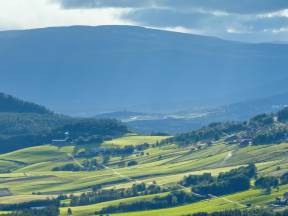
Maybe you are now sitting and looking down into the valley at the beautiful farms that lie side by side in a row.
Only a few hundred years ago they would have been deep under water.
At that time there was a huge lake there, Lesjavannet, which was drained and emptied to make room for population growth and for arable land.
You can also find Lesja Open Air Museum here with its fantastic timber houses which show us how life was on the mountain farms in the olden days.
The old and venerable Lesja church, which was established in 1749 is also located here. It is claimed that no one who enters Lesja Church comes out untouched.
We are now travelling along Lesjaskog lake, which is also know known as the watershed between Romsdalen and Gudbrandsdalen. It is one of very few lakes in Norway with two outlets, which run off into two of Norway’s most famous rivers, the Rauma River and Gudbrandslågen.
The two towns of Lesjaskog and Lesjaverk, are located at opposite ends of the lake and the whole area exudes exciting history, magnificent nature and small vibrant rural communities.
Here you can find Norway’s only remaining blast furnace from the old disused ironworks, an old school museum and many other well preserved cultural relics from a bygone era.
Lesjaskog lake is known for its fantastic fishing opportunities, and you can catch both large and small fish here.
During April 1940 the frozen lake was used as a landing site by the British RAF 263 squadron. Several hundred local men cleared a 750 metre long runway where 18 aircraft were stationed. More than 40 heroic missions were carried out from here, before the enemy’s superior flying capacity destroyed not only the landing strip but also most of the stationed aircraft.
How cold it was during those winter days is not known, but at one time a temperature of minus 45 degrees was recorded here in Lesjaskog, and then both mice and men wisely stayed indoors.
Are you fond of the outdoor life and taking part in activities in beautiful surroundings?
We are soon approaching the outdoor activity and cabin village of Bjorli, which is situated around 600 metres up in beautiful Romsdalen and whether it is summer or winter, the little village is brimming over with activities for both young and old.
Bjorli ski centre sits in the middle of the village, where the ski lifts will transport you from the centre up to 1200 metres. The international ski slope has hosted the Norwegian Championships in downhill skiing several times as well as the world cup in telemark skiing.
World famous stars such as Aksel Lund Svindal and Nina Løseth have competed and received their Norwegian Champion medals here.
Here at Bjorli station a restaurant was built in 1925 with room for 700 people. It was intended for cruise passengers who would dock at Åndalsnes and then take the train up the Romsdal valley to Bjorli where they would be served delicious traditional Norwegian food. The restaurant stood here until 1940, when it fell victim to the Nazis during their dramatic pursuit of the Norwegian gold reserve and was never rebuilt.
We are now passing Stuguflåten bridge, which is one of the many iconic bridges on the Rauma Line, and even though it is not that big, both the craftmanship and the engineering are world class.
The popular travel guide Lonely Planet, named the Rauma Railway as Europe’s most beautiful train ride in both 2012 and 2022. They emphasised the incredible feat of building a railway line on these precipitous and inaccessible mountainsides, whilst at the same time noting that the buildings along the line complimented the magnificent and romantic scenery.
Camera flashes have flashed here for over 100 years, and artists from all over the world have found their inspiration here. Right where you are now, Harry Potter was chugging along by train during filming of Harry Potter and the Half Blood Prince, which was filmed here on the Rauma Railway.
Stuguflåten bridge was also the scene of one of the Second World War’s biggest acts of sabotage, led by the resistance fighter Joachim Rønneberg from Ålesund. His team blew up the bridge in January 1945, in what was known as operation Fieldfare, the purpose of which was to sabotage the enemy’s supply lines.
The bridge was repaired and rebuilt to the same standard, although the wounds are still visible in some places.
If you look out of the window and down into the valley you can see the small village of Verma which at one time was the end station of the Rauma railway line, before the track to Åndalsnes was completed in 1924.
The name Verma actually means ‘warm’, which may seem a little strange when you consider that temperatures here often creep below minus 30 degrees in winter time.
A little further down the valley the train runs in the opposite direction as a part of the switchback tunnel system. If you turn your gaze to the opposite side of the valley, you will see the majestic Verma waterfall which plunges 380 metres down to the valley floor, the last 50 metres in free fall.
This seemingly sleepy village, is surrounded by action in the form of powerful rivers and crashing waterfalls, all the senses come into play here when you experience the impressive forces of nature surrounding us.
A little further down into the village you can find the fantastic Ville Verma adventure park, with both ziplines and nets, where outdoor enthusiasts can cross the wild stretches of river and explore the exciting Niagara Falls which is possibly as impressive as its namesake on the border between the USA and Canada.
Romsdalen is dominated by its powerful mountains and their precipitous mountainsides made the building of roads and railways difficult. Clever engineers had to therefore solve those challenges, so that the trains could navigate the demanding climbs.
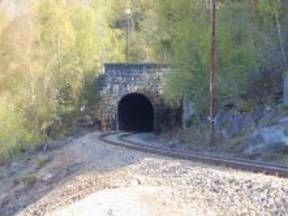
We are now entering the Stavem tunnel, where the railway track turns 180 degrees and we will drive back the way we came. This is known as a switchback tunnel and is designed to reduce the gradient so that the old steam locomotives could manage the strenuous hills. The line’s other switchback tunnel is located between Kylling Bridge and Verma station.
This well over 100 year old tunnel is 1,3 kilometres long and was for the most part built using the raw muscle power of two work teams, one working at each end of the tunnel.
It was only towards the end of construction that machine drilling was used. When the work teams finally met in 1922, after 9 years of construction, there was only a few centimetres of deviation. Both the planning and construction were therefore an unparalleled feat.
What do you and Tom Cruise have in common?
Both of you have crossed the Rauma River on one of the world’s most spectacular and photographed bridges, Kylling bridge.
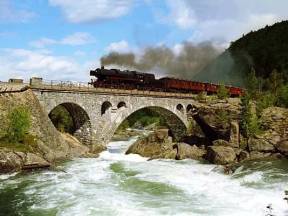
The monumental stone bridge that we will soon be passing, is not just a jewel of Norwegian engineering, but showcases craftmanship of the highest standard, where every single stone in solid granite, has been carved with great love by local stone masons.
The painstaking work took almost nine years, and the 76-metre-long bridge was completed in 1921 and became a masterpiece for the history books.
The bridge hovers 60 metres above the roaring Rauma River with an unobstructed view of the Verma waterfall which plunges into the river with a fall of almost 400 metres.
The bridge is also called a ‘tiger’s leap in stone’ which perhaps symbolises the bold construction in this harsh landscape.
And Tom Cruise perhaps also behaved like a tiger when he acted out the famous fight scene on top of the train the Orient Express in Mission Impossible 6. The scene took place right where you are now on top of Kylling Bridge.
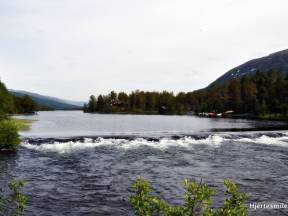
We are now travelling alongside the Rauma River in Romsdalen, but we will soon cross both the river and the road E136 on the Foss Bridge.
The Romsdalen Valley is also known as Raumadalen and stretches in the same way as the river right from Lesjaskogsvatnet through the magical and vibrant cultural landscape, right down to the Romsdal fjord in Åndalsnes.
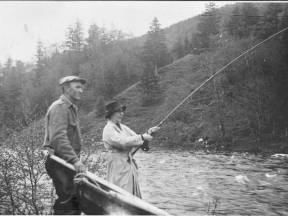
The salmon rich Rauma River has brought great joy to locals and visitors alike. The local landowners have harvested the rivers resources as a part of their farming for centuries, but at the beginning of the 19th century, both the river and the excellent salmon became popular with the wealthy English upper classes.
It was a status symbol for the British to travel and discover other countries. The pure nature here and the exotic villages with their salmon rivers were in stark contrast to the grey industrialisation of their homeland. Many were noble Englishmen or Lords, but by all means not all of them. However, in Norway there were all referred to under the common name of ‘ Salmon Lord’.
Most of them rented out fishing rights on the river, guides, overnight accommodation and staff to help them, but there were also some who bought farms with fishing rights.
They weren’t just anglers, but also explorers, hedonists and tourists. The English salmon Lords actually started tourism in Norway, and it was right here that it all began, along this and other fantastic Norwegian rivers.
This magical train journey gives you a unique insight into Norwegian history and culture where you can experience ‘the most Norwegian of Norwegian’. Mountains, valleys, rivers, waterfalls, and trolls. Trolls?
But what actually is a troll?
They are beings that have been a part of Norwegian folklore for thousands of years. And not just in Norway, across Europe and the rest of the world, similar beings have given humans wonder, fear and a bit of horror.
Trolls are often described as large, stupid, nasty, scary, and ugly, almost like monsters. In other cases the trolls are depicted as dwarf-like beings, also known as small trolls.
Regardless, trolls often represent a conflict in the battle between good and evil. Trolls often therefore die in battle, and not because their opponents are strong, but because they are smart, cunning, stubborn and persistent.
These stories feed the imagination and are strengthened by Norway’s changing and dramatic nature. Forests, mountains, and rivers all change character as dusk sets, and then both trolls and many other strange creatures appear.
According to the legend of the Troll Wall, it started with a troll wedding that got out of hand. The trolls partied and wandered so much that they didn’t notice that it was daylight, and as you probably know trolls cannot be out in sunlight. When the sun rose the whole wedding party was petrified and can still be seen to this day as part of the Troll Wall.
We will soon be passing two of Norway’s, or maybe even Europe’s most famous mountains. On the other side of the road towers the majestic Romsdalshorn mountain massif, whilst the 1700 metre high Trollveggen hugs the vertical and precipitous rock formations on the other side.
Trollveggen has Europe’s highest vertical drop of over a kilometre where parts of the mountain massif extend more than 50 metres out over the edge.
Both of the spectacular mountains have attracted climbers, base jumpers and other outdoor and extreme sports enthusiasts from around the world for several hundred years.
One of them, Arne Randers Heen, loved Romsdashorn so much that he climbed it a whopping 233 times, and built a small stone cabin with a garden on the mountain top. Talk about a room with a view!
Both Romsdalshorn and Trollveggen, have been the sites of unforgettable breath-taking feats for the record books, but unfortunately there have also been stories with tragic outcomes.
You can hear more about them if you visit the Trollveggen visitor centre, which also houses a cafeteria, souvenir shop and auditorium.
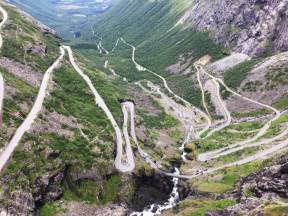
Now turn your gaze to the other side of the emerald green Rauma River, and look into the magical Isterdalen Valley which culminates in the engineering masterpiece that is Trollstigen.
The road, that is only open in the summer months rises 856 metres above sea level, through roaring waterfalls and 11 sharp hairpin bends, where busses literally hang off the roadside.
At the top you will feel fairly small, standing in the middle of five gigantic mountain massifs; Bispen, Kongen, Droninga, Stigbrottshornet and Storgrovfjellet, all of which rise nearly a kilometre further up towards the clouds.
Historically, Trollstigen is the old mountain pass between Åndalsnes down in Romsdalen and Valldal in Inner Sunnmøre. An important reason for the connection over Stega mountain was a large annual market that took place at Devoll Farm. But it was only after the opening of the road in 1936 that Trollstigen became an attraction in itself.
Every bend on Trollstigen actually has its own name, often named after the foreman of the work party that built that particular bend in the road.
Here, surrounded by majestic mountains, deep and lush valleys and emerald green rivers, lies Åndalsnes, or Tindebyen which is full of spectacular experiences.
The town was also at the centre of one of the second world war’s largest battles, during which the whole of Norway’s gold reserve was at stake. In dramatic fashion, Norwegian and English soldiers together with hundreds of heroic volunteers managed to save the Norwegian gold and cash reserves, whilst howling German bombs squealed around them leaving the whole town in ruins.
Both the town and the steadfast people rose up again and to this day exist as a hub between the fantastic Norwegian mountain experiences both in Summer and Wintertime. The idyllic fjord centre has all you need and more.
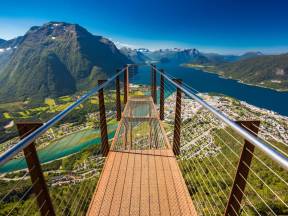
We recommend the spectacular walk up the Romsdalstrappene to the Rampestreken viewpoint, which literally hangs out 8 meters in the air, giving you an eagle’s eye view over Åndalsnes and the beautiful Romasdal fjord. On your way down again we recommend taking the award winning Romsdal Gondola for all of you without a fear of heights.
And if you should hear some rough guitar riffs or some banging dance tunes, then maybe Raumarock or another of Åndalsnes’ famous music festivals is taking place.
The Rauma Railway - Europe's most beautiful train journey
The Rauma Railway - Europe's most beautiful train journey