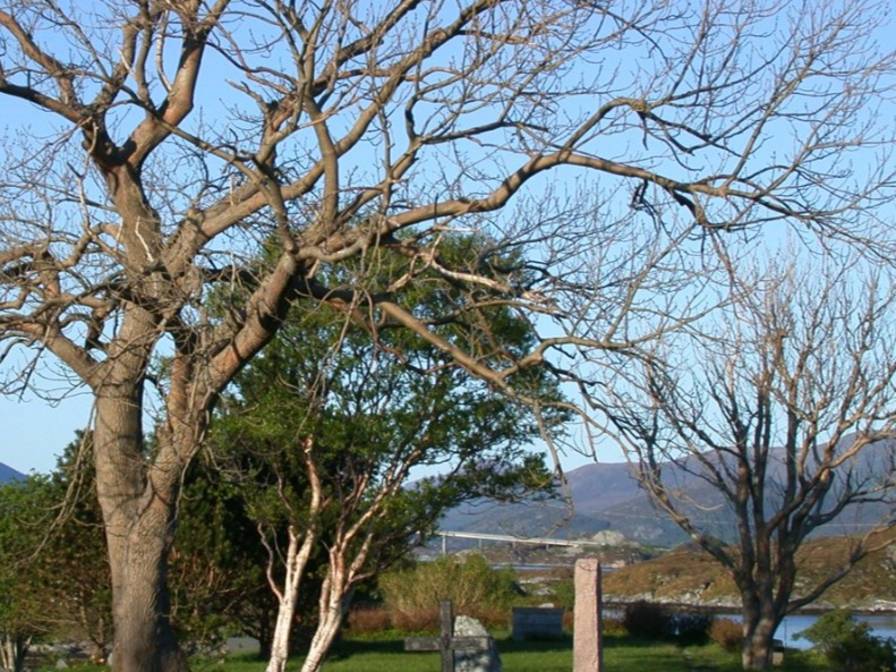
The Marble Church on Herøy
0
Legend tells of three sisters who drifted out to sea, helplessly lost after a shipwreck. They promised that if they made it to land alive, they would build a chuch in the place that they came ashore. One of the sisters made it to Kinn, another to Giske and one to Herøy. These are three places along the coast with churches dating from the early Middle Ages. The building of the marble church on Herøy could have begun as early as the 11th century. The church was devoted to Mary and was built in the same style as churches in England and Ireland. In the middle of the 19th century there was an order from the state that churches should have a designated number of seats according to the population. Therefore, the old church was too small and had to be demolished. The stone was used in the foundation wall of the new church, which was built just a few metres away. It was later moved, and now only the walls remain. Within the walls you can see finely carved marble stones from the church that was built there nearly a thousand years ago. On the site of the old church, the outline of the marble church is marked in slate. The altar is there too with a large stone slab from the marble church as an altarboard. In the middle of the stone there is a depression. That is where the relics were placed. The residents of Herøy have been gathering for church services on the island of Herøy for almost 1000 years. And it was possibly a religious gathering point prior to that also. It was usual to build churches at the ancient Pagan places of worship, and many believe the Goddess Frøya was worshipped here on Herøy before the church was built. Today, Herøy is a key point on the stretch of the coastal pilgrim path that runs from Stavanger from Nidaros and pilgrims can get their pilgrim passport stamped in Havlandet.