Thank you for choosing The Fjords.
We wish all passengers a pleasant day, either your cruise is ahead or if you're leaving the boat for new experiences in the beautiful metropole of Oslo.
Please follow the crew’s instructions on departure and arrival.
We are now looking into Bjørvika, where a completely new district has sprung up from the former container port that was here in the old days.
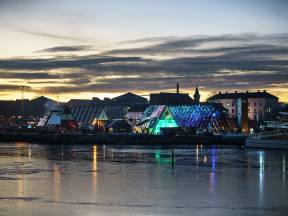
At the bottom of the cove, you can see the barcode skyline, and in front of it, the Oslo Opera House, and the Munch Museum.
To the right of the Munch Museum, we see Bispevika and the Bay of Oslo, which move into the brand-new district of Sørenga with its distinctive sea baths.
On the opposite side of the bay, you'll find Salt, a brand new cultural village with six stages, restaurants and a steaming sauna.
If you look towards the five islands to the east, you will see Hovedøya closest to the centre of Oslo.
The island has a permanent boat connection with Oslo and an abundance of inviting beaches surrounded by beautiful woodland and a rich cultural heritage.
You can wander freely through large parts of the island, but part of the island is a nature reserve where the rich fauna is protected.
We are now passing Bygdøy, here you can find world-class cultural heritage, such as Viking ships and other Viking treasures, the iconic exploration boats Fram and Kon Tiki, as well as Norwegian houses from a whole millennium.
Alongside the idyllic beaches you can also find Bygdøy royal farm.
The monarchy has always been strong in Norway. The slogan for the Norwegian kings has always been "Everything for Norway".
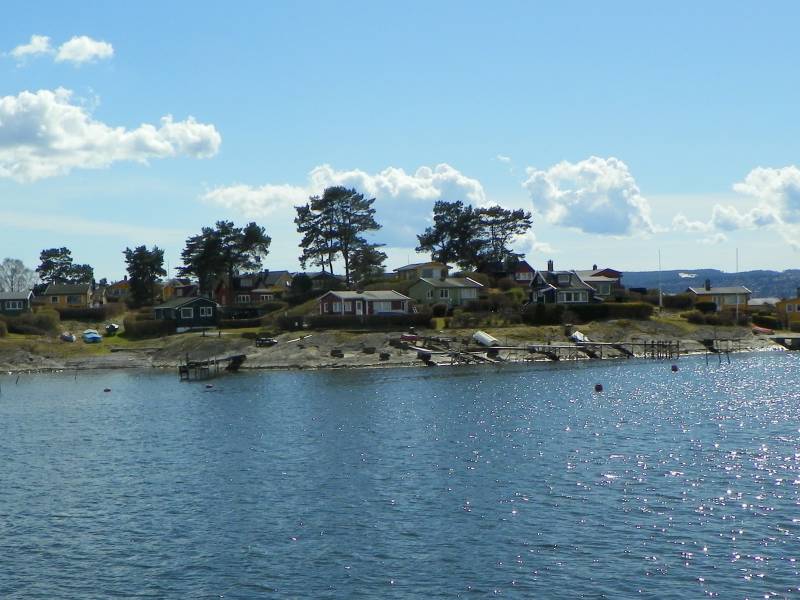
We are now passing the islands of Nakkholmen and Lindøya which are covered with almost 500 cabins.
The islands were regulated for cabin use early in the 1900s with strict restrictions.
Life at the cabin is often characterised by its closeness to nature and a break from city life.
Towards the mainland you can now see Huk, where you will find one of Bygdøy’s most inviting swimming beaches, and it is here you will also find one of Norway’s most famous nudist beaches.
The Oslo fjord is full of beautiful beaches, but according to international beach ratings, some of the world’s best beaches can be found in Vestland and in the harsh north of the country.
Why travel to Spain or the Maldives when you can experience several of the world’s most beautiful beaches here in Norway?
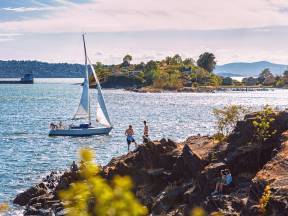
Today there are an amazing million pleasure boats in Norway, which equates to a boat per every sixth person.
No other country can match such a boat density!
Norway has been a world leading boating nation since Viking times, when Norwegian Vikings spread fear and unrest across the continent.
During the second world war, Norway already had the world’s fourth largest fleet of ships, which were commanded by the Norwegian government from London.
You will find more information about this topic in our free audioguide.
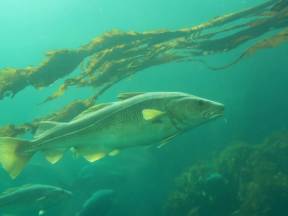
It is easy to be awed by all the things around you as you travel through the beautiful Oslo Fjord, but have you thought about what can be found underneath us?
You might think of fish, crabs, and seaweed, but just as it is above the sea line, the underwater kingdom is also teeming with life, stories, and mysteries that we only know the tip of.
Follow our free audioguide to learn more about the life underneath us.
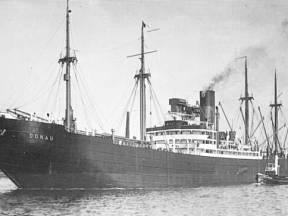
On the 26th of November 1942 the German cargo ship DS Donau sailed past this exact spot.
On board were 532 unsuspecting Norwegian Jews, crammed together into the cargo hold on their way to the concentration camp at Auschwitz, 303 men, 188 women and 42 children.
They arrived on the 1st of December 1942 and the women, children and elderly were sent directly to the gas chambers. Of those who left only 9 returned to Norway.
DS Donau was later sunked by the norwegian resistance movement.
We are now passing Vippetangen, which is an old historic area in Oslo with a fascinating history.
The area has been in use since the Middle Ages as an important port and trading post. In the 17th century, a customs station was established here, and Vippetangen became an important hub for trade and transport.
During the 19th century, Vippetangen was developed into a modern harbor with quays and warehouse buildings.
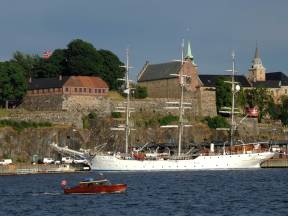
Up on the hill to the right, you now see Akershus Castle and Fortress. The construction of this majestic medieval royal stronghold began in the late 1200s, carrying a long and exciting history. Over the years, it has served as a royal residence, a defensive fortress, and a prison. Today, the Akershus Castle area houses the Defense Museum, Akershus Church, Norway's
Home Front Museum, Karpedammen, cultural agencies, and several restaurants.
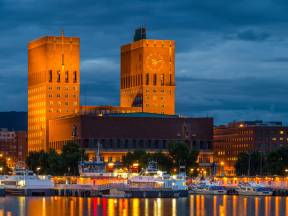
At the innermost part of the bay, you can see Oslo City Hall with its monumental sculptures guarding the impressive building. The City Hall is a gem and a symbol of Norwegian architectural history. Completed in 1950, it is known for its distinctive clock tower and beautiful brick facade.
To the left of the City Hall is the Nobel Peace Center, a museum dedicated to the heroes who have received the Nobel Peace Prize for their remarkable work in peace and conflict resolution. . The museum is surrounded by the largest art museum in the Nordic region, "Nasjonalmuseet" or the National Museum.
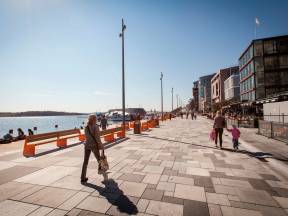
At west you may now see Aker Brygge, which was built on what used to be the shipyard, Akers Mekaniske Verksted. Today the area is dominated by restaurants, shops and beautiful apartments.
Extending from Aker Brygge is Tjuvholmen, which also has an interesting history. It was once an abandoned part of Oslo but has now been transformed into a modern and artistic area.
Here, you'll find many art galleries, a sculpture park, modern architecture, and a variety of excellent restaurants and cafes. Also located by the waterfront is the Astrup Fearnley Museum, a modern art museum.
If you turn your gaze towards the land and up, you will spot the impressive ski resort, Holmenkollen.
Behind Holmenkollen lies Frognerseteren, a historic landmark turned into a living museum area, blending modern elements with the surrounding nature.
In the middle of the forest, Roseslottet stands in gold, featuring over 300 monumental artworks dedicated to democracy, legal security, and humanism.
A little further up in Åssiden is Skimore’s facility at Tryvann, offering inviting alpine slopes for both adults and children.
We are now on the peninsula of Bygdøy, where you can delve into Norwegian history.
Here, you'll find the "Norsk Folkemuseum", one of Europe's largest and oldest open-air museums and a national cultural history museum.
Right by the fjord is the Kon-Tiki Museum, allowing you to get to know one of history's most famous explorers, Thor Heyerdahl.
You can also see The Fram Museum that focuses on other maritime explorers, or The holocaust Center is an important institution with exhibitions and events that convey the history and consequences of the Holocaust, genocide, racism, and other abuses against minorities.
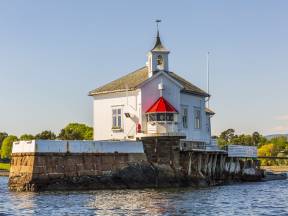
Now we come to the journey's most popular insta-moment, Dyna Lighthouse.
The lighthouse is one of Norway's 212 lighthouse stations throughout history. It was built in 1874 and consists, as you can see, of a fog bell, a beacon, and a residence for the lighthouse keeper and their family. A lighthouse keeper lived here, ensuring that the light was lit and the tower clock was wound up.
The lighthouse was fully automated in 1956, and that's when the lighthouse staff moved out. It stood practically empty until 1992 when some clever minds decided that the lighthouse could be suitable as an event venue.
We are now passing Gressholmen and Heggholmen Lighthouse.
It was actually an airport here! When it was built in 1927, it was also Norway's first scheduled airport.
Heggholmen Lighthouse was built in 1876 and has both a light and a fog bell to safely guide boats into the Oslo harbor. The bay between the islands is an important nesting and grazing area for seabirds. Over 160 different bird species have been recorded, and 340 different plant species documented on the islands. Because of this, the area is registered as a nature reserve, and camping or lighting fires on the islands is not allowed.
We are now passing the charming beacon, Kavringen, which has been blinking year-round since 1892 to protect boats from the reef it stands on.
Soon, we'll be heading towards the city center, and you will be able to see one of Oslo's most famous vantage points, Ekeberg, located on the slope to the right of the center.
From Ekeberg, there are beautiful roads and romantic paths leading down to the city center and Ekeberg Park, and from there, you can follow the road all the way down to the Medieval Park.
Then, you are just a stone's throw away from the opera house and our docking point in Bjørvika.