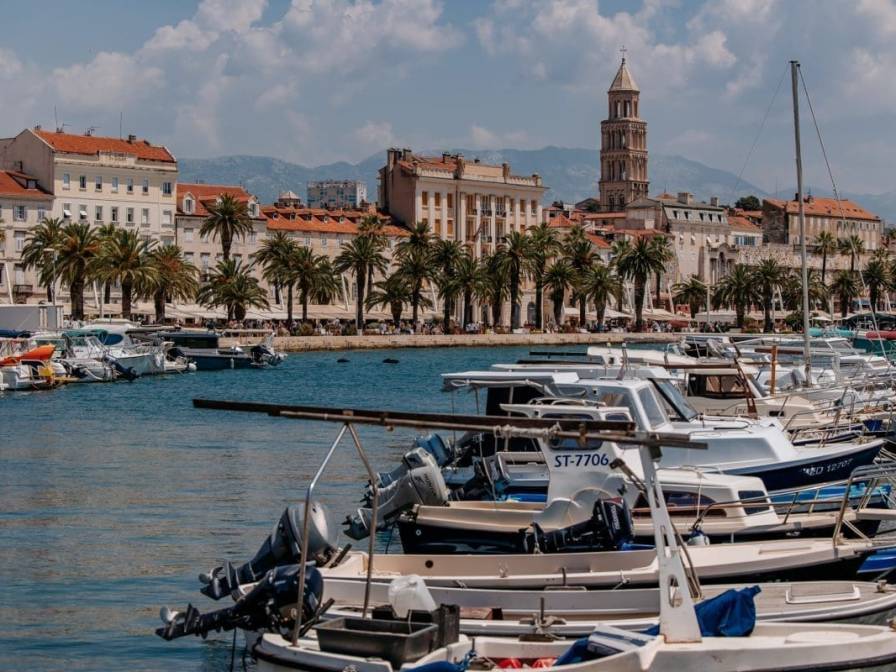
Leaving Split Harbor: Croatia, Split & the Adriatic Sea
0
As we slowly leave Split harbor, take a moment to look back at the city — this view tells the story of Split better than any postcard. Split is one of the oldest continuously inhabited cities on the Adriatic coast, with a history stretching back more than 1,700 years. Its story begins when the Roman emperor Diocletian chose this coastline as the place to build his retirement palace. Over time, people moved into the palace itself, turning imperial walls into homes, streets, and squares — something almost unique in the world. Through centuries of Roman, medieval, Venetian, and later European rule, Split never lost its bond with the sea. The Adriatic was the city’s lifeline: a source of food, trade, defense, and connection to the wider Mediterranean world. Today, Split is Croatia’s second-largest city and the main gateway to the central Dalmatian islands. Ferries, fishing boats, cruise ships, and speedboats continue a maritime tradition thousands of years old. Croatia as a whole is deeply shaped by the sea. Despite being a relatively small country, it has one of the longest and most indented coastlines in Europe, with more than a thousand islands creating countless bays, channels, and natural harbors. The Adriatic Sea is known as one of the cleanest seas in Europe. Its rocky seabed, limited tides, and constant circulation keep the water exceptionally clear, often allowing visibility of several meters below the surface. Below the surface lives a rich but gentle marine world — small colorful fish, octopus hiding among rocks, sea urchins, and delicate coral-like formations. Dolphins are also frequent visitors, especially in quieter island areas. As we begin our journey today, we follow sea routes used for thousands of years by Roman ships, medieval traders, and local fishermen. Leave the city behind, breathe in the sea air, and let the Adriatic set the rhythm for the day.