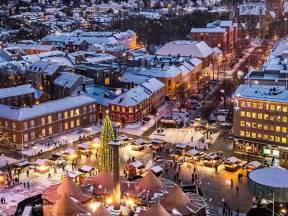
Step into Trondheim, a city rich in Viking heritage, royal history, and stunning architecture. Once the capital of Norway, this charming city blends medieval landmarks, waterfront beauty, and vibrant culture. This GPS-guided walking tour, in collaboration with Visit Trondheim, provides an immersive journey through Trondheim’s fascinating past and present.
With the GuideToGo app, you’ll experience high-quality professional stories and productions, bringing Trondheim’s history, legends, and cultural treasures to life in 14 languages.
HIGHLIGHTS
⛪ Nidaros Cathedral – Norway’s National Shrine
Visit the awe-inspiring Nidaros Cathedral, the final resting place of Saint Olav, Norway’s patron saint, and a key pilgrimage site in Scandinavia.
🏰 The Archbishop’s Palace
Explore one of Scandinavia’s best-preserved medieval palaces, home to centuries of political and religious power.
🌉 Gamle Bybro & Bakklandet
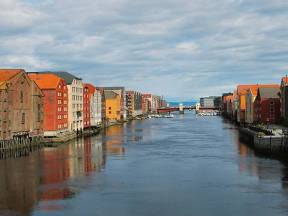
Cross the charming Old Town Bridge and wander through Bakklandet’s colorful wooden houses, a historic district filled with cozy cafés and unique shops.
⚓ Trondheim Fjord & The Harbor
Discover Trondheim’s maritime legacy and how it became a major trading hub during the Viking Age.
🏞️ Kristiansten Fortress (Optional uphill walk)
Enjoy panoramic views over Trondheim from this 17th-century fortress, built to protect the city from invaders.
ABOUT THE TOUR
Starting from any location in Trondheim city center, this self-paced walking tour allows you to explore Trondheim at your own speed. Listen to captivating stories as you stroll through the city’s most famous landmarks and hidden gems.
INCLUDED
✔️ GPS-guided narration with high-quality professional voice-over in Norwegian and english.
✔️ Available in 12 more languages with the best AI voices the market kan provide.
✔️ Self-paced tour – start and pause whenever you like.
NOT INCLUDED
❌ Entrance fees to museums or attractions.
❌ Food, drinks, or personal guide services.
PRACTICAL INFORMATION
Duration: Approx. 120 minutes.
Starting point: Anywhere in Trondheim city center.
Languages: Available in Norwegian, English, German, French, Spanish, Italian, Chinese, Japanese, Ukrainian, Russian, Arabic and Polish.
📲 Ready to explore Trondheim? Download the GuideToGo app and experience Norway’s Viking capital with a premium audio guide!
Before:
https://experio.page.link/ZDW9V9r9BZZocw9E7
Audio guides available in:
Deutsch , Arabic, 中文, 日本語, Polski, русский, Français, Español, Italiano, Українськa, 한글 , Norsk bokmål, English (British)
To find more content and listen to free audio guides, download the Guide To Go app.
Highlights of Trondheim, ultimate collection
Points of interest
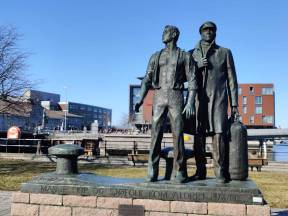
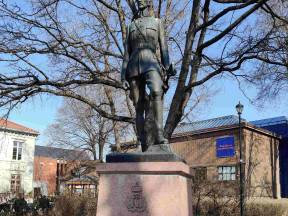
War Sailor Monument
The War Sailor Monument was erected in 1981 to commemorate all war sailors during the First and Second World War. The title war sailor was used for people who traveled on merchant ships, often in convoy with military or civilian supplies to one of the warring parties.
The Norwegian merchant fleet came early under allied control because the Norwegian exile government in London requisitioned all Norwegian ships under a new joint state shipping company. The Norwegian captains were not enticed to return to an occupied country, but continued to sail under the Norwegian flag to contribute to the liberation of Europe.
4134 Norwegians and about 60,000 allies lost their lives at sea. The strain of sailing under the constant threat of being sunk by enemy bombers, torpedo boats, and submarines was probably indescribable.
Many war sailors therefore suffered long-term effects from the stresses. The surviving women and children also suffered great strains. The families not only lost their loved one, but also their source of income during difficult times.
Close your eyes for a little minute. Try to imagine the nightmare it must have been when enemy bombers flew over the boats.
The sculpture was made by Kristofer Leirdal.
The Justice Museum: Exploring Crime and Punishment
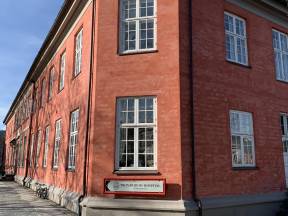
You’ve arrived at the Justice Museum, a fascinating gateway to Norway's legal history, spread across two historic buildings: the Criminal Asylum and the Military Hospital. Tickets are purchased at the Military Hospital and grant access to all exhibitions.
Ever wondered how crime and punishment have evolved in Norway? This is the place to find out. The museum features captivating exhibits, from the brutal methods of medieval justice to the principles of modern law. Step into authentic prison cells, admire historic weapons and uniforms, and feel the atmosphere of the Criminal Asylum.
Can you imagine the dramatic trials that shaped our society? The Justice Museum offers a deeper understanding of how the long arm of the law has influenced our lives.
The Olav Tryggvasson monument
Olav Tryggvasson was Norway's king from 995 to 1000 and is considered the city's founder. The monument is 18 meters high, and the sculpture where Olav is enthroned at the top is wearing a sword and the severed head of Tor the God.
It will symbolize the end of the pagan era in Norway and the start of the Christianization of society.
Olav Tryggvasson was formerly a Viking chief and sources link him to many Viking voyages, including a voyage where he traveled as a Viking to England with 93 ships.
He plundered his way from Sandwich, through Ipswich, to Maldon. He later attacked London with 94 ships, and the English king finally made a peace treaty with Olav and his men. In Norway, the then king, Håkon Sigurdsson Ladejarl, was treacherously killed by his own people, and Olav took over as king when he returned.
He was married to the Danish princess Tyra Haraldsdatter. Her father was Harald Bluetooth. Olav Tryggvasson died in a naval battle in the year 999, only approx. 40 years old.
The monument to Olav Tryggvasson was designed by the sculptor Wilhelm Rasmussen and was erected in the Market Square in Trondheim in 1921.
The Defence Museum Rustkammeret: Norway's Military History
Here at the Archbishop’s Palace, you’ll find Rustkammeret, one of Norway’s oldest museums. With roots dating back to 1826, the museum has undergone several transformations. Its current location opened after extensive renovations in 1968 and features the impressive Hall of Flags and Memorial Hall, established in the 1970s.
Rustkammeret takes you on a journey through centuries of Norwegian military history – from medieval battlefields to modern defense technology. Highlights include weapons, uniforms, and artifacts from the Union Wars and World War II. The museum also explores the military’s impact on Trondheim and Norway as a whole.
Discover historic artifacts and exhibitions that vividly portray the lives of soldiers and the evolution of military technology over the years.
The Science Museum: From Past to Future
You are now standing at the Science Museum, part of NTNU and one of Norway's oldest university museums. Founded in 1767, the museum offers insights into both natural history and cultural heritage. Its exhibits span from prehistoric discoveries to modern science and technological advancements.
Inside, you can explore everything from ancient Viking treasures and archaeological finds to fascinating fossils and wildlife from Norway and beyond. Have you heard the story of Tora, the medieval woman? Through the exhibit, you’ll gain a unique glimpse into the life of a woman from the Middle Ages, based on discoveries from the Trøndelag region.
The museum is also renowned for its temporary exhibitions, covering topics like climate and environment, innovation, and the challenges of the future. This is where history and science come together to inspire and fascinate.
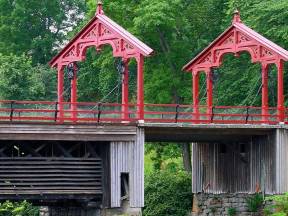
Old citybridge
The old city bridge crosses the Nidelva river between Bakklandet and Kjøpmannsgata. The bridge was built in 1681 and is a well-known landmark in Trondheim. It has gone through several restorations and was open to car traffic right up until 2014. Today, the bridge is only used as a pedestrian and cycle path.
The bridge goes by the name "Lykkens portal" after Trondheim's well-known city song "Nidelven - quiet and beautiful you are". Houses were built on each side of the bridge which were used as toll houses or guardhouses. In the 18th and 19th centuries, all goods brought into the city were taxed.
At the entrance from Kjøpmannsgata, the one axis house still stands. It was first used to house the guard forces. Later it functioned as a dike master's residence, i.e. a residence for an officer in the engineering corps. The dike master lived here until 1968, when the home was taken over by a nursery school.
The Jewish Museum
Welcome to the Jewish Museum in Trondheim, located in the city’s old synagogue from 1925. The museum is a tribute to the Jewish community in Norway and a reminder of their significant contributions to Trondheim’s history.
The exhibitions share stories of Jewish culture, traditions, and faith, while also shedding light on the darker chapters of history, such as the deportations during World War II. One of the museum’s most poignant features is the memorial wall, displaying the names of Norwegian Jews who were killed during the Holocaust.
Have you ever considered how a small group of people can leave a profound mark on a city’s identity? Through artifacts, photographs, and personal stories, the museum invites you to explore a rich cultural heritage that both inspires and moves.
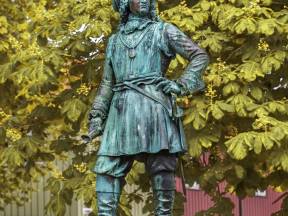
The Tordenskiold monument in Trondheim
Peter Wessel Tordenskiold was an admiral in the Danish-Norwegian fleet and born in Trondheim in 1690. His father was a loyal man and was both a merchant, councilor and ship owner. He had a total of 18 children.
Peter hired his father's boat at an early age and as a 15-year-old he served on several slave ships before starting the sea cadet school in Copenhagen.
The path was then short to the navy, where he quickly rose through the ranks, and he eventually became an admiral. Peter was known to be a very good sailor and is often described as brave, quick-witted and cunning.
As commander-in-chief, he led the fleet to several victories against the Swedes and is credited with having sunk the entire Swedish fleet in Gothenburg. This also strongly contributed to the fact that the Swedish king Karl XII gave up the attempt to conquer Norway.
Perhaps he was a little too bold at times. He died in Germany in 1720, only 30 years old, after losing a duel in which a rapier was used.
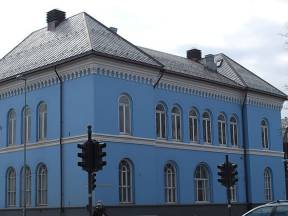
PoMo: Trondheim’s New Art Museum
You are now standing in front of Trondheim’s old and iconic post office, which has been transformed into a modern art museum. Here, history and contemporary art merge, leaving a lasting mark on the city’s cultural evolution. PoMo is a space for groundbreaking creativity and a gathering point for both Norwegian and international artists.
The museum offers a dynamic selection of exhibitions, ranging from thought-provoking installations to interactive multimedia experiences. PoMo aims to challenge perceptions, spark conversations, and provide visitors with a unique journey through the diverse expressions of modern art.
The name PoMo reflects the postmodern art movement, where tradition meets innovation to create a space where art feels alive and relevant. Whether you’re an art enthusiast or simply curious, PoMo promises an inspiring and unforgettable experience.
Bakklandet
You are now on "Bakklandet", Trondheim's first suburb. Today, the area has merged with the city centre. It was not until 1847 that Bakklandet was incorporated into the city. Ancient history can be found here in both old factory buildings and homes, but today adapted to our modern world.
There has been a lot of activity here since the Middle Ages, among other things there was a brickworks here that produced bricks. Later, both shipyards and many other industries were established. Today you see the old factory buildings as shops, restaurants, offices and homes.
Here there was a teeming life in the old days. There were wharves and trading activities all along the river, and behind were all the homes for craftsmen, small merchants and other working people.
Bakklandet has been set on fire and burned down twice, first by Swedish troops in 1658 when they besieged the city, and later in 1718 when Norwegian forces set fire to the area as part of the defense of Trondheim.
Today, Bakklandet is a popular area for both tourists and locals. Here it is brimming with creativity, trade and good meeting places.
Archbishop's Palace
The Archbishop's Palace is a stone castle complex built in the early 13th century, and has served as the residence of archbishops, sheriffs, and has also been used as a warehouse.
Today, the oldest part, the Nordfløya with its massive stone staircase, is used as a banquet hall for important receptions and dinners.
In 1556, the Archbishop's Palace became the residence of the sheriff and was therefore called the King's Farm. Between 1614 and 1625, major renovations were carried out to transform it into a Renaissance castle.
The buildings have been exposed to several fires, and in August 1983 parts of the complex were destroyed, leading to the loss of irreplaceable cultural relics and historical material. Two large wooden buildings, the Southern and Eastern Storage Buildings, burned to the ground.
For over 800 years, the Archbishop's Palace has been a meeting place for powerful men and a venue for important meetings and grand parties. Now, the building hosts exhibitions of several national treasures, including the coronation regalia of King Haakon and Queen Maud.
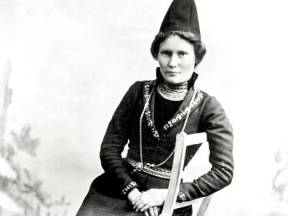
Lilletorvet Elsa Laula Renberg Square
We are now standing in what must have been a central place in the city. In the streets and squares, market trading took place, where goods were sold from small booths. Excavations from medieval streets suggest that the trading place in Nidaros was a meeting point for people from different places. Both skeletal material from the cemeteries and finds from the trading places indicate that Nidaros had international contacts.
There is a significant Sami presence in the archaeological material from the city ground. The Sami traditionally engaged in reindeer husbandry in the mountains and fishing along the coast, and they also visited the cities for trading.
The Sami culture has its own mythology, and Sami influence is known from the archaeological material from the medieval city. They are considered an indigenous people of Norway. The norse sagas mention the Sami as a people with great knowledge and special magical abilities, often consulted for advice by the Norwegian kings. Sami culture has been subjected to numerous abuses through taxation and deprivation of land, water, and grazing areas. The assimilation policy of the Sami intensified in the 1700s and 1800s, marking a dark chapter in Norway's history. The place where we stand is now called Elsa Laula Renbergs plass, a tribute to the woman who, in 1917, convened a large Sami meeting in Trondheim, laying the foundation for what we now know as the Sami Parliament.
The Norwegian Deaf Museum
Imagine you couldn’t hear – what would the world look like then? The Norwegian Deaf Museum, located in Trondheim’s former main school for the deaf from 1855, offers a unique insight into the history, language, and culture of the deaf community. Here, past and present come together in exhibitions that highlight the deaf community’s struggle for rights and inclusion.
The museum features interactive experiences where you can explore Norwegian Sign Language, learn how deaf people have communicated throughout history, and discover the technological aids that have transformed their lives.
Did you know that Norwegian Sign Language is a fully-fledged language with its own grammar and history? The Norwegian Deaf Museum is not just a place for learning but also an important space for reflection on inclusion and diversity.
Vitensenteret, The Science Centre
Welcome to Vitensenteret, the Science Centre, one of the city’s most popular attraction for children, youth, and families. Here, science and technology become pure fun through exciting experiments and hands-on activities that captivate visitors of all ages.
The centre is filled with interactive exhibits covering everything from physics and chemistry to technology and space exploration. Have you ever tried creating a tornado, controlling a robot, or experiencing gravity in action? At the Science Centre, you can explore complex phenomena in an engaging and accessible way.
Whether you’re looking to be inspired by the magic of science or simply enjoy some fun experiments, the Science Centre promises an educational and unforgettable experience for everyone.
Leiv Eiriksson
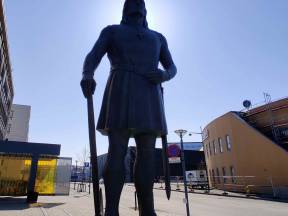
The Viking Leiv Eiriksson stands determined and looks out over the fjord here in Trondheim harbour, ready to discover and conquer new lands. Leiv set out from Trondheim harbor on his historic journey to North America in the year 1000.
He thus probably became the first European to set foot on American soil, specifically Newfoundland on the east coast of Canada. He himself gave the country the name Vinland, which can mean "the land of the grasslands".
Leiv was born in Iceland in the year 973 and was the son of Eirik Raude. The father became an outlaw in Iceland and had to flee. Leiv was then raised in Iceland by a knowledgeable man named Tyrke. Here he learned both language, runic writing, knowledge of nature and how to handle weapons. All this was knowledge Leiv took advantage of on his travels.
Some will probably still claim that Christopher Columbus discovered America, and American school children still learn that. Later research shows that this is wrong, at least this is a widespread opinion here in Norway. Several dated finds in Newfoundland support this.
Leiv Eriksson died in the year 1020, aged 50.
The statue you see here is a copy of a similar statue that stands in Seattle and was made by August Werner.
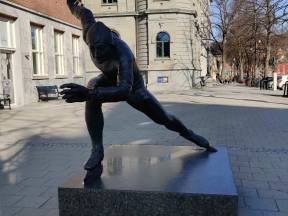
"Hjallis" Hjalmar Andersen
Hjalmar Andersen, or Hjallis as he was popularly called, was one of the best and most popular skaters of all time. He was born in Nordland in 1923, but grew up in Trondheim. He debuted as a skater after the war and showed incredible talent. He quickly joined the Norwegian national team and received silver in the EC as early as 1948.
Then it went blow after blow with big titles and world records. He won all the NM, EC and WC three years in a row in the years 1950 – 1952, and not only that, he won three Olympic golds in Oslo in 1952. During that period he was, so to speak, unbeatable at 10,000 meters and won 50 races in a row! Beat that!
Hjallis was also a skilled cyclist and rower, and ended his active sports career as a rower. He received several awards for his efforts and received Egeberg's Honorary Award for outstanding efforts in two sports.
After his career, he published several books and was a frequent and popular TV guest where good stories came on a conveyor belt.
Hjallis was undoubtedly one of Norway's most popular athletes of all time. He left this world in 2013 and was buried at the state's expense.
Peter Egges Square
On the square where we are now standing, there has been settlement since the 10th century. The cultural layers were very thick, and a multitude of archaeological finds have been made here.
Large parts of the area were excavated archaeologically from 1970 to 1985. Several skeletons were found, revealing much about both diet and living conditions in the Middle Ages. Many people suffered from various injuries and diseases, and the skeletons bear the marks of lives filled with heavy physical labor. Gout was common.
Although dental caries almost did not exist, the teeth show significant wear. The diet typically consisted of flour-based food, containing a lot of stone dust, which wore down the teeth. Many teeth had large cavities, and many suffered from painful dental abscesses.
There were many traces of craftsmanship in this area. Craftsmen were an important part of urban society, and traces of metal, bone, and leather production were found, made by comb makers, tailors, and shoemakers. There were also likely individuals working with walrus ivory.
Medieval buildings were constructed using both log and timber framing techniques. A reconstructed part of the city can be seen in the medieval exhibition at the Science Museum. Chess pieces, jewellery, and many traces of trade have been found in this part of the city. Three Sami bone spoons were also found here. Where the Public library stands now, eight objects with runic inscriptions were found as well.
Trondheim Art Museum – Bispegata
Welcome to Trondheim Art Museum in Bispegata, home to the permanent collection spanning over two centuries of art. Here, you can admire iconic works by renowned Norwegian artists such as Edvard Munch and Harriet Backer, alongside modern expressions from our own time.
The exhibitions offer a fascinating insight into how art has reflected societal changes and how various artists have interpreted the world around them.
The museum also has another location, Gråmølna, a short distance away, which focuses on contemporary art and temporary exhibitions. There, you can explore innovative artworks that challenge ideas and invite reflection on our time and surroundings.
Trondheim Art Museum – Gråmølna
You are now at Gråmølna, the contemporary art branch of Trondheim Art Museum. Here, you can explore temporary exhibitions and innovative works that challenge conventional ideas and inspire reflection.
The exhibitions change regularly, featuring both Norwegian and international artists. Gråmølna is a dynamic arena for modern art, where you can experience how today’s artists interpret and question some of the most pressing issues of our time. This is the perfect place for those seeking to be surprised, inspired, and engaged.
The museum also has a location in Bispegata, a short distance away, where you’ll find the permanent collection spanning two centuries of art. There, you can enjoy iconic works by renowned Norwegian artists such as Edvard Munch and Harriet Backer, alongside modern expressions from recent times.
Stiftsgården
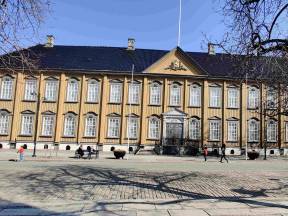
Stiftsgården is the Nordic region's largest wooden palace or palace, built in the years 1774-78, and then in 1906. The building is Trondheim's official royal residence, but is also open to tourists in the summer season. Visitors can enjoy the interior and the centuries-old decorations.
The building was built for the Danish-Norwegian noblewoman Cecilie Christine von Schøller. She inherited a substantial amount from her late husband which financed the construction of the diocesan farm. She later moved to Copenhagen and received several noble commissions.
In the year 1800, the Stiftsgården was taken over by the state and used partly as a residence for the Stift Samtman, and partly as a residence for the royals. From 1906, the palace with its 140 rooms has exclusively been Trondheim's official royal residence.
The 4,000 sq.m. The large Stiftsgården has been the center of a number of royal events, including four coronations and two royal blessings from 1818 to 1991.
Our Lady's Church
Our Lady's Church is a stone church that was built in about 1200. Besides Nidaros Cathedral and Lade Church, this is the only church from medieval Trondheim that has survived to this day.
From the 15th century onwards, the church has been referred to as Our Lady's Church. The church has been ravaged by fire several times, but has been rebuilt each time.
The church has an original inscription in the wall which states that the church was given to Saint Mary and is referred to as the younger Mary church. The tower you see was completed in 1742 and at the time had a flat roof with a viewing pavilion.
Both the exterior and interior are characterized by the over 800 years of history that the building represents, but both the art, sculptures and interior testify to the strong significance the church had for the local population.
Around the church there was originally a cemetery, but the town grew and pushed closer to the church. The last burial took place in 1830 and the cemetery was closed a few years later.
Today, the area is laid out as a park where some of the old supports are still intact. In the basement, there are still several elaborate burial vaults that are referred to as Trondheim's catacombs.
King Haakon VII - Statue
King Haakon VII was Norway's first king in 600 years after the liberation from Denmark in 1814 and the dissolution of the union from Sweden in 1905. He was born on 3 August 1872 outside Copenhagen. His name was originally Prince Carl, and he was the second eldest son of the then King Frederik and Queen Louise of Denmark.
In 1905, the Danish prince Carl was offered the Norwegian crown and took the name Haakon VII after a referendum. He was married to Queen Maud, daughter of King Edward VII and Queen Alexandra of Great Britain. When they arrived in Oslo in 1905, they were met with cheering crowds and ringing church bells from all over the city.
The couple was officially crowned in Nidaros Cathedral in Trondheim on 22 June 1906 after a longer coronation journey through Norway.
King Haakon VII was a popular king in both good and bad times. During the occupation of Norway during the Second World War, he accompanied the government to England where, together with the allies, he contributed greatly to the liberation of Europe.
The king adopted the slogan "All for Norway" which he followed until his last breath on 21 September 1957.
Only text : Artist: Stinius Fredriksen - 1972
Park, Marinen
Did you know that Marinen is home to Pstereo, one of Norway’s coolest music festivals?
Idyllically located along the Nidelva River, right next to the majestic Nidaros Cathedral, Marinen is one of Trondheim’s most beloved parks. The large open lawn is perfect for picnics, frisbee, volleyball, or simply enjoying the sun.
Marinen also boasts a rich history, with traces of Trondheim’s past visible along the riverbank. On summer days, the park is filled with students, families, and tourists soaking up the beautiful views of the river and cathedral. During the Pstereo festival, the area transforms into a vibrant stage with music, dance, and festive vibes – an unforgettable experience.
Marinen is a park that blends nature, culture, and history, always offering something special.
Go`dagen (Good Day) Statue
The sculpture is colloquially known as "Torgkona", which translates to "Market Woman" or "Square Woman" in English. The model for "Go'dagen", meaning "Good Day" in a friendly and informal way, was Anna Kornelia Holm, a woman from Skjervøy in Troms. She came to Trondheim as a young girl to work as a maid. She never actually worked as a "market woman", as the nickname might suggest, although some have believed so.
Instead, Anna spent much of her retirement in the square in Trondheim, or she sat on a bench by the Nidaros Cathedral. Everyone who greeted her received a cheerful "Go'dagen" ("Good Day") in response.
The sculptor, Tone Thiis Schjetne, had noticed the woman who walked around greeting people. She wanted to create a study of her, and in 1957 Anna Holm posed as a model for her. Many recognize this woman, as the artist has succeeded in making her a universal figure.
Just give it a try. Say hello to the "Market Woman", and you might get a cheerful "Good Day" back.
Artist: Tone Thiis Schjetne - 1983
Gåsaparken
Here you’ll find one of Trondheim’s hidden gems, Gåsaparken, or the goose park.
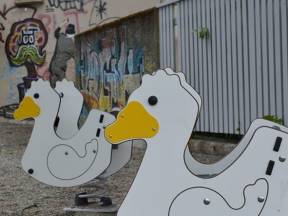
This small park, located on Bakklandet by the Nidelva River, got its name from a very special goose that was once world-famous. The goose, owned by the founders of Kafé Gåsa, proudly wandered the area and gave its name to both the café and the park. Today, the goose is back in the form of sculptures – quiet but still a delight for the youngest visitors.
Although Gåsaparken is small, it is an essential green space for locals. The park features flowers specifically chosen to attract bees and bumblebees, offering plenty of pollen, nectar, and delightful fragrances. In the summer, it’s a popular spot for sunbathers, relaxation, and even concerts, especially during the Bakklandsdagene festival. It’s a peaceful retreat in the heart of the city, perfect for a break in charming surroundings.
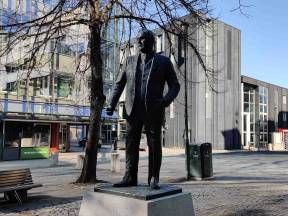
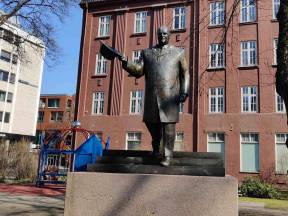
Johan Nygaardsvold (Statue)
Prime Minister Johan Nygaardsvold, nicknamed "The Old Man", was born in 1879 in Hommelvik near Trondheim. He was a Labor Party politician and Prime Minister of Norway from 1935 to 1945.
He emigrated to the United States aged just 23 and worked as a railway worker, but returned to Norway just five years later. As a representative of the Labor Party, he somewhat reluctantly took on several positions and was elected to the Storting in 1915.
A few years later, after much persuasion, he became Minister of Agriculture in 1928.
When Norway was occupied in 1940, he refused to capitulate to German supremacy. He led the government together with the royal family in a dramatic escape through Norway with the German soldiers hot on their heels. They eventually made it safely to port in England with help from Churchill.
In England, he and King Haakon VII were responsible for coordinating the Norwegian resistance. Together with the Allies, Norway and Europe were liberated in 1945.
Johan Nygaardsvold received an honorary salary from the state after his political career until his death in Trondheim in 1952.
From Viking Age to Christianity
The Vikings are known for their brutal raiding expeditions where they plundered treasures and people whom they sold as slaves. But most people were probably peaceful farmers and skilled seafarers, craftsmen, and traders during the Viking Age. Both raiding and peaceful trade increased contact with foreign lands, introducing new ideas and cultural influences. Knowledge of a new God, with values different from the Norse ones, was likely well established in some areas of the country by the end of the Viking Age. Olav Haraldsson was a Viking king who, after his travels on the continent, became Christian and attempted to Christianize Norway during his reign from 1015 to 1028. He had to flee the country in 1028 but returned to Norway in 1030 to assert
his right as king and make Norway a Christian land. Here, he encountered resistance and was killed in the Battle of Stiklestad on July 29, 1030. The battle and his death have become a landmark date for Norway, as it retrospectively marked the date when Norway became a Christian country. According to legend, his body was transported to Nidaros by boat on the fjord and brought here where we stand, and it is said that his coffin was buried somewhere along the riverbank of the Nidelva. Many myths emerged around Olav after his death. He was declared a saint on August 3, 1031, and thereafter referred to as Olav the Holy, Norway's eternal king and national saint.
Norway's national shrine, Nidaros Cathedral, was built as his burial church. With Olav's fall at Stiklestad, Christianity had taken root in Norway. His death marked the transition from the Viking Age to the Middle Ages. In the centuries that followed, the city flourished as a religious center but also as a meeting place and trading hub.
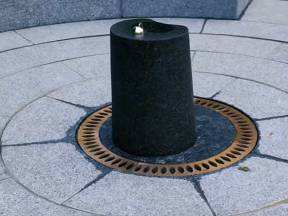
Saint Olav’s Holy Spring
You are now standing in front of Saint Olav’s Holy Spring, a small but significant spring rooted in Norway’s history and legends.
This sacred spring is named after Olav the Holy, Norway’s saint-king, and has been an important pilgrimage site for centuries. According to legend, the spring emerged where Olav’s body rested after the Battle of Stiklestad in 1030. The water is said to possess healing powers, and pilgrims have for centuries drunk from the spring or washed in its waters, seeking health and blessings.
Can you imagine what it must have been like for medieval pilgrims to arrive here, weary and hopeful, searching for both physical and spiritual strength? Saint Olav’s Holy Spring remains a place of reflection and wonder, just as it was nearly a thousand years ago.
Medieval Trondheim
Trondheim is considered to have been founded in 997. A royal estate was established at Skipakrok, near the mouth of the Nidelva River. However, the area around the river had been inhabited for centuries prior to the city’s official founding. Burial sites at Nidarneset, in the heart of modern Trondheim, reveal settlements dating back to around 400 BC.
One of the first churches in the city was St. Clement’s Church, likely located in what is now Trondheim’s city center. The church was an important symbol of the rise of Christianity in Norway.
In the 11th century, Trondheim experienced rapid growth, characterized by riverfront warehouses and streets running north-south. Nidaros Cathedral, built over St. Olav’s grave, was begun around 1070 and completed by approximately 1300. The establishment of the archbishopric in 1152 solidified Trondheim’s status as Norway’s ecclesiastical center.
The late Middle Ages brought challenges, including major fires, such as the one in 1531 that destroyed much of the city, the Archbishop’s Palace, and the cathedral. The Reformation in 1537 marked the end of Trondheim’s role as Norway’s religious capital.
Arve Tellefsen - Statue
Arve Tellefsen is a violinist from Trondheim, born in 1936. He showed early talent and started playing at the age of six at Trondhjem's music school.
He gradually progressed through the degrees until he completed his education at the Conservatory of Music in Copenhagen.
During a long solo career, he has played with several of the world's leading orchestras and conductors. He has released several records and received many awards, including five Spellemann awards.
His warm and popular appearance was not only expressed through his music, but also as a popular TV guest on many channels.
He was long known as a "mother-in-law's dream" and "Norway's most desirable bachelor", but that was until he married Kristin Slørdahl in 2005.
Erich Christian Dahl
We are now looking into the park named after Erich Christian Dahl, a man who left a significant mark on Trondheim’s history.
In front of the building, you’ll find a bust of Dahl, erected to honor his contributions to the city. Dahl, one of Trondheim’s most influential businessmen of the 19th century, founded E.C. Dahls Brewery in 1856, which remains a proud part of the city’s identity. He was also a dedicated philanthropist who used his wealth to improve Trondheim and support social causes.
This park is a peaceful place where history lives on. Can you imagine how the city’s people must have valued his contributions to the community? Erich Christian Dahl’s legacy is a reminder of the power of commitment and generosity.
Rockheim (Home of Rock)
Rockheim, meaning "Home of Rock" in Norwegian, is the National Museum of Popular Music in Norway. It is dedicated to collecting, preserving, and sharing Norwegian popular music from the 1950s to the present day.
At Rockheim, visitors can experience a "time tunnel," which is an expansive journey through recent Norwegian music and cultural history, occupying over 1,320 square meters. This interactive journey takes visitors from the rise of youth culture in the 1950s to the diverse digital media landscape of today.
The exhibition highlights Norwegian bands, artists, and the industry within the cultural context of each decade.
Additionally, Rockheim boasts its own performance stage and conference hall, as well as what may be the most exciting museum shop in Norway for music enthusiasts.
On the top floor of the museum, there is a panoramic restaurant. Here, visitors can reflect on their experiences and enjoy a good meal, all while taking in the view over the beautiful city.
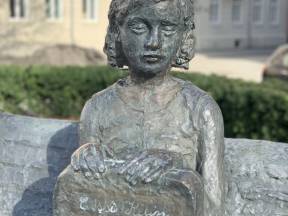
Cissi Klein
Cissi Pera Klein was a Norwegian-Jewish girl from Trondheim who became one of the victims of the terrifying Holocaust. In the winter of 1942, she was arrested at school and sent to Oslo, where she and her family were detained.
A few months later they were deported to Auschwitz by boat and train. Upon arrival at the infamous camp, Cissi was brutally sent to the gas chamber and killed at just 13 years old.
In 1942, a systematic persecution began, with the arrest of all Norwegian Jews. During 1942 and 1943, a total of 773 Norwegian Jews were deported to German death camps. The largest deportation took place on 26 November 1942 when a total of 529 Jews were transported out of the country on the ship DS Donau.
Most of the Norwegian Jews were sent to the Auschwitz death camp; where only 38 of them survived. With this, the Jews made up more than half of all Norwegians who were killed in German camps during the war.
Cissi is remembered every year as one of the victims of the holocaust and had her own street named after her.
Nidaros Cathedral
Nidaros Cathedral is Norway's original archbishop's church and one of the Nordic countries' largest medieval churches. For almost a thousand years, people have come to Nidaros Cathedral with their lives, their longings and their hopes.
The Nidaros Cathedral was built on the spot where Olav the Saint's body was buried after the battle at Stiklestad. The church has a long and exciting building history from when it was begun in 1070 right up to the present day.
Both architecturally, historically and artistically, the cathedral can compare with similar magnificent buildings in Europe. Today, tourists from all over the world make a pilgrimage to Nidaros Cathedral, which is Trondheim's biggest tourist attraction.
Haakon VII was crowned in Nidaros Cathedral in 1906. Later, the church was used for the signing of both King Olav V and King Harald V.
Church services are still held here, and then there is free entry. Beyond that, Nidaros Cathedral is open every single day.
Tickets can be bought at the Visitor Center where there is also a small cafe and shop.
King Olav V
You are now standing in front of the sculpture of King Olav V, who was Norway's king from 1957 to 1991. He was a very popular king and always had a funny story in store. He always stood on the people's side and when the oil crisis paralyzed Norway he left the limousine in the garage. King Olav took the tram like all other ordinary people.
He was the son of King Haakon VII and Queen Maud, and was baptized Alexander Edward Christian Frederik and was Prince of Denmark.
When his father was crowned king after the dissolution of the union with Sweden in 1905, the Prince was only two years old and was named Crown Prince Olav.
The crown prince was then the first Norwegian heir to the throne to grow up in Norway since the Middle Ages. He became interested in sports early on and was an active sailor for over 70 years. The highlight of his sports career was when he won Olympic gold in Amsterdam in 1928.
The following year, Crown Prince Olav married Princess Märtha of Sweden and they had three children together.
The king and his family have always stood strong in Norway. The slogan for the Norwegian kings has been "All for Norway". Popularity, warmth and empathy in good times and vigor in bad times are descriptions that contribute to the fact that the Norwegian people not only stand behind our own king, but also look up to and admire him.
Just in case you are lucky enough to meet the king, he will be addressed as "Your Majesty".
Nidelven
Beneath us flows the city's greatest pride, the Nidelven River. This 30-kilometer-long river originates from Selbusjøen and winds gracefully through Trondheim before meeting the Trondheimsfjord. You may have heard the famous lines, Nidelven, quiet and beautiful you are, here where I walk and dream.
The words from Oskar Hoddø’s beloved song have left a deep mark on the hearts of Trondheim’s people. Nidelva meanders like the city’s lifeline, serene and majestic, with historic wharves standing tall along its banks. It has witnessed the journeys of kings, the bustling lives of merchants, and the joyful songs of students. Fishermen wait patiently in the current, hopeful for the salmon rising to the surface, while the city awakens in the morning sun. On a clear evening, the lights of churches, houses, and bridges reflect on the dark waters, a sight that brings peace even to the most restless soul. Nidelva is more than a river; it is Trondheim itself, the heart that never stops beating.
The hospital church
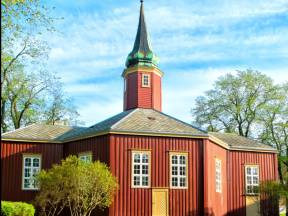
You are on "Hospitalsløkkan". In front of you is the Hospital Church, which, with its characteristic tower and roof, stands out well in the old town buildings in the area.
It was built in 1705 and then replaced a dilapidated medieval church on the same site, and it again replaced a Marian church that was built in the 12th century.
The church has been associated with Trondhjem's hospital, which is located on the other side of the park.
In its time, this was the first church with an octagonal ground plan in Norway. Inside the church are the pulpit and altarpiece from the 1640s and stood in the old medieval church.
The altarpiece's dramatic main motif, the crucifixion of Jesus, was painted by hospital priest Gustav Adolf Lammers in 1830. He was a great preacher, and a not inconsiderable painter and architect. Lammers later became the model for Henrik Ibsen's uncompromising priest Brand.
The hospital church is owned by Stiftelsen Trondhjems Hospital. The hospital has had responsibility for its own church since the Middle Ages. Today, the activities in the Hospital church are part of the offer from the Cathedral and Our Lady congregations.
Pirbadet
Fancy a dip?
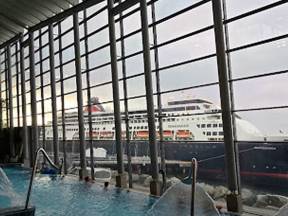
Here, by the fjord, lies Pirbadet, a modern bathing cathedral with panoramic views of the Trondheimsfjord. You can swim in heated water while large cruise ships glide past just outside. The building rises proudly by the sea, monumental in its own way—just like Nidaros Cathedral at the opposite end of the city center. Where the cathedral gathers souls for reflection, Pirbadet brings people together for play, relaxation, and exercise.
Pirbadet is Norway’s largest indoor water park and opened in 2001. Here, you’ll find everything from wave pools and a lazy river to diving towers and waterslides. The training pool meets Olympic standards, and the wellness area offers hot springs and saunas. Pirbadet, here at Brattøra, is one of the city’s most popular attractions for visitors of all ages.
Nerbyen
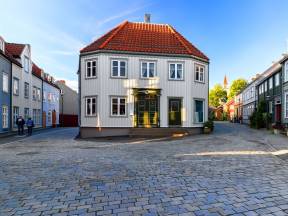
Here in Nerbyen, among cobbled streets and old wooden houses, you’ll find one of Trondheim’s oldest districts.
For centuries, this was a bustling hub of trade, where sailors, merchants, and craftsmen filled the streets with life. In the 19th century, numerous small shops emerged, some run by Jewish families who sold clothing, textiles, and specialty goods.
Today, Nerbyen is a charming district where history lingers in the walls.
Old warehouses and wharves have been transformed into modern cafés, art galleries, and boutique shops. In the evening, the area comes alive as bars and restaurants open their doors. Here, past and present intertwine in a neighborhood that continues to evolve—yet still echoes the spirit of old Trondheim in its narrow streets.
Kristiansten fortress
On this beautiful ridge, you can savor the view of the picturesque city of Trondheim, breathe in the fresh sea air, and embark on a unique journey through history.
Kristiansten Fortress was built following the great city fire of Trondheim in 1681. At that time, King Christian V ordered the drafting of a new urban and fortification plan, in which the role of Kristiansten Fortress was to prevent enemies from firing down into the city.
The fortress proved to be an effective guardian until it was decommissioned in 1816. The tower that sits atop the fortress, where the main artillery was positioned, is called the Donjon, which is also the most important building. From the roof, a lookout could observe most of the city and the fortress's immediate surroundings.
The Swedes besieged the city in 1718, but they failed to capture the fortress. Just over a thousand soldiers held their ground until the Swedes capitulated and returned home. This was the only time combat took place there.
But like most things, there's another side to this story. During World War II, 28 Norwegian resistance fighters tragically lost their lives by execution at this very site. After the war, several convicted war criminals were also executed here.
Today, the historic area is open daily for everyone to explore.
Munkegata
We find ourselves in the heart of Munkegata, nestled between the Nidaros Cathedral, a prominent church built over the burial site of Norway's patron saint, King Olav II, and Ravnkloa, a renowned fish market by the fjord. This is one of a few streets in Norway that embodies the distinct character of an avenue.
Originally planned as the city's primary artery, Munkegata was a central feature in the urban blueprint of 1681 designed by the well-known city planner, Cicignon. An avenue, characterized by a wide road with trees or greenery lining each side, is designed to guide one's gaze towards a significant building - in Trondheim's case, this is the Nidaros Cathedral.
Munkegata, which translates to 'Monk's Street', was named in homage to the monks, or canons, associated with the Cathedral, and those living on Munkholmen, a small islet north of Trondheim. A canon was in the Roman Catholic Church the designation for priests connected to a cathedral.
Every summer, Munkegata comes alive with a bustling market set within its historical surroundings. Known as "Martnan", this vibrant festival holds long-standing traditions that date back to the medieval era!
It's fair to say that the "Martnan" might feature a fair amount of beer consumption. Legend has it that the German monks in the 1600s followed a diet consisting solely of beer! While we can't say for certain if the monks of the Nidaros Cathedral or Munkholmen shared such a diet, it's safe to assume they had a clear avenue between them if they did indulge in a similar lifestyle.
Trondheim central station
You are now standing outside Trondheim Central Station, the city’s main hub for trains and buses. Here on Brattøra, travelers have been coming and going since the railway first arrived in Trondheim in 1864. The old station building, opened in 1910, was a stately neoclassical building, a reminder of the railway's heyday. The new modern station building is a traffic monument that takes travelers into the future.
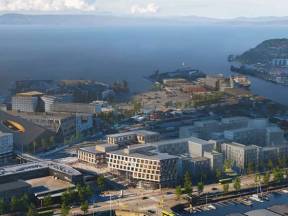
The city center lies across the bridge, but if you take the stairs in the opposite direction, you’ll reach Brattørkaia. Here, the fresh, salty sea air greets you in a modern waterfront district, home to Rockheim, Norway’s national museum of popular music, and Pirbadet, the country’s largest indoor water park. Overlooking the Trondheimsfjord, this is a place where history and the future meet—just like here at the station itself.
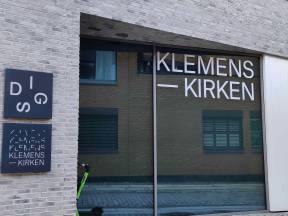
Klemenskirken
Nå står du på historisk grunn. Akkurat her ble Norges niende konge, Olav Haraldsson, til Olav den hellige. Olav døde i slaget på Stiklestad i 1030 og ble etter sagnet gravlagt på det stedet der Nidarosdomen ble bygget.
Kisten ble senere flyttet hit og åpnet året etter. Ifølge legenden så det ut som om Olav bare sov. Hår og negler hadde vokst og det strømmet god lukt fra kroppen.
Mennene rundt kisten, Biskop Grimkjell, Einar Tambarskjelve og flere andre, konstaterte nå at Olav var en hellig mann. Her ved Klemenskirken ble Olav Haraldsson til Olav den hellige! Kisten ble deretter trukket med kostbare stoffer og satt over alteret i kirken.
Utgravningene og funnene her ble en arkeologisk verdensnyhet. Det som skulle bli et næringsbygg viste seg altså å være historisk grunn i særklasse.
Gradvis viste utgravningene kirker datert tilbake tidlig 1000-tall, alter, skjeletter og noe materiale fra annen bebyggelse, som kunne dateres til 900 tallet. Funnene viser at den opprinnelige kirken var en Klemenskirke.
Alteret der Olav den Hellige sin kiste stod, kan besiktiges gratis alle dager fra mandag til lørdag.
---------------------
Alternativ tekst (av Olav):
Klemenskirken er regnet som Olav den helliges første hvilested og Trondheims eldste kirke, bygget omkring år 1015. Høyalteret i kirken er vurdert som en arkeologisk sensasjon. Kirken ligger i Krambugata, som er Trondheims eldste gate.
St. Olavs skrin ble plassert på høyalteret i Klemenskirken i august 1031. Det var lenge et mysterium hvor Klemenskirken hadde ligget, men under utgravning i 2016 ble ruinene av kirken oppdaget. Riksantikvaren har uttalt at funnet av Klemenskirken er det viktigste funnet i Norge på nærmere 75 år.
Klemenskirken har vært ødelagt flere ganger over en periode på 350 år. Kirken ble gjenreist etter hver ødeleggelse. Hver gang kirken ble gjenoppbygget ble det tatt med elementer fra den foregående kirken. Men etter en brann på 1300-tallet ble ikke kirken bygget opp igjen. Bare høyalteret ble stående.
Arkeologene fant minst seks bygninger under kirken. Man har trodd at Trondheim ble grunnlagt i år 997, men funnene av bygningene under kirken fra midten av 900-tallet viser at byen er enda eldre. Det har vært en sammenhengende byutvikling på samme sted i over tusen år.
Klemenskirken blir nå vist fram akkurat der den ble funnet. Høyalteret og restene av kirken ligger i en egen underetasje, og her er det også utstilt modeller av kirken som viser hvordan kirken gradvis ble bygget ut gjennom 350 år. Det er også utstilt vikingtidsbygg og gjenstander. Riksantikvaren har utarbeidet utstillingen, og den forvaltes av NTNU Vitenskapsmuseet.
Olavshallen
Do you love theater and music?
Here lies Olavshallen, Trondheim’s largest cultural venue and one of Norway’s most important concert and theater stages. Opened in 1989, the building is home to Trondheim Symphony Orchestra & Opera and features a grand hall with seating for over 1,200 guests.
Olavshallen is a hub for classical music, jazz, pop, and stand-up comedy. The building also houses a music school, shops, and cafés. With its central location by the Nidelva River, it has become a gathering place for culture enthusiasts in Trondheim. What might be on stage tonight?
The map of Nerbyen
Now we are standing in Brattørgata in Nerbyen, in an area that, from the 1880s to 1940, was a gathering place for Jewish immigrants from Eastern Europe. They fled poverty and antisemitism and found a new home in Norway, a country that, just a few decades earlier, had a constitutional ban on Jews. Here, most Jewish families ran clothing shops, such as A. Mendelsohn, R. Isaksen, and H. Klein. So far, 60 addresses in Nerbyen have been identified as former Jewish-owned businesses, popular among farmers, fishermen, and workers from across Trøndelag.
World War II wiped out almost all Jewish businesses in Trondheim, and only a few reopened after the war. Today, few traces remain, but with "The Map of Nerbyen," this history is made visible. As antisemitism seems to rise again, remembering, and learning, has never been more important.
Brattørveita
Many streets in Trondheim end with the word "veit"—such as Ørjaveita, Gjetveita, and Brattørveita, where you are standing now. But what is a "veit"?
Veiter are narrow alleyways dating back to the Middle Ages when Trondheim developed with small wooden houses and dense urban planning. They served as shortcuts between larger streets and were essential pathways for the city's residents. Today, many veiter are preserved, offering a unique glimpse into Trondheim’s historical layout.
Brattørveita was once a bustling trade street, lined with shops, craftsmen, and warehouses. Today, it remains one of several veiter that still tell the story of old Trondheim—a city where these hidden passages reveal centuries of history. Where will Brattørveita lead you today?
The railway bridge
Now you are standing on Jernbanebrua, the railway bridge, an important link between Brattøra and Nerbyen. Originally built to connect the railway to the harbor, but that was before. The bridge is now a key route for pedestrians and cyclists. Below you flows Kanalen, an artificial waterway dug in the 1850s to create a connection between Nidelva and the Trondheimsfjord.
The canal made it easier for ships to reach the busy harbor areas, and its banks were once lined with warehouses and shipyards. Today, the area has transformed, but Kanalen remains a vital part of the city, surrounded by modern buildings and recreational spaces. From the bridge, you can see both historic wharves and the future of Trondheim—a meeting point between old and new.
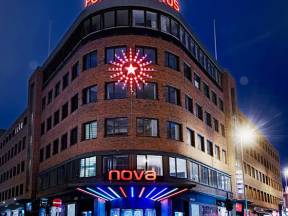
Cinema Nova
Now you are standing outside Trondheim cinema Nova, the city's largest cinema and a popular gathering place for film lovers. The building opened in 2000 and features 11 modern theaters, including an IMAX screen for the ultimate movie experience.
Not far from here, towards Nidaros Cathedral in Prinsens gate, you’ll find Trondheim cinemas other venue, Prinsen cinema, which houses eight additional theaters.
Prinsen cinema
In 1897, film was shown in Trondheim for the first time. It is hard to imagine how spectacular it must have been for the people of Trondheim to see moving images. It was an instant success, and within the first decade of the 20th century, eight cinemas had opened in the city.
One of them is here where you stand now,
Prinsen cinema, Trondheim Kino’s second major venue, featuring eight modern theaters in the city center. Showing everything from blockbusters to independent films, it remains a favorite spot for film lovers.
On the facade, you can see the word "Verdensteateret", the world theater, in large letters.
This is a tribute to Trondheim’s first permanent cinema, which opened in 1911. Located not far from here, it was the city’s first true cinema palace.
Solsiden
Times change! Now, you are literally standing on Solsiden, or the sunny side, one of Trondheim’s most popular areas for shopping, dining, and nightlife.
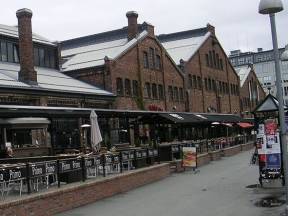
But this place has a long history. It was once home to Trondhjems Mekaniske Værksted, one of Norway’s most important shipyards, established in 1872. For over a century, ships, locomotives, and industrial machinery were built here, shaping an area defined by hard work and heavy industry.
In the 1990s, the shipyard closed, and a major urban transformation began. Old industrial buildings were repurposed into shops, restaurants, and housing. Today, Solsiden is a vibrant city district where historic brick walls stand alongside modern architecture. Here, past and present merge into one of Trondheim’s liveliest, happiest, and most urban neighborhoods. This is Solsiden.
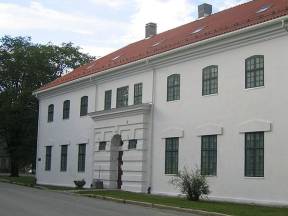
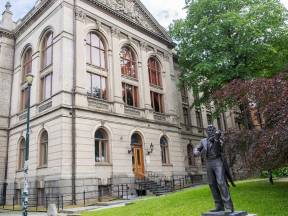
Tukthuset
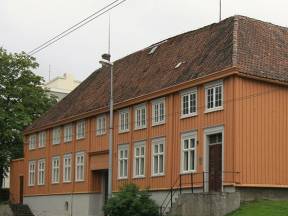
Have you been good this past year? Now you are standing outside the old Tukthuset, an old Workhouse, one of Trondheim’s most striking historical buildings.
Originally built in 1733, the Workhouse served as an institution for the poor, unemployed, and criminals. Inmates were expected to learn useful skills such as weaving and craftsmanship, but life within these walls was often harsh. It functioned as both a prison and a labor facility, reflecting the strict social control of the time.
Over the years, the building was repurposed for various uses, including as a prison, military barracks, and school. Today, the Workhouse is a protected cultural monument, standing in the heart of modern Trondheim. It serves as a reminder of a time when punishment and social responsibility went hand in hand, and of how the city has evolved through the centuries.
NTNU Kalveskinnet
Here lies NTNU Kalvskinnet, one of NTNU’s central campus areas in Trondheim.
The name Kalvskinnet, or "calfskin," likely dates back to the Middle Ages when the land was used as grazing fields and was perhaps sold for the equivalent value of a calfskin.
Today,
Kalvskinnet is part of the Norwegian University of Science and Technology (NTNU) and is home to programs in teacher education, archival and library sciences, technology, and innovation among others. Several buildings here have historical significance, including the former State College for Teachers, which still dominates the area.
With its location near the city center and Nidelva, Kalvskinnet is a hub for knowledge and research. Past and future meet here, where historic buildings are filled with modern education and technology. Who knows what new ideas are being born here right now?
Midtbyen
Trondheim is full of contrasts, and here you stand now, in Midtbyen, surrounded by both past and present.
Midtbyen has been the heart of Trondheim since Olav Tryggvason founded the city in 997. During the Middle Ages, it was a thriving trade center where merchants and craftsmen filled the narrow streets with life. The great fires of the 17th and 18th centuries reshaped the city’s architecture, replacing cramped alleys with wider streets. In the 19th century, commerce flourished along the wharves, and modernization accelerated with steamships, railways, and industry.
Today,
Midtbyen is a harmonious blend of historic buildings, modern shops, and a vibrant city life. Traces of the past are everywhere, from Nidaros Cathedral to old wooden houses. What will Midtbyen look like in a hundred years? Just like before, it will change—but it will always remain the beating heart of the city.
Trondheim Hospital
Trondhjems Hospital is the oldest health institution in the Nordic region that is still operational. The hospital is still located where it was originally established. This area later took on the name "Hospitalsløkkan," colloquially shortened to "Løkkan," which translates to "The Meadow."
On September 13, 1277, King Magnus Lagabøter put his royal seal on a document granting land for a hospital for poor men. Notably, the building was erected before the king gave his permission.
This was not a hospital in today's sense, but functioned as a care institution for the poor and disabled, and as an isolation area for lepers. For the people of the Middle Ages, it was a place of mercy where the sick and poor received care.
At the hospital, people were encompassed by daily religious services and the priest's prayers, and were ensured regular meals, including one liter of home-brewed beer a day.
Throughout the 19th century and up to the present day, the hospital has been used as a home for the elderly and the sick, and eventually became a model institution when it comes to elderly care in Trøndelag, a region in central Norway.