
Foshal
0
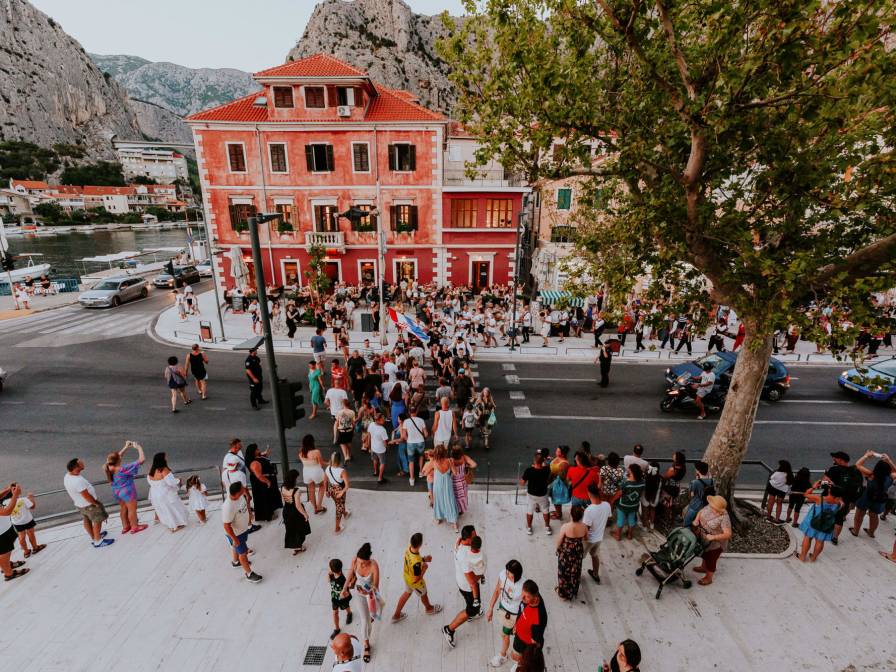
You are on Fošal, the main promenade of Omiš, but few people know that this place was once a key part of the city's defenses. The former moat, after which Fošal got its name (Italian fossa), was dug along the southern walls and filled with water - a real obstacle for any attacker from the sea. This moat was part of a complex Venetian defense system, and was additionally protected by towers and bastions, such as the famous Turjun tower on the southeast corner, which was expanded into a large five-sided bastion in 1659. Interestingly, Fošal inherited its name from the Foša river, which once flowed through this area, before the canal was turned into a defensive moat. During the 19th century, when the city began to expand southward and the road to Split was being built, the moat was filled in, and Omiš took on its present appearance. Although the moat has disappeared, traces of the southern walls can still be seen under the first rows of houses north of Fošal, and the line of the former rampart can be seen in the paving. Today, Fošal is bustling with life – it is surrounded by cafes and historic houses, and their courtyards hide the walled-in remains of former battlements and loopholes. Recent archaeological research has discovered underground fragments of the walls, which are a constant reminder of the warlike past of this area, which has gone from being a defensive barrier to becoming a symbol of the city's everyday life and tourism. Another interesting fact: Omiš was famous for its pirates in the Middle Ages, and their skill in defending the city was so renowned that even after the Ottoman conquests, they managed to keep the city under Venetian rule, while the surrounding fortresses fell one after another. The pirates used their special ships with shallow drafts and hidden passages, and even built an underwater wall at the mouth of the Cetina River, which was invisible and deadly to enemies.