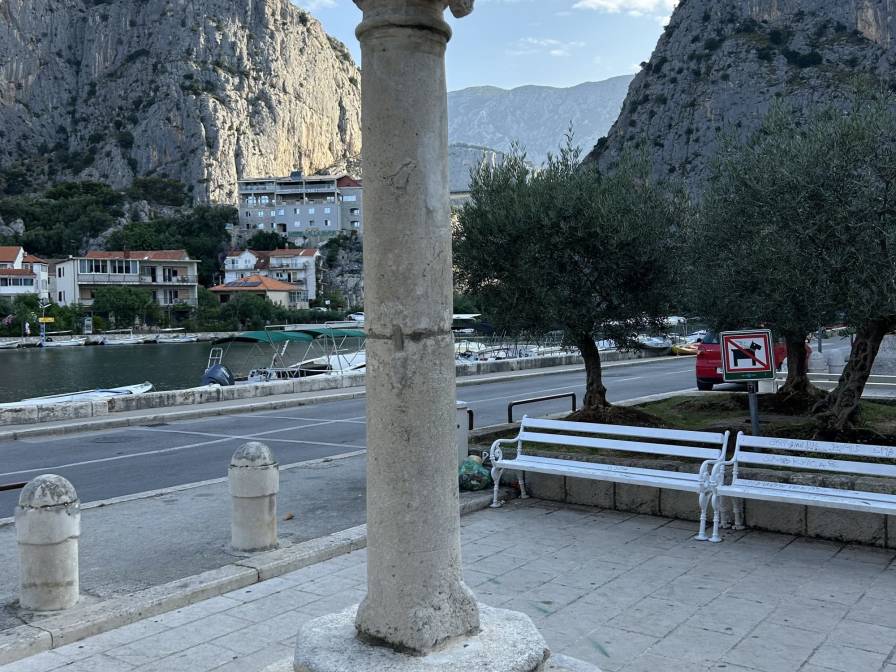
Pillar of Shame (Pranger)
0
Before you is the Pillar of Shame – a historical monument that was part of the everyday life of Dalmatian towns in the Middle Ages and early modern period. Those who committed offenses such as theft, slander or blasphemy ended up here, as well as those who did not have the money to pay the fine. It did not matter if you were poor or a foreigner, it was enough for the town prince to decide so and you were already tied to the pillar, exposed to the gaze and mockery of passers-by, and sometimes to being pelted with rotten fruit or garbage. The Pillar of Shame in Dalmatia was often placed on the main or side square, and in some towns there were even more – for example, in Zadar there were two, one for the nobles and one for the commoners. This pillar probably dates back to the 17th century, from the time of Venetian rule, which is confirmed by the coat of arms of the providores carved on the pedestal. The providores were Venetian administrators and their coats of arms still testify to their power in Dalmatia today. The convicts were tied to the pillar for several hours, and according to the Šibenik statute, “one day” on the pillar meant standing from sunrise to sunset. The punishment often included additional measures – for example, in Perugia, a notary who forged wills was not only tied, but also mutilated before being exposed to the public. Some pillars, such as Orlando’s in Dubrovnik, had other functions: they were used to fly flags or as a yardstick for merchants. Today, the Pillar of Shame is a reminder of old legal customs and Venetian influence, although exact information about its construction has not been preserved. If you are interested in learning more about the history of this region, be sure to visit the church of St. Roch, which was important in the 17th century and preserves interesting traces of the past. One interesting fact: the punishment of the pillar of shame in Croatia was only abolished at the end of the 18th century, by the decision of Emperor Joseph II.