Church of the Holy Spirit
0
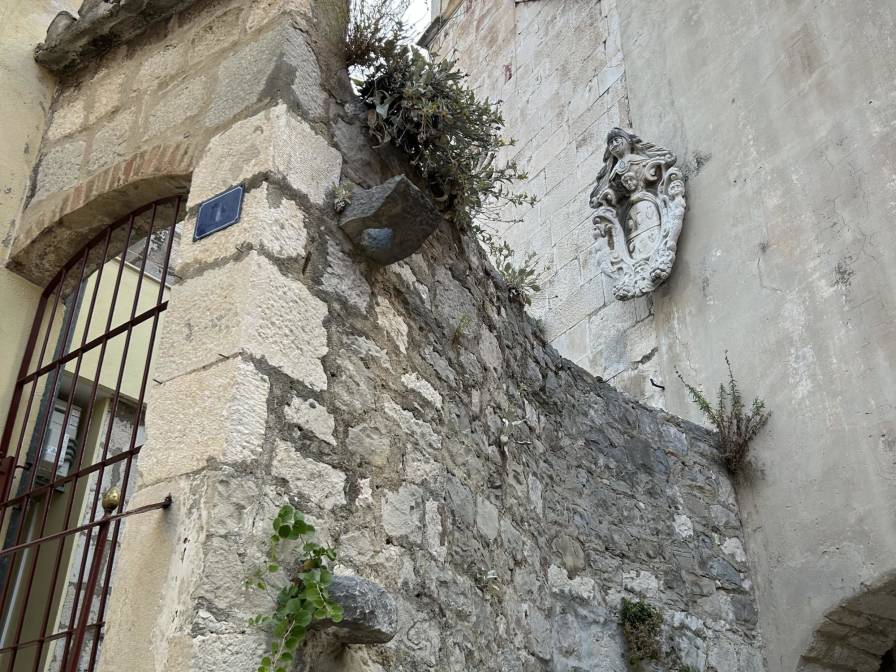
You are standing in front of the Church of the Holy Spirit, just below the Mirabella Castle, in a place where the history of Omiš literally comes to life. This church, built in 1585 on the remains of an older Gothic building, is not just another stone in a row – its renovation was the result of the vision of the headman Marko Drešković, and the work was led by the Dubrovnik master Marin Martinović and the Venetian engineer Giovanni Battista Camozzini, who also designed the bell tower. At first glance, the facade of the church attracts attention with a stone portal from the workshop of the famous Omiš Bokanjić family, decorated with reliefs and a rosette divided by columns. The central opening in the shape of a quatrefoil is surrounded by Gothic dentils, a detail rarely seen in Dalmatian churches from that period. The bell tower is made of finely worked stone and combines Renaissance and Baroque elements, while the interior of the church hides a ribbed vault with a stone cornice and side windows with arched ends. Of particular value is the main altar with Jacopo Palma the Younger's work, "The Descent of the Holy Spirit", which is one of the most important works of art in the church. On the wall above the side entrance are the coats of arms of Venetian governors, and the main portal bears an inscription about the renovation in 1585. Right next to the church there used to be a hospital for the poor and sick, which shows how important the Brotherhood of the Holy Spirit was to the entire community. The Church of the Holy Spirit is today a nationally protected cultural asset and an essential point on any tour of the old town. Here, in a small space, Gothic roots, Renaissance innovations and a strong Venetian influence intertwine. It is interesting that this very complex was the administrative center of Omiš, so important decisions were made here and the city elite gathered. Another interesting fact: the bell tower of the Church of the Holy Spirit is one of the few in Dalmatia whose designer is known by name, which further emphasizes its uniqueness.