
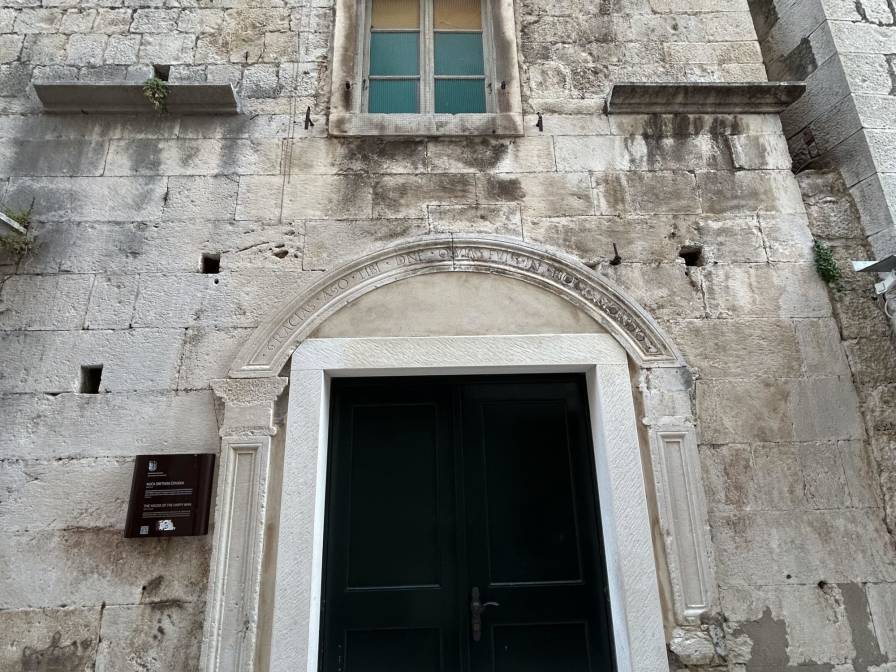
The house of a happy man
0
You are looking at the House of the Happy Man, one of the symbols of the Renaissance in Omiš. Above the entrance is an inscription in Latin: "Gratias ago tibi Dne quia fui in hoc mundo" – a simple but powerful thanks for life that translates to “I thank you, Lord, that I was in this world.” The house was built in the 16th century, while the city was under Venetian rule. It is believed to have belonged to Ivan Primojević, a famous lawyer and ambassador of the Omiš commune to Venice, but very little is known about his life. This house is a typical example of Dalmatian architecture from the Venetian era: it has three floors. The ground floor housed a workshop and living room, the bedrooms were on the first floor, and the kitchen – quite unusually – on the top. Historians have long tried to explain this arrangement, but the reason is actually very practical: having the kitchen on the top floor reduced the risk of fire, which was a common problem in medieval cities. Today, this house is a protected cultural heritage site and a symbol of optimism, preserved thanks to traditional building techniques. The white stone facade is decorated with Renaissance details, while the interior shows how practical and adapted to everyday life in old Omiš was. Interestingly, the inscription above the door has become an inspiration for numerous visitors, and the house is now an indispensable part of the city's cultural offer. Lesser known fact: near the house there is also the Pillar of Shame, another historical symbol of Omiš, which testifies to the past customs and justice in the city.