
People's Square
0
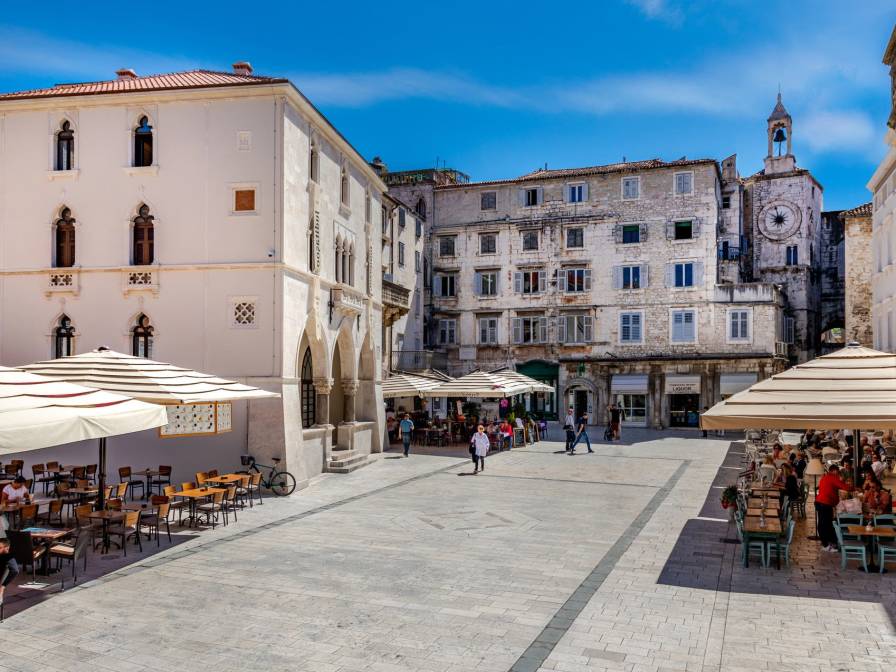
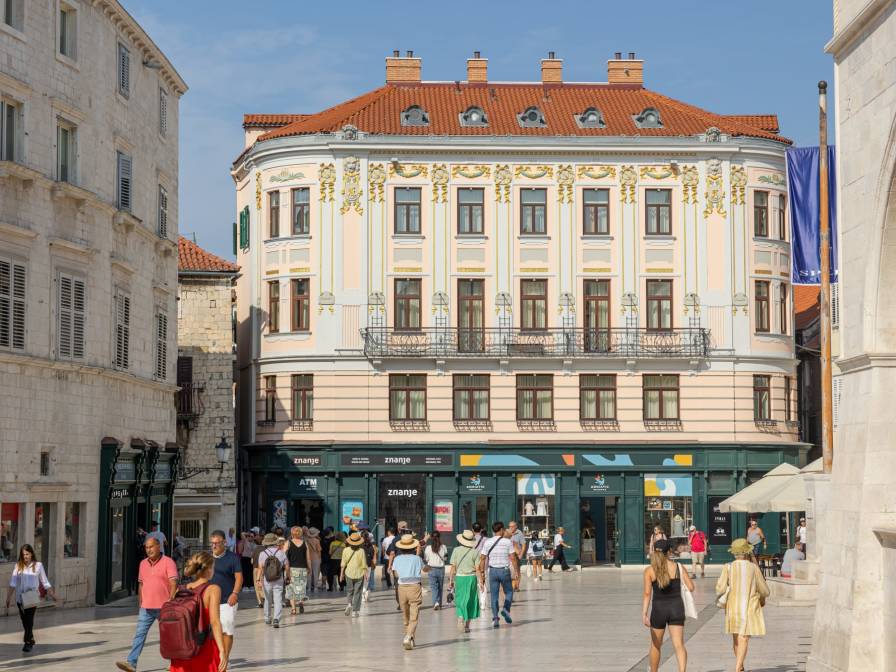
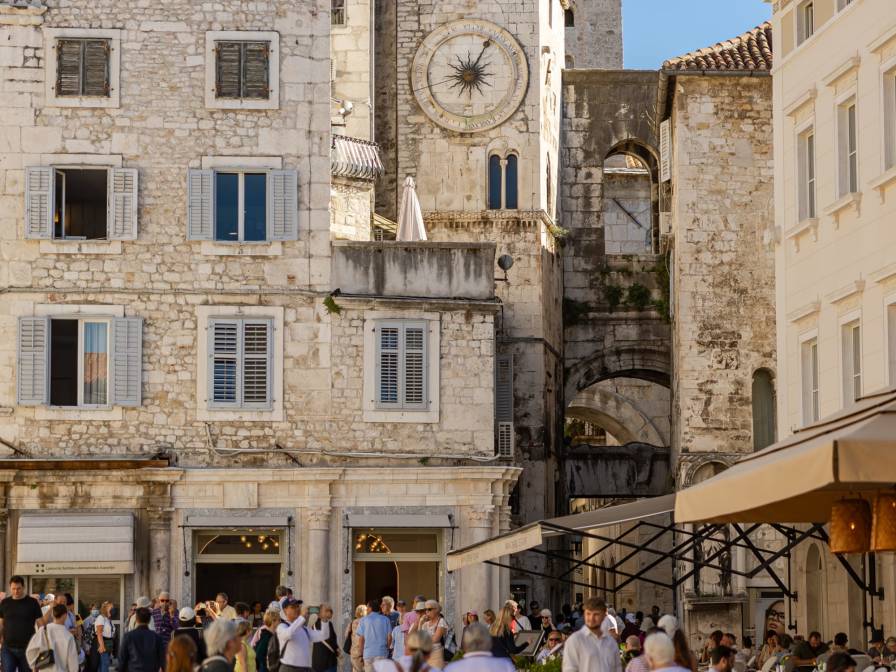
You are in the People's Square, which the people of Split simply call "Pjaca". It was created in the 13th century when life began to move out of Diocletian's Palace. Beneath its stone surface, traces of ancient buildings, early Christian mosaics and a Roman aqueduct have been found, meaning that this area was alive long before it became a medieval core. On the west side of the square is the Old Town Hall, with its distinctive Gothic triforia, once the seat of the city government, but also the place that kept the original Venetian lion - a symbol of Venice, whose influence long defined the political and cultural framework of Split. That lion was later removed, during the changes of the late 18th century, but its history remains one of the untold chapters of the Pjaca. From this same spot in 1424, the city statute was publicly read, officially published and available to the people for the first time - a moment that clearly demonstrated how this space is not just a square, but a stage for political shaping. The clock that dominates the bell tower today was installed in 1450 and is considered the oldest public clock in Croatia. Its unusual dial with 24 numbers instead of the usual 12 reminds us that people in this city have always measured time in their own meter. When the French took over Dalmatia in the early 19th century, the Pjaca received a novelty that was incredible to many – the first nighttime public lighting. The administration at the time introduced a series of practical measures that enriched the city, but the fact remains in the collective memory that the night on the square was illuminated for the first time. At the same time, right next to the Pjaca, the Morpurgo bookstore was opened, one of the oldest in Europe, and was not only a place to buy books, but also the center of the city’s intellectual energy. Journalists, professors, poets and the curious came to it every day, so it is no coincidence that the first electric light bulb in the city allegedly appeared here. In the past, every merchant from the Pjaca had to report the exact prices of his products to the city administration every morning – a system of early market supervision that modern states are proud of today. Here, knightly games, public competitions, punishments, and even debates between nobles were held, which the citizens followed as if they were the news of the day. Everyday life was so closely tied to this space that city news, decisions, and affairs began or ended right here.