


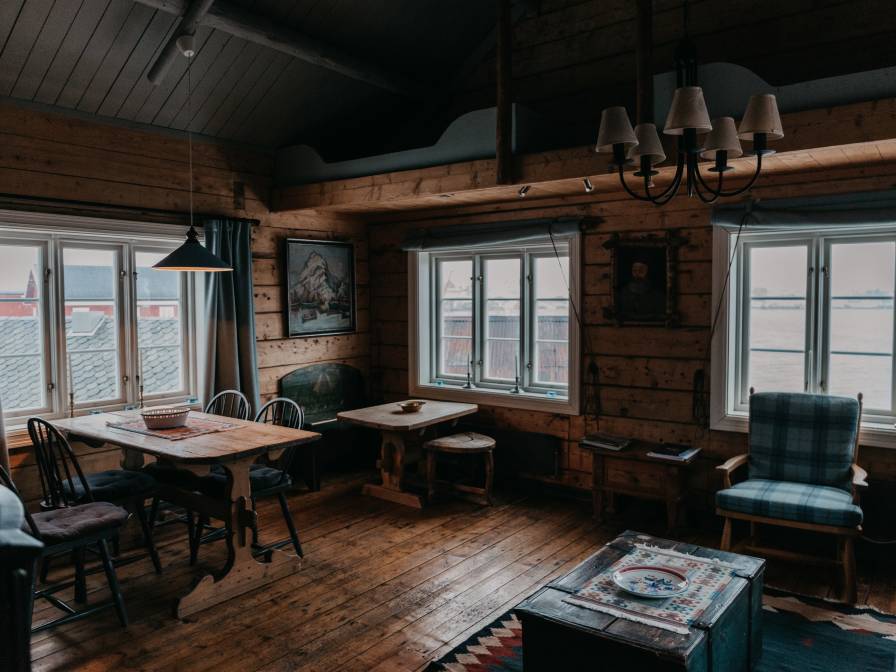

Rorbu’es- fishermen's cabins
0
You are now safely positioned between some of the many “rorbues” you will find here on beautiful Reine, and you may be wondering why they are called “rorbues”? The first part of the word refers to rowing, and the second part, “bu”, refers to a small house where tools were kept. The first known Lofoten fishing started as early as the 9th century, and the first “rorbues” were set up some 100 years later. These rudder houses were thus seasonal homes and equipment storage for fishermen, especially at that time when they had to row out to the fishing grounds in open boats without sleeping quarters. The “Rorbues”, or cabins, usually had two rooms, a smaller part was a living room where the fishermen could cook and sleep, and a work and storage room. 8 – 12 fishermen lived here under tough conditions sharing only four small bunk beds. Some cabins have divided roofs, one part of the roof was clad with a turf roof, which provided more insulation for the living room. You may be wondering why the “Rorbues” are painted red? In the olden days, they were painted with cod liver oil, a by-product of cod liver which was coloured with red iron oxide they found in the iron-rich soil. How it smelled is not 100% known. You can try painting your house with cod liver oil, to find out!