


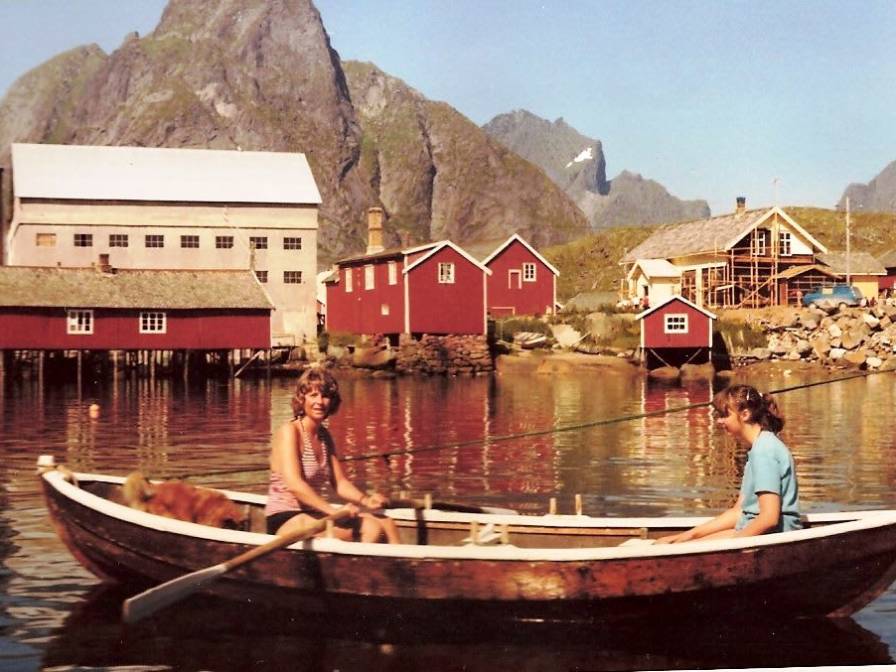

“Kvinnfolka” – Women
0
Close your eyes and try to imagine a few hundred years back. Then you might be able to imagine a couple of hundred people in full vigour among the tillers, factories, fishing huts and boats. Strong odours of cod liver oil, fish, tar, and smelly socks literally hang over the small fishing village, whether from the cod liver oil pots, the factory, the fish waste, or the newly tarred boats. And everyone talked, in many dialects, or argued, discussed prices, laughed, or cried, yes, and sometimes some hot sounds of love emerged from the “rorbues” or the surrounding stone piles. Reine was a vibrant society, a male-dominated society with the fisherman at the centre, but as you probably know, behind every strong man there is an even stronger woman. The "women" were the glue that kept the infrastructure going, either here or from the commuting fishermen's homes. The work at home on the farms with livestock, the house and children was a full-time job for the woman, and it was also a matter of honour for the women, whether they were wife, mother, or sister, to make the man properly equipped for winter fishing. They packed fine Lofoten chests with homemade woollen clothes, a special Norwegian flatbread, and other equipment they needed to survive for many weeks. At the time, there were no ready-made pizzas, vacuum cleaners, nurseries or washing machines. The effort the women put in is at least equal to the effort of the men and must never be forgotten.