Aker Brygge
0
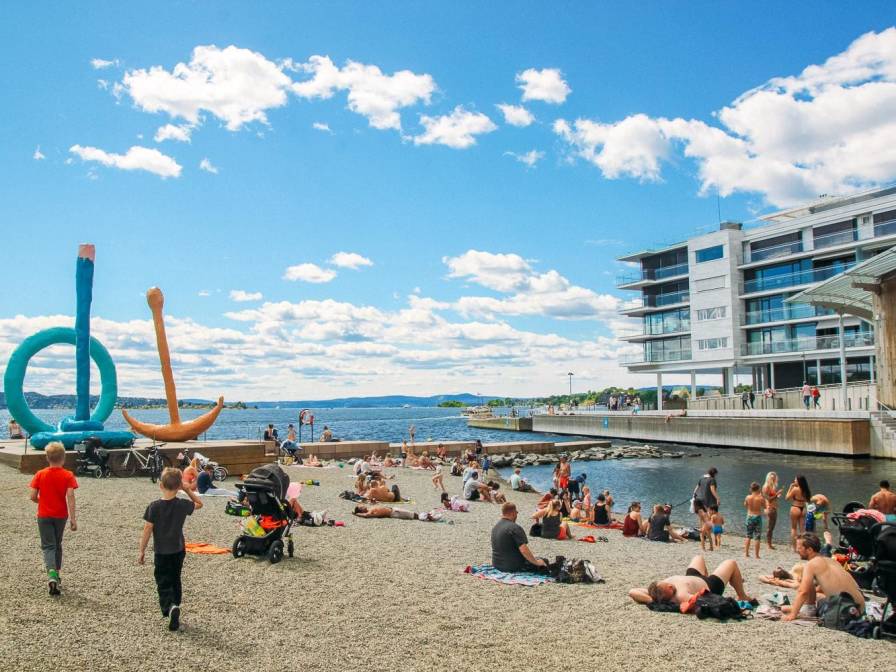
Do you see the stylish people gathering around the fashionable restaurants and apartment complexes along the docks? That's Aker Brygge. In the old days, there were no restaurants or apartments here, but there were just as many people. They didn't have as fancy clothes, and the pleasant smell of food was probably replaced with diesel, burnt steel, and scorched coffee. Aker Brygge is built on what used to be the shipyard, Akers Mekaniske Verksted. The shipyard, initially a workshop, was established in the mid-1800s and eventually gained a large and central position in the Norwegian industrial environment that lasted for over 140 years. The shipyard was closed down in 1982, and the old factory buildings were either demolished or converted into modern homes. And just like that, the sounds that had characterized the city for so long vanished, the banging against steel, the trucks, and the countless signals for shift starts, breaks, or stops. Extending from Aker Brygge is Tjuvholmen, which also has an interesting history. It was once an abandoned part of Oslo but has now been transformed into a modern and artistic area. Here, you'll find many art galleries, a sculpture park, modern architecture, and a variety of excellent restaurants and cafes. Also located by the waterfront is the Astrup Fearnley Museum, a modern art museum. Tjuvholmen is a beautiful gem today, but in the really old days (in the 1600s), the sight that greeted seafarers might have been a bit different. The area was once a sanctuary for the city's rogues. The name Tjuvholmen, or Thief Islet, originates from the time when the city's thieves were taken to the gallows on the islet and hanged. It was not uncommon for the loot from both small and large robberies to be buried out here, something the police quickly caught wind of, of course.