You are now at Oslo central station. Here history and modern society meet and go hand in hand, they can take you to any destination in the world or straight out into the buzzing metropolis that is Oslo.
Oslo has been the capital of Norway since 1814 when Norway gained its own constitution but the history of the city goes back 1000 years. The city has grown along with neighbouring municipalities and collectively they now have a population in excess of a million people.
From the train station you can follow the main street ‘Karl Johans gate’ straight to the Royal Palace. Along the way you will pass many of the country’s national monuments and you can follow in the footsteps of the world renowned artists Grieg and Munch.
The compact city centre is easy to explore on foot, by bike or electric scooter and an efficient public transport network makes the whole of the wider city easily accessible. Oslo is a green and environmentally friendly city with parks, open urban spaces and woodland covering over half the city.
The city has an abundance of cultural highlights with everything from music and food to children’s festivals. Every December, the eyes of the world are focused on Oslo for the awarding of the Nobel Peace Prize. Nelson Mandela, Mother Teresa and Malala Yousafzai are amongst some of the well over 100 previous peace prize winners.
We are now passing through the district of Ullern; through the facades of the buildings you can catch a glimpse of the Oslo fjord and Bygdøy with its resplendent historic museums and beautiful beaches.
On Bygdøy you can find world-class cultural heritage, such as Viking ships and other Viking treasures, the iconic exploration boats Fram and Kon Tiki, as well as Norwegian houses from a whole millennium.
Norwegians have always had a passion for travel and discovery with a determination to be the first. The Vikings voyaged around the world and were the first to discover America. Later the Norwegian flag was planted both at the North and South poles, but unfortunately they did not make it to the moon first.
Alongside the idyllic beaches is the summer residence of the Royal Family. The monarchy has always stood strong in Norway and the motto of the Norwegian Kings has become “Alt for Norge” – ‘’everything for Norway”. Popular, warm and empathetic in the good times and a man of action in the bad times are descriptions of the King that contribute to the fact that the Norwegian people not only support the King but also look up to and admire him.
In case you are lucky enough to meet the King you should address him as “Your Majesty”.
We are now in Lysaker, a district in the municipality of Bærum which borders Oslo. The name Lysaker means “bright acres” although today it could be better referred to as “bright buildings”. What was once a farm has today been replaced with high rise offices and commercial buildings.
The district is only home to 4000 people, but the huge office complexes that you can see employ over 30 000 workers.
Today there is nowhere else in Norway that has more daily traffic than the motorway ‘Europavei 18’ around Lysaker, well over 200 000 cars a day. In addition to this train and boat traffic mean a significant number of people pass through the junction of Lysaker daily.
In Lysaker you can also find Polhøgda home of the polar explorer Fridtjof Nansen. Nansen is renowned for both his expeditions and his burning commitment to others. In 1922 he was awarded the Nobel Peace prize for his international efforts to help refugees after the 1st World War.
As we arrive in Sandvika in Bærum municipality we meet a mix of history, art, technology, nature and sea life.
Out towards the fjord is Fornebu which used to be the airport for Oslo but has now been converted into an innovative community for technology design and industry. Here you can find the administrative headquarters of corporate giants such as Equinor, Aker Solutions and Telenor to name but a few.
On the other side of the tracks you will find a thriving town founded on ancient history with the idyllic Bærums verk in the background. For over 400 years people have lived and worked at Bærums verk. On this site there was a huge iron foundry which cast stoves to be used to heat chilly Norwegian homes. Today the factory is closed but the area has been converted into a shopping and cultural area where you can find Norway’s biggest sculpture park.
Bærum is unique as an arts and culture municipality. On one of the area’s beautiful islands you will find Kalvøya where some of the world’s most famous artists have performed over the years; David Bowie, U2, Neil Young and Eric Clapton to name but a few.
It is not known if any of those celebrities liked to play chess, but Bærum boy Magnus Carlsen certainly does, in 2004 he became the world’s youngest chess grandmaster at the age of 13 years, 4 months and 27 days.
We are now stopping in the centre of Asker; a town surrounded by the beautiful Oslo and Drammen fjords. There are miles of inbuilt beaches and walking trails down to the magical water where you can fish or take a swim.
The station that you see here includes a colourful audio-visual art installation which uses 16.7 million colour combinations based on the primary colours red, yellow and blue. The installation has an accompanying soundtrack which varies from day to day, this way regular commuters can still experience something new every day.
The centre of Asker is in many ways built around the station, but there has been a settlement here in the area as far back as the early Bronze Age. Today the municipality is experiencing large population growth and now has about 100 000 inhabitants.
Situated on a beautiful ridge above the centre of the town is the Skaugum residence where his Royal Highness the Crown Prince lives with his family, just as his father and grandfather did before him.
With its proximity to Oslo and its central location in relation to the Oslo fjord, Asker is a popular town with young families who work in and around Oslo.
Have you heard of the world famous pop group A-Ha? The group’s singer Morten Harket grew up here in Asker.
We are now entering the Lier tunnel which at 10.7 kilometres long is one of Norway’s longest. In the forests above the tunnel is Røyken where the authors Asbjørnsen and Moe put together their collection of Norwegian legends and folktales. All children love fairy tales! They are both fun entertainment and a way to educate younger generations about right and wrong.
In Norway, legend has it that there is a castle where a Princess was imprisoned by a 3 headed troll. The story goes that the person who managed to free the Princess would win both her hand in marriage and half the kingdom. But no one knew where the castle was and those who did manage to find it were defeated by the troll – that is until a boy called Askeladden set out on his quest.
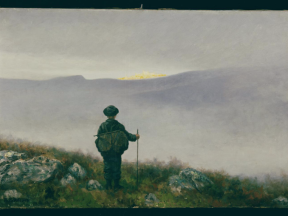
The name of the castle is Soria Moria and the story both originated from and was written in this area. In Norway the art of storytelling was hugely popular and the mystical forests, mountains, rivers and waterfalls gave inspiration to the fantasy stories which are known as folktales.
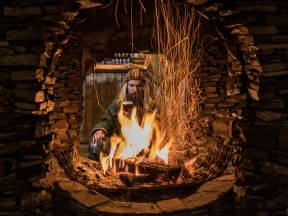
Askeladden or ‘Ash lad’ in English, was an atypical hero, he was portrayed as lazy, weak and incompetent. The nickname Askeladden derives from the word ‘Askefisen’ which refers to a person who blows on the coals to stoke the fire – a task that was given to those who were thought to be good for nothing else. Before Askeladden, his bigger and bolder brothers along with many others tried to free the Princess but they all came home defeated.
Askeladden however, found the castle, overthrew the troll and won the hand of the Princess and half the kingdom. The moral of the story being regardless of your background and what others think of you, you can achieve what you desire if you try.
But, as they say here in Norway “Snipp, Snapp, Snute” now the story is over.
We are now passing one of the oldest, biggest and most successful ports in Norway.
Timber, produce and goods have been redistributed from the port of Drammen for over 1000 years.
The solid timber from the forests around the Drammen River has been a popular commodity in Europe ever since ships were able to cross the world’s oceans. In the beginning it was exported to England to be used as mast timber in ship building, often exchanged for foodstuffs such as salt.
Timber, power from the watercourses, the harbour and later the railway provided the founders of the city with great opportunities. Cellulose and textile factories, tile works, copper works and more sprang up along the banks of the river creating tens of thousands of jobs.
Today many of these factories have closed down or moved but Drammen harbour continues to thrive and is more attractive, effective and environmentally friendly than ever.
For decades, the port of Drammen has been Norway’s biggest gateway for car imports. Containers and other goods also pass through the busy harbour every single day, but the exporting of timber has been replaced with the importing of state of the art cars.
We are now stopping in the magnificent river city of Drammen which is one of Norway’s biggest cities. Here you will find a vibrant and lively centre surrounded by beautiful nature with a varied cultural landscape.
What was once an old trading and industrial town with busy factories standing in a row along the river, is today a state of the art urban city. Most of the old and imposing factories have now been converted into beautiful homes, offices and shops.
Football, skating, beer and sausages all have an importance to the city. Beer continues to be brewed in the country’s oldest brewery - Aass brewery which you can see just across the river. The sausage stalls which previously stood side by side have today been turned into cool eateries serving international dishes. The pride of the city is the local football team Strømsgodset, not forgetting the Drammen Olympic skaters, Ivar Ballangrud, Charles Mathiesen and Sten Stensen.
The river has without a doubt been central to Drammen’s development. Indeed, today keen salmon fishers and swimmers make the pilgrimage to fish and swim in the river. Rio de Janeiro has Copacabana, Florida has Miami Beach and Drammen has the Bragernes river park which locals refer to as the “Copacadrammen”.
Thousands of years of beer
Do you enjoy a beer! Without a doubt Norwegians do and have done for thousands of years. In fact for hundreds of years beer was drunk daily by both adults and children, although that beer was noticeably weaker than the beer drunk at celebrations. Right up to the 1900’s this weak beer was an important source of nutrients as a part of the daily diet, especially important when there was no access to clean water as the disease carrying bacteria found in water could not survive in beer.
Of course the art of brewing is just as old and every farm once had their own beer. In fact there is actually an old Norwegian law that states that farmers can be evicted if they have not brewed beer for three years.
As the cities grew, along came the industrialised production of beer and many of the smaller breweries with their own types of beer disappeared. Today however, the diversity of beer is making a comeback and steadily more and more local breweries are being established and creating local speciality beers.
One of these breweries is Haand brewery in Drammen, which specialises in new types of beer, amongst them the beer Dresin which has been developed in partnership with Vy.
In 1987, 11 guys from Mjøndalen ran out onto the pitch at the Wezer stadium in Bremen. Across the pitch they faced the German champions Werder Bremen who were at the time captained by the Norwegian defender Rune Bratseth.
It was literally David versus Goliath – the small town of Mjøndalen versus the world’s best footballers. And David won! Little old Mjøndalen slayed Werder Bremen! Around the town they still talk about the heroes from 87, but they are just as obsessed about following the “brown jerseys” as the team are referred to in relation to the colour of their kit, in the Norwegian premiership today.
Mjøndalen has grown along with the town of Krokstadelva on the other side of the river and collectively today they have about 10 000 inhabitants and are a part of Drammen municipality.
There have been settlements in the area since the 1300s and the Drammen River and its contributory rivers and streams were a valuable resource. Wood and corn production were at the heart of this development and mills and sawmills sprang up wherever there was running water, it is estimated that there could have been over 100 mills in the area. This is also reflected in the name Mjøndalen which originates from the Norse name “Mylnudalr” mylna means mill.
There was a great mood in the area right up until 1756 when the King decreed that all corn must be used in food production and not for liquor!
We are now arriving in idyllic Hokksund which is situated in the municipality of Øvre Eiker.
The large forested areas around the Drammen River provided the basis for the forestry industry, but only after the railway arrived and it became easier to distribute the timber did the processing of the natural resources in the area become more refined.
Today, Hokksund is a modern town where old and new exist side by side. Many of the historic buildings are well preserved and are a popular draw for tourists. The beautiful old station building is one of these landmarks; it is a protected cultural monument but still remains in daily use.
Everyone dreams of finding a treasure chest full of gold and that actually happened here in Hokksund. In 1834, a treasure trove of 2.5 kg of gold and some silver in the form of jewellery and coins was discovered. The treasure is from the Viking age and dates back to the 800s; today it is on view at the Historical museum in Oslo.
And who knows? Next time it could be you who finds the treasure…
The Vikings raged through Europe plundering and spreading fear wherever they went, in England, France and Italy they would tremble in their boots when they heard the word Viking.
This is how they were portrayed in myths and legends, but the real picture was probably more nuanced, it is likely that there was more civilized trade with Europe and that everyday life on Viking farms was filled with mundane daily chores.
In this area and the surrounding villages there was probably around 120 Viking farms. At that time the river was about 6 metres higher and was connected to the Drammen fjord, allowing the Viking ships to dock in Hokksund.
Findings from local graves suggest that the Vikings here were bloodthirsty warriors, many swords, axes, shields and arrowheads have been uncovered. In addition treasures of gold and silver originating from central Europe have also been excavated.
The Viking age in Norway lasted from around the year 800 to 1050 and the name Viking describes those who travelled to trade or plunder in Europe. This period also describes the time of transition away from a pagan society to christianity. The Vikings brought home with them the experiences, knowledge and ways of life they had experienced on their travels.
And for those of you that believe that Vikings wore helmets with horns –that is in fact a myth!
In a moment the train will pass Embretsfoss power station in the municipality of Modum which is one of an incredible 1893 water power stations in Norway. The river Drammen and thousands of similar rivers provide Norway and Europe with clean and renewable energy.
The power station was built in 1916, but has been modernised many times since, in addition to this power station there are 3 other power stations in the municipality. Norway is the world leader in energy production, whether that is oil, gas, wind or hydro power.
This power station utilises a fall in the river of 16 metres to produce enough energy to power almost 20,000 homes. You would have to use around 25 wind turbines to produce a similar amount of power.
The Drammen watercourse has about 120 power plants of various sizes; when we look at this we can safely say that water is gold for Norway. Norway is a cold country and a lot of money is used on heating. But nevertheless, Norway has the lowest electricity prices in the world in comparison to income.
Do you live in Germany, Belgium, the Netherlands or England? Then there is a strong possibility that the gas you use to cook with is produced in Norway. In the sea off Norway there are 8 thousand kilometres of pipes providing gas to Europe – to put that into perspective that is the same as the distance between Oslo and Beijing.
The train is now approaching Vikersund, a town in Modum municipality with around 15 000 inhabitants. Rock carvings in the area show that people have been living here for around 6000 years.
After the middle ages, there was a growth in the paper and mining industries, but today the municipality is a typical Norwegian agricultural community with several power stations which provide a good income.
Vikersund is also the starting point for the romantic and charming Krødern railway line. The heritage rail line with departures to Krøderen is open during the summer months; tourists can take a ride on an old steam locomotive and experience the ambience of the railway in bygone times.
Not far away is the world famous ski jumping hill Vikersundbakken. Many world records have been set here. In 2017 the Austrian Stefan Kraft jumped an amazing 253.5 metres setting a new world record. In 1808 Olaf Rye jumped 9.5 metres setting the first world record in ski jumping. Quite a development!
Norwegians have a saying “It’s better to jump in than to crawl in”. Which means don’t put off doing something that is not so much fun until later, for example washing the dishes after dinner. This saying probably also applies to jumping from Vikersundbakken!
We are now travelling along the beautiful and magical Tyrifjorden, Norway’s fifth biggest lake.
Many years ago this area was covered in 2 to 3 thousand metres of thick ice and when the ice age ended Tyrifjord became part of the sea. But when the huge ice masses began to disappear the landscape began to rise and eventually over time Tyrifjorden became an isolated lake.
Around Tyrifjorden you can still find many signs from the time the fjord was a part of the sea. In 1906 the famous fossil the ‘giant sea scorpion’ was excavated, it measures an impressive 70cms and is estimated at around 420 million years old. At that time this area would have been next to the South Pole, 100 million years later it was on the equator.
On a piece of land protruding into the lake is Bønsnes church. Saint Olav was born in the area and many legends link him to this church. He played a key role in introducing christianity to Norway and was canonized after his death in battle in Stiklestad in the year 1030.
On the 22nd July 2011 Tyrifjorden experienced Norway’s darkest ever peacetime event. After a bomb was detonated in the government district of Oslo, here on the idyllic island of Utøya 564 young people attending a youth camp were subjected to the worst terror attack in Norwegian history.
77 people lost their lives that day and every year a memorial service is held to remember them.
Do you believe in ghosts? We are now passing the small town of Ask which gets its name from the 2000 year old estate which sits atop of the valley, which according to legend is full of ghosts who carry their heads under their arm.
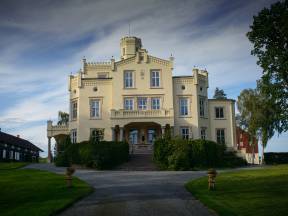
Locals call the estate “The Castle” due to the shape of the building and its characteristic 22 metre tower.
The mansion is probably amongst the oldest in the kingdom and has been depicted in many Norwegian sagas; it has also been home to Viking chiefs, General Majors and artists.
If you think that if you buy a haunted house you can demand a price reduction afterwards you can forget it! This case has already been heard in a Norwegian Court; in 2012 a Judge ruled that a price reduction cannot be demanded after purchasing a “haunted house”.
Beautiful Hønefoss is the next stop! Here you will find dramatic rivers and waterfalls in the middle of the town centre, which have not only given life but nourishment to the pulsating and cosy surroundings. The town is part of Ringerike municipality and together they have around 30 000 inhabitants.
The name Ringerike can be found in early historical sources and the area played an important role during the Viking age. For some 1500 years the area was a holy meeting place where priests made offerings to the Gods and kings ruled from magnificent halls. At Veien cultural heritage park you can relive history in a house reconstructed from Roman times.
Forests, rivers and waterfalls have given the municipality good opportunities for growth and the business community was largely founded on timber. But beyond that, the region has lush countryside with agricultural land, hills and lakes. People come here to relax, cycle and hike in the woods, not to mention to enjoy the skiing terrain!
As early as 1868 the first train rolled down the tracks from Hønefoss towards Oslo and it was a welcome distribution route for local businesses. The Art Nouveau station building that stands here today was built in 1909 when the Bergen line opened.
Think of a hall with 540 doors through which you can see everything that is happening in the world. Every night there are parties with whole roasted pigs on the menu. In this house you die every night but come back to life again every morning.
This is how the Norse God Odin describes his paradise - Valhall. Vikings on a plundering raid felt honour in dying with a sword in their hand and reaching Odin’s Kingdom.
Researchers estimate that the Norse religion originated around 750AD and ended after the christianisation of Norway around the year 1150.
Norse mythology is different from myths that explain the worlds of the Nordic Gods. The Norse myths are about various divine beings, how the world came to be, how it is ordered and how it will eventually go under.
The most well-known of the Gods was Thor. He could control the forces of nature and was the Lord of thunder and lightning.
Children are still told that Thor is out with his hammer when a storm is raging and lightning flashes and thunder rumbles, then he is out driving across the sky in a chariot pulled by the two buck goats “Tanngnjost” (teeth grinder) and “Tanngrisne” (snarler).
Thor is also a superhero in the American Marvel universe together with others such as Hulk, Iron Man and Captain America.
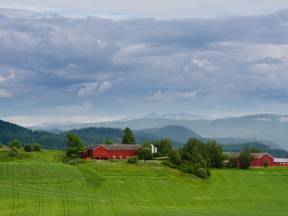
You can spot them everywhere, big and small farms with white farmhouses and red barns.
Norway is a nation built by people who harvested the resources they had locally. In many ways it is farmers and fishermen that have laid the foundations of the cultural landscape that you see on this journey.
Traditionally, as a rule a farm would consist of a farmhouse and at least one or more outbuildings in the form of barns, stables or storehouses.
In 1950 there were over 200 000 working farms in Norway, most of them very small. Today that number is drastically reduced and now there are only a little over 38 000 left in use although, the Farms of today are considerably bigger.
Are you wondering why all the barns are red?
It came about from the fact that in the olden days red paint was the cheapest and so the farmers saved themselves money by painting their larger outbuildings red. The proud farmers saved the more expensive white paint for their houses, and what was once a money saving habit has today become a tradition.
Norwegians have always prospered from nature, the oil deposits are called black gold and herrings the silver of the sea. So as we approach Sokna we are approaching the ‘red gold’ –cranberries. The berries have a somewhat sour and bitter taste and have a long shelf life.
In 1942, the following was the headline in the Norwegian newspaper Dagbladet:
“Last night bonfires lit up the whole of Sokna, 5000 cranberry pickers waiting for the ‘Klondike’ like rush in the morning. In the rush, one man was cut across the left arm and was driven bleeding to the doctor by the police sergeant.”
The war years in Norway were tough and it was hard to get hold of food. Sokna had excellent conditions for growing cranberries and hungry Norwegians began to flock to the surrounding forests. A cranberry train ran from Oslo and a cranberry police were even put into place to check that the picking was carried out according to the rules!
Today, the picking is a little more civilized and as a part of Norway’s right of public access it is of course free to pick berries and mushrooms in Norway.
This area is also known for its cold winter temperatures. A temperature of minus 50 has been recorded here which is right up there with the coldest ever recorded temperature in Norway, recorded in Karasjok in 1886 where a temperature of minus 51.4 was recorded. It was once so cold here that a train waiting for a green light froze to the tracks.
“You see me on road signs
At the edge of the forest
In oil paintings under a stormy sky
Silhouetted against a Canadian sunset”
Who am I?
Known as the king of the forest he is often seen in these areas. The elk is the largest animal in the forest and together with the deer is the most important hunting game in Norway.
The forests supply the elk with an abundant food source. Elk can devour 8000kgs of plants, twigs, bark, bushes and roots every year, which are digested in the ruminant’s four stomachs.
There are around 100 000 elk in Norway, but they can also be found in the rest of Scandinavia, Russia and Canada.
If you come across an angry elk you can forget about running away…an elk can run at an incredibly fast top speed of 60 kmh.
The 1952 Olympics – Norefjell
On the other side of Krøderen Lake we can see the Norefjell mountain range which is renowned for its hiking terrain and many ski centres. With its proximity to Oslo the area is perfect for families with children but at the same time there are enough challenges for those who are looking for a more demanding run.
This scenic area was the arena for the downhill and grand slalom events during the Oslo winter Olympics of 1952.
The Austrians dominated in the alpine events and took home 7 out of a possible 18 medals, but perhaps the most memorable moment was when the Norwegian Stein Eriksen took gold in the grand slalom, tens of thousands of spectators encouraged him down the slope with deafening cheers from start to finish.
The winter Olympics of 1952 were a huge success and both competitors and spectators set a standard for good sportsmanship. Whether you were Norwegian or Greek you were cheered over the finish line regardless of which place you finished in.
It is said that Norwegians are born with skis on their feet. However, the Greek slalom skier Antoin Miliordos was definitely not born with skis on his feet! He fell down a total of 8 times on his way down the alpine slope and crossed the finish line backwards, but nevertheless he did reach the finish line and didn’t finish in last place!
The sea serpent of Krøderen
The train is now chugging fearlessly past the beautiful Krøderen Lake which is in Krødsherad municipality. The lake is renowned across Europe for its excellent pike fishing and every year sports fisherman from many countries come to try their luck in catching a pike.
These fresh water fish are found over the whole of the Northern hemisphere and can weigh in at around 20kgs, in fact in Bulgaria and Germany pike over 25kgs have been caught.
In 1854 there was a big commotion in the villages around Krøderen when a local farmer discovered a sea serpent. The head was as big as a small house, the eyes as big as dinner plates and it roared like a cow.
The farmer ran into the barn to get his gun but when he can out again the sea serpent had mysteriously disappeared.
Whether it was a sea serpent or an overgrown pike remains to be seen, but do let the conductor know if you see something suspicious.
The train is now rolling towards Flå which is the eastern entry point to the Halling Valley. From the station you can stroll right out in to the small village which is surrounded by wild and beautiful nature on all sides.
The main attraction in Flå is the bear park, where you can discover wild animals such as bears, lynx, foxes, wolves and elk in their natural habitats. In addition there is also a crocodile land with snakes, alligators and turtles.
Families with children are naturally drawn to Flå and the bear park but it is also a favourite spot in both summer and winter for outdoor and nature enthusiasts. Tourists are especially drawn to the forested mountain valley of Vassfaret, which is full of lakes, tumbling waterfalls, steep slopes and mountain tops.
Should you choose to take a hike to Høgvarde, which lies 1466 metres about sea level you will be able to see 20% of Norway. There is ongoing large scale development of cabins in the area and the municipality actually has as many cabins as it does inhabitants.
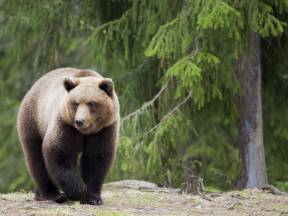
Bears are protected in Norway and today there are just over 100 bears living here. In comparison in the 1800s there were over 4000 bears in Norway. And no! You won’t find polar bears wandering around villages on mainland Norway, they are only found in the arctic regions.
If you take a look out of the window now you will see the Hallingdal River winding its merry way towards the Oslo Fjord. There is something romantic about rivers such as this and many declarations of love have been declared here through the centuries.
‘”Spring nights silent and cool
Embrace the slumbering valley.
The river hums its long
Muted, lulling song”
The stanza is taken from the poem “A spring night” written by the Norwegian poet Johan Sebastian Welhaven in the 1800s. Some things never change, such as the sound of running water, birdsong and the cool wind that rustles the trees. This is in stark contrast to the modern technological world of today and the peace that can be felt from being close to nature as described by Welhaven is something that should be experienced.
The Halllingdal River is the main river in the Hallingdal water course, which has its origin on the Hardanger plateau and runs out into the Drammen fjord. In other words it follows large parts of the Bergen line as it makes its journey across Norway through towns and villages.
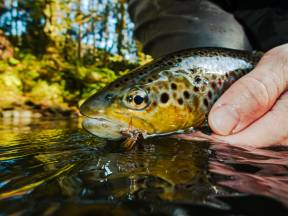
The river is full of trout and therefore a paradise for fly fishers who all have their favourite spot along the river. Further down the river the trout are bigger but you will also have the company of the flesh eating pike whose favourite meal is trout. In contrast to sea fishing, river fishing is regulated and a permit must be obtained from the landowner.
We are now passing the small village of Bromma which used to be a stop on the Bergen line.
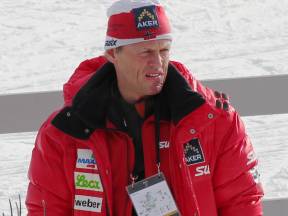
One man who grew up in Bromma was so good at skiing that he won both world championship and Olympic gold medals. He kept such a great pace that he was nicknamed the “Bromma Express” perhaps a metaphor for the Bergen train, which wizzes past every day. Pål Gunnar Mikkelsplass represented Bromma and Norway in the 1980s and was later the Norwegian national team coach.
In Norway the world ski championships are as exciting as the football world cup is for Italians. During the Oslo Winter Olympics of 1982 the whole of the Norwegian population were glued to their TV screens. The “Bromma Express” was taking the third stage of the relay when he fell! The whole of Norway held their breath. Taking the last leg was the legendary Oddvar Brå and when he broke a ski pole in the final sprint in a dual with the Russian Aleksandr Zavjalov, the whole of Norway went crazy. Brå fought until the end and Norway and Russia ended up sharing the gold medal, in a TV moment which was for many as memorable as Neil Armstrong taking the first steps on the moon.
In Norway, people will ask “where were you when Oddvar Brå broke his pole?’’ And everyone over the age of 50 will answer without hesitation – try it!
We are soon arriving in Nesbyen, the heart of Hallingdal. The small but nevertheless bustling village offers both exciting history and wonderful experiences for both young and old.
Both in winter and summer tourists find their way to Nesbyen with its rich choice of walking paths, on foot, by cycle or skis.
There are around 3500 inhabitants in the municipality which has traditionally been a timber and agricultural community. But tourists increase this number drastically and in the high season the number of tourists outnumbers the population. Most of them come to use the around 4000 holiday homes that are in the area.
Nesbyen has an outdoor swimming pool and great beaches where everyone can enjoy life in Norway’s warmest municipality. Why travel to the beaches of the Mediterranean when you can enjoy warm and beautiful Nesbyen?
And no, you are not hallucinating if you should meet a Nisse here in winter. There are many Nisse that you can only find here in Nesbyen, what is important regardless of which Nisse you meet, is to just smile and say hello and you are sure to get a hug in return.
King Hadding of Haddingjadal
According to legend, in ancient times and at the start of the Viking age, King Hadding lived here on the Viking farm Garnås from where he ruled over the whole of Haddingjadal, which is today known as Hallingdal.
He holds a great significance for this area; King Hadding was one of the little kings who ruled locally in Norway in the times before Harald Hårfagre united the country into one kingdom. Garnås provided the little king with both cultivation opportunities and a good view over his kingdom. His people and his descendants are often called Haddingane, they were solid, harsh siege Vikings who seldom showed mercy in battle.
The name Haddingjadal was used well into the middle ages. The area then became known as Hallingdal and today consists of 6 municipalities which go under the common name of Hallinger.
We are now arriving in Gol, which is Hallingdal’s biggest traffic hub and an important trading centre halfway between Oslo and Bergen. Here Norwegian history meets the contemporary modern lifestyle.
With its warm inland climate, Gol and Gol Mountain are the perfect place for an active family summer holiday. Here you can combine cycling, mountain biking, fishing, hiking, farm visits, refreshing swimming, camping and horse-riding.
In wintertime the area is an Eldorado for keen ski enthusiasts with prepared cross county tracks and alpine slopes which are mirrored in the sparkling snow. And once you have had enough of the cold you can take a refreshing swim and enjoy the tropical beaches at Tropicana swimming land at the famous Pers Hotel.
If the pool does not tempt you, you can delve into ancient history at the Gordarike medieval park. Visitors can wander around historical Valhall, which is a replica of a longhouse from the Viking era, and learn about Norse Gods and the Vikings’ beliefs.
In the same area you can find the new Gol stave church, an exact copy of the original church from the 1200s which has today been moved to Oslo.
The around 4000 permanent residents don’t need Netflix to get their entertainment, they have more than enough to keep them entertained with all the underground folk, nisser, trolls and wights that are found in the area.
Have you heard about the underground people the Haugafolk? They often pop up in this area, but they can only be heard not seen.
In times gone by many magical and mythical notions emerged all over the world. In Norway those ideas flourished through stories, legends and myths. Often the characters had human like forms or figures with features from the natural world or animal kingdom and today everyone has heard of wights, trolls and nisser.
In Hallingdal there were stories of underground people called Haugafolket or huldrefolket. They were human like figures that rose up from the earth, they could appear when and where they wanted and they would snatch children and women to become part of their underground people. If someone was taken, it was possible to free them by throwing or shooting something over their head before they were taken underground.
Luckily you are safe on the train, but if you disembark at Hallingdal station it might be wise to be on guard!
Across the river and a little up the slope lies the “Torpo stave church” which was erected in the 1100s. Hallingdal originally had 7 stave churches. Today Torpo stave church is the oldest and the only original church which still stands in the valley. It is also the oldest building in Hallingdal. In Gol you can also find a true replica of their original stave church.
The beautiful and peculiar stave churches which were erected in many villages in Norway have a special history. During the course of the Viking era Norway went from worshipping Norse Gods to a belief based on christianity and it is officially estimated that Norway became a christian land in 1030.
The Stave church in Gol is embellished with many Norse symbols, amongst others Thor and his hammer. Why these symbols are in a christian church, no one knows. The story goes that Norwegians were unsure about the new beliefs and wanted to keep some memories from the old beliefs.
From the 1100s and beyond, it is estimated that there were over a 1000 stave churches erected in Norway. Today there are 28 remaining. They got their name from their structure - a structure of horizontal wooden sleepers connected with vertical wooden poles. The achievement of raising these beautiful buildings is unique, especially when you consider that the axe was the tool most used in their construction.
The train is now approaching the idyllic mountain village of Ål, which is a popular hopping off point for nature enthusiasts and families.
The 5000 inhabitants of Ål and its surrounding villages have a wealth of local traditions and are famous for their rich cultural life with art, folk music and dance. Here you can find magnificent nature and an appropriate mixture of traditional and modern village life. Before, the barns were used as traditional outbuildings, but today many of them are in use as galleries and as venues for barn parties and entertainment.
Every year the village is host to the elite from the world of freestyle cycling who meet here to perform neck breaking extreme cycle stunts. “Huckfest Bike festival” is the leading cycle festival in Norway and combines all forms of mountain biking and some elements of motocross.
Its proximity to a number of outdoor experiences is another reason why tourists are drawn to Ål. They can experience mountains and nature, an indoor play area, climbing park, petting zoo and many other children’s activities all year round.
Whether you come with skis, a cycle, walking shoes or a fishing rod you are guaranteed to find something to interest you. And if you want a good night’s sleep, Ål can tempt you with luxurious ‘lavvoer’ –which are traditional Sami tents with soft beds, in addition to the village’s hotel, campsite and cabins.
Murder on the Bergen Line
Few locations have inspired crime writers more than the railway line. The Bergen line in particular, with its unruly weather, steep banks and endless plains has been inspiring authors long before Agatha Christie cast Hercule Poirot in the starring role of her novel set on the Orient Express.
“The Hardanger glacier had a helmet of fog on its head and the high mountains lay there huddled under a blanket of snow. The rotating snow plough groaned with the exertion as it ate the snow and sprayed it out through its nostrils like a whale”.
This is a scene described by Øvre Richter Frich in the novel “The clenched fist” in true Agatha Christie style.
In the Bergen lines well over 100 year old history, there have been many novels and works of fiction published which have been set on the line between Oslo and Bergen.
In Norway it is traditional in the Easter holidays to devour crime stories both in the form of books and television series, either at home or at the cabin. This special Norwegian phenomenon known as “påskekrim” originated in the opinion of many, from the novel “Bergen train looted last night” by Nordahl Grieg and Nils Lie which was published in 1923.
So, if you are tired of listening to me, I can absolutely recommend a good crime book from one of our famous Norwegian authors. Maybe the author Jo Nesbø can tempt you? His book the “leopard” has been translated into 40 different languages and the action takes place in this region.
The monster on the Bergen Line
It comes towards you with blazing eyes and smoke billowing from its nose. The yellow monster is on the tracks coming for you and there is only one thing to do – run!
The monster called ‘Beilhack’ is in fact one of only 13 rail snow blowers in the whole world. For over 40 years the yellow machine with red fans has rumbled over the high mountains in order to keep the line open in the winter. It can move an amazing 19 000 tons of snow in an hour.
We have a lot of different types of weather here in Norway! Throughout the history of the Bergen line the snow in the higher mountains has been a challenge, but regardless the train must run. When the snow ploughs on the highways have given up, the rail rangers and machines have been clearing the rail lines of snow with pride for over 100 years.
In the beginning, there were hundreds of families living along the railway line in just over 80 ranger houses, the rangers were diligent in keeping the tracks snow free so that the trains could pass both day and night. They were supported by powerful snow blowers and later on snow covers and screens were built to ensure that the trains could pass year round.
The next stop is Geilo which lies in Hol municipality and has around 5000 inhabitants. The town is a world famous tourist destination with hotels, winter sports facilities and cabins.
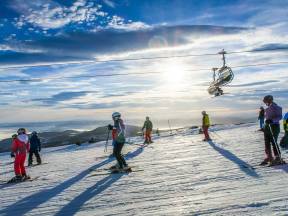
With around 40 ski slopes split along the two sides of the valley the facility is a white dream for everyone from beginners to experienced powder hunters. The tourist destination of Geilo has the marketing slogan ‘Ski Geilo’ and in 2019 Geilo won the prize of Norway’s best ski resort at the world ski awards.
If you need overnight accommodation the town boasts 8 hotels and guesthouses as well as many hostels and smaller accommodations. Dr Holms is the most famous hotel with a history dating back to the origin of the Bergen line.
Geilo is also a paradise for fishermen and hunters. The water is teeming with trout and the mountain areas are a popular hunting ground. The Ryper is a small grouse like bird which thrives in cold areas both above and below the Arctic, in Norway hunting of Rype is widespread. Rype also have the nickname “beautiful women”, Geilo is therefore a place well suited to those who fancy themselves a ’Rype’ of one type or the other.
Ut på tur, aldri sur – out on a walk, never sulky!
What do you remember most from your childhood? Many Norwegians will nod in agreement when I say, ’’being on a mountain walk and getting to eat a ‘Kvik lunsj’ chocolate bar for the very first time.’’
Beyond the 20th century it became more and more common to be a tourist in your own country. Wide plateaus and mountains were invaded by hiking and ski loving families during holiday times. Their rucksacks were filled with packed lunches, hot cocoa, oranges and of course ‘Kvik Lunsj’ chocolate bars.
After many hours walking in the fresh and cold mountain air, this became a long awaited meal and a reward for the effort. ‘Kvikk lunsj’ was introduced in 1937 by the Freia chocolate company and since then has become the whole country’s go to hiking chocolate.
The advertisements for ‘Kvik lunsj’ have always encouraged people to embark on a walk and given them good advice along the way. During the 1960s the mountain weather rules were printed on the chocolate wrapper and since then they have conveyed walking tips, information on attractions and the Norwegian Tourist Associations cabins which are located all over this naturally beautiful country.
The famous English author Roald Dahl, wrote the book “Charlie and the Chocolate factory” after being inspired by the Freia chocolate factory in Oslo and when Norway held the winter Olympics in 1952, an amazing 10 million ‘kvikk lunsj’ were sold.
We are now getting closer to Ustaoset. Just east of the station is the place where many claim Norway was united as one kingdom. The construction of the Bergen line took place from the East and the West and in 1907 the last sleeper coloured in red, white and blue was laid just east of the station, two years before the official opening.
Exhausted workers, engineers and politicians celebrated ecstatically over the feat that had been accomplished and this meeting of East and West was seen as the final joining of the country. With the track completed the journey time between Oslo and Bergen was reduced by over 3 days.
The Bergen line was complete.
Others, who achieve their goals in Ustaoset, are the competitors in “Spring’s most beautiful adventure” -the Skarverennet cross country ski race. Every year over ten thousand ski enthusiasts take part in the race from Finse to Ustaoset. Skarverennet is a race that attracts both professional and amateur skiers from around the world. The route follows the Hallingskarvet mountain range and is 38 kilometres long.
The course can be completed by everyone, old and young alike and at the finish line everyone will be hailed a winner. In the professional classes, stars such as Dario Cologna, Petter Northug and Terese Johaug have all been winners of the Skarverennet; the latter has in fact won the race 10 times.
Do you see the road that runs alongside the train line? That is Rallarvegen one of the world’s most famous roads which has several times been voted Norway’s best cycle route - unsurprisingly! Cyclists can enjoy magnificent and powerful mountains, glaciers with white and azure ice and wide open spaces as far as the eye can see.
We are now in Haugastøl in the municipality of Hol the western entry point to the Halling valley. The Bergen line was planned over high mountains, but there was no infrastructure. Therefore, a construction road of around 80 kms long was built from Haugastøl in the East to Myrdal in the west, and further down to Flåm in Aurland, so that supplies, equipment and materials could be transported to the route the rail line should follow.
On the opposite side, also in Vestlandet another construction road was built from Voss to Upsete where the excavation tunnel was built to Myrdal.
Throughout a short and hectic summer period hundreds of horse transports per day went over the mountain with materials and equipment and around 2500 men were in full swing working on the construction.
”We blast through the tunnels with the happiest of songs all summer long; here it is changing, though life offers us a struggle for our daily bread”
This is a verse taken from one of the countless rhyming Rallar songs. Rallar is a Swedish word for construction workers who travelled around looking for work. In Norway they used the equivalent word “slusk”, which originally was a derogatory nickname for sloppy, disrespectful rough people or tramps but which later become synonymous with taking pride in your work.
At the end of the 19th and beginning of the 20th centuries large scale development took place in Norway. Industry was advancing and cities were growing with a greater need for better infrastructure and communications. The manpower required to achieve this was greater than that which Norway had available, therefore many Swedes came to the area to work on the construction and also a number of Italians.
Working conditions were often miserable, work days long and safety terrible. But regardless of this the workers were proud of the work they performed and had a great unity.
Singing at work raised morale, something we are familiar with from English sea shanties for example.
The world’s first glacier airport
Imagine building an airport where only one single plane would land…..
The Germans did just that on the 1800 meter high Hardanger glacier in 1940. Hitler got the crazy idea that having an airport at elevation would give the German aircraft bombers, not only a chance to save precious fuel, but also the significant advantage of being able to land between the mountains on their way to bomb northern Norway.
They collected the best engineers in Germany and created a top secret project to build an airport. A glacier is mostly flat when you look at it from above and is made from quite hard material. The work soon proved to be very demanding for both the German soldiers and the Norwegian sympathisers who were working on the project. Neither the weather nor the ice behaved as they hoped they would, but in the space of 8 months the 1 km long landing strip was complete.
But it went horribly wrong when the first test flight came into land. It of course crashed and the propellers were buried in the ice, making it both the first and last flight that landed at the airport.
We are now travelling along the 35 kilometre long mountain range Hallingskarvet. “Skarv” means the naked mountain which refers to its lack of vegetation. The highest peak is called Folarskardnuten and stands 1933 metres above sea level; from there you can get a panoramic view over the Hardanger glacier, Jotunheimen and the whole of the extensive Hardanger mountain plateau.
At the foot of the Folarskardet Mountain you can find Lordehytte – the Lords’ cabin.
At the end of the 19th century aristocratic English Lords discovered Norway and viewed it as an exotic and exciting holiday destination. They flocked to the beautiful Norwegian fjords, valleys and the salmon rivers of western Norway in their grand yachts.
After a while, the Lords also got a taste for the Norwegian mountains. The harsh nature, the ascent of high mountains, and the hunt for wild reindeer tempted the Lords to return year after year. Lord Garvagh from Ireland got to know a local man Lars Lein, who was a skilled hunter. They gradually developed not only a friendship but also a business arrangement, whereby Lars helped the Irish Lord to build a hunting cabin.
The small cabin was 27 square metres, with 3 rooms including incredibly a fully stocked library. The cabin which was built in 1880 cost 650 kroner to build. The kitchen relied of course on mainly canned goods, but there was also room for a few crates of wine and champagne as well.
The cabin stands there to this day and many more such cabins were built in the Norwegian mountains.
We are now stopping at Finse station which at 1222 metres above sea level is the country’s highest railway station and the only one without a utility connection. Since the opening of the Bergen line Finse has been bustling, its rugged and wild nature makes it a popular tourist destination. In the station you can find both the Rallar museum with exhibitions about the Bergen line’s construction and operation and the Hotel Finse 1222.
By 1909 the first hotel had already opened in Finse and in 1914 Norway’s first indoor ice rink was opened here. It was here that the legendary Sonja Henie trained her way to numerous Olympic gold medals for figure skating. Henie won her first Norwegian championship at the age of 10 and at the first winter Olympics in Chamoniox in 1924, she finished in 8th place, she was just 11 years old.
Today there are only a handful of people who live in Finse, but in earlier times there were as many as 200 permanent residents. The popular hotel Finse 1222, since its establishment in 1909 has welcomed many prominent cigar smoking guests. The guest list includes Kings, Princes and other celebrities from around the world.
Fear not if Darth Vader, Luke Skywalker or Princess Leah should pop up on the train with their light sabres. They are just participants in one of the nostalgia events that take place in Finse. In fact, large parts of the fifth film in the Sky Wars series “The Empire Strikes Back” were actually filmed here in 1980.
Hardangerjøkulen – The Hardanger glacier
We are now on our way into the Finse tunnel, travelling over part of the Hardanger glacier, which is Norway’s seventh largest glacier. It is around 300 metres thick in places and covers an area greater than Manhattan in New York.
The name “jøkulen” comes from jøkul which means icicle or glacier. With its azure ice, its beauty becomes more apparent the closer you get to the glacier, especially in the summer when the ice glistens in the sunlight.
A walk across the glacier is an experience that will leave you with lifelong memories, but it has to be done in the company of an experienced glacier walking guide. The ice is constantly moving and hidden cracks make it unsafe for visitors to roam free.
There are over 1500 glaciers in Norway which cover around 1% of the country. Since the beginning of the 21st century many of the glaciers in Norway have been melting, mainly as a result of warmer summers.
The earth is getting warmer and if climate forecasts are correct, according to Norwegian research there will only be 28 glaciers left in Norway in 100 years’ time.
Do you dream of going on an expedition to one of the earth’s poles? The English pole explorer Ernest Shackleton called this area a miniature Antarctica. Together with Roald Admundsen and Fridtjof Nansen he is one of the world famous explorers who used Finse, Vidda and Hardangerjøkulen as a training ground for their expeditions.
We are now approaching beautiful Hallingskeid which lies 1100 metres above sea level in Ulvik municipality. Today there are no permanent residents, but many tourists visit every year.
As you can see, the station is undercover; this is to protect the train and passengers from the large amounts of snow that can fall here. Hallingskeid station was earlier a fixed stop on the Bergen line and the waiting room was actually consecrated for use by the Norwegian church. For many years there was a christening font and both baptisms and weddings were performed here.
In 1960 the station, station covering and the guard house burnt to the ground. Four families were made homeless by the dramatic blaze.
By the side of the station, tourists can visit the convenient Hallingskeid tourist cabin which is open year round, or take a walk along the Rallarvegen which runs alongside the track. The stretch of track from Hallingskeid to Myrdal is for many the most spectacular part of the Rallarvegen. The cycle track runs along a mountain ledge, with steep banks and wild thundering waterfalls.
The distinctive open mountain terrain offers many other exciting opportunities to enjoy the natural surroundings whether you are wearing shoes or skis.
.
Hardangervidda – The Hardanger plateau
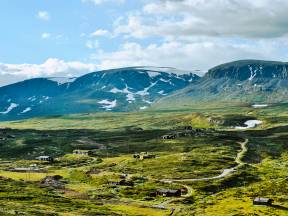
We are now passing the outer edge of the Hardangervidda which is one of Europe’s largest high mountain plateaus and the Nordics largest national park. There is an impressive view, which will become obvious to you as you look over the vast expanses.
Here you can find watercourses and lakes filled with fish, wild reindeer herds and ryper in wild flight. There are big and small waterfalls, rivers and streams in their thousands and by no means least wind. In winter snowstorms ravage the area and only the hardiest animals can survive in these extreme conditions.
In summer the plateau provides a romantic spectacle where hikers, hunters and animals alike enjoy the beautiful surroundings. Over 6000 years ago humans had already found that they could reap the benefits of the plateau’s resources and hundreds of Stone Age settlements have been found in the area!
The plateau extends across 7 municipalities and as a whole the area is as big as the city of Tokyo in Japan.
The mountainous landscape of Norway can of course be enjoyed through the VY train window, but should you choose to disembark at one of the stations you will be rewarded with countless experiences, attractions and things to do for all ages.
Myrdal station stands on what was once a construction area for the Gravhals tunnel. As in Upset at the other end of the tunnel, construction workers or those involved with the construction lived here.
They had their own country store, a construction priest, cobblers and many female workers who washed and made food. The latter were important in many ways and the women took pride in keeping the barracks and camps clean. These cooks were known as “Rallarkokka” and had a struggle in feeding all the hungry men whilst being subjected to numerous ‘courtships’.
The station has a connection to the Flåmsbana – the Flåm railway line, which is one of Norway’s most fantastic tourist experiences. Many consider the journey from Myrdal to Flåm as one of the world’s most beautiful and spectacular train journeys. The Flåmsbana is a part of the popular round tour “Norway in a nutshell”.
The 20 km long train journey showcases Norwegian nature at its most beautiful and is a masterpiece of Norwegian engineering. Flåmsbana is one of the worlds steepest stretches of railway and is known for its spectacular turning tunnels which spiral in and out of the mountain. 18 of the 20 tunnels on the Flåmsbana were built by hand.
We are now driving into the Gravhals tunnel. In its time it was Europe’s longest tunnel and became a pioneer project for other tunnels. To dig through 5.3kms of granite mountain at this height undoubtedly required exceptional engineering expertise.
Gravhalsen was measured and calculated using triangulation between the mountains on the east and west sides. The survey took nearly 3 years and involved building platforms in stone in several places on the mountain. These platforms were used as the fixed points for the surveyors, this thorough work paid off! When they broke through to the middle of the tunnel the measure of deviation was only 4cms. A remarkable achievement considering the length of the tunnel and the tools that they had at their disposal at that time.
The work took 6 years all together and the tunnel was dug manually from both ends. The hard rock made the progress slow and the work demanding. In the beginning they were digging only a metre a day, which was not enough. To rectify this they built a small power plant, bought in drilling machines and hydraulic drills. In this way they managed to double the progress so that the tunnel was completed in 1906.
Gravhals tunnel was the biggest single project on the Bergen line. A supply road was built from Flåm to Voss to transport materials to the building site and there were several hundred men at work at both ends of the tunnel.
Bridal procession on the Hardangerfjord
The train is now passing by the outskirts of Ulvik municipality, also known as one of the Hardanger municipalities. Which stretch all the way from the world’s third longest fjord, Hardangerfjord, right to Finse which lies at 1222 metres above sea level.
Hardanger is known for its lush countryside, where sunny fjords meet steep mountains with their wild waterfalls and crashing rivers. Artists from around the world have fallen in love with these surroundings and have reproduced the romanticism of the Norwegian farming landscape both on canvas and through the medium of music.
“Brudeferden I Hardanger” – Bridal procession on the Hardangerfjord, is a painting that most Norwegians will recognise. The idyllic fjord wedding celebration was painted by Tiedemand and Gude in 1847, it was actually painted in Düsseldorf in Germany, but depicts the romantic and enchanting way of life of Norwegian farmers in the villages on the west coast. It continues to be a national icon, which is today on show at the national gallery.
At the bottom of the fjords are the fruit farms with their rows and rows of delicious sweetness which cover the villages. Hardanger is widely known for its apples, pears, cherries and plums. They are best enjoyed straight from the tree, but down in Ulvik they also produce juice, cider, liqueur, dessert wine and spirits from the apples.
They say an apple a day keeps the Doctor away. Whether that applies to apple liqueur is unknown but either way it tastes heavenly!
Out of the window you can now see Mjølfjell in Voss municipality. The area got its name from the “white” mountain of the same name, which consists of a rock called anorthosite. The light flour coloured bedrock gave association to the Nynorsk word “Mjøl” which means flour and thereafter it was called Mjølfjell.
Today walkers and cabin owners have conquered the beautiful mountain. If you fancy a cooling dip, you can find lakes, streams and an outdoor swimming pool where you can relax on a sunbed and enjoy the beautiful landscape.
In the olden days there were many stables and summer farms where the animals came for summer grazing from the farms below. The animals needed to be supervised and milked, which was largely a job for the ‘budeiene’.
‘Budeie’ is a traditional occupation carried out by women who had responsibility for looking after the animals either on the farm or at the summer farm. In fact, in the 1800s “cattle care” was purely a women’s profession in Norway. The Budeine left the farm with empty milk pails during the day, would stay the night at the stable or summer farm and return the next day with pails full of milk.
It was not a walk in the park to be a budeie, but they had every Saturday off and the unmarried budeiene were often on that day swarmed by potential suitors.
Norway is full of world class Canoeing Rivers, everything from small steep streams to big rivers with severe rapids can be found nearly across the whole of the country.
Some of the nation’s best canoeing rivers can be found in this beautiful, dramatic and lush valley of Raundalen. It stretches from Upsete to Voss with a gradient of 1000 metres. Along the valley and the train line you can follow the Gangsdøla, Kleivelvi, Raundalselvi and Vosso rivers.
Since ancient times the valley has had many smallholdings and animal husbandry has been the most important industry. The river that runs down the valley is full of small rapids and waterfalls and when the snow melts the river froths and foams, it is a dramatic and beautiful sight.
Small game, deer and lynx wander along the mountainside and in the woods. In addition there is a rich birdlife and amongst others you can find the national bird of Norway the Fossekallen which dives for insects in the streams and rivers.
The river is also a popular place for rafting enthusiasts who come to dance over the terrifying rapids in rubber boats.
It was here at the foot of the magnificent Raundalen that a dramatic event occurred in 1177. The newly crowned King Sverre Sigurdson and his army were marching from the east of Norway to Bergen to recruit soldiers and procure weapons for their army.
But, the whole of Norway had not submitted to King Sverre and there was great resistance in Vestlandet. On their march the bloodthirsty army were able to plunder whole communities without any real opposition.
But in Voss they heard word that King Sverre was on his way and farmers from the whole area came together to stop the king. The farmers of Vestlandet eat a lot of fish and lamb and are not easily scared. They turned up with what they had to hand to defend themselves and stopped the King and his army in their tracks. The King was forced to retreat and he and his army fled up the steep hillside with their tails between their legs, chased from behind by the angry farmers of Voss.
The trail King Sverre and his army took is today known as the “Sverrestigen” and is a popular walking trail.
King Sverre was the 28th King of Norway and reigned from 1177 to 1202. He did eventually gain a foothold in Vestlandet and actually lived out his last days in Bergen.
Knife and fork at the ready; you are ready to tuck into the signature dish of Voss - Smalahove. On the plate in front of you, you will find smiling up at you a half burnt sheep’s head, eyes, teeth and tongue still intact.
So to start - put your fork right under the eye and eat your way down to the teeth and jaw, finish by cutting up the eye and removing the eye muscle, which according to food enthusiasts is the best part.
In Vestlandet it is said somewhat jokingly that there are almost as many sheep as people here, sheep have been a part of the livestock here for 4500 years and there are about 900 000 lambs born every year.
Smalahove became a part of the diet a few hundred years ago, when a lack of food forced better use of the whole animal. Smalahove was at first an everyday dish, but it is now considered a delicacy to be eaten at celebrations.
Every Christmas thousands of Norwegians consume this delicacy, often serving it with potatoes and mashed turnips. It is best enjoyed with a glass of aquavit, the Norwegian spirit made from potatoes and a glass of dark beer.
We are approaching the golden town of Voss and if you look out of the window now there is a good possibility that you will see an Olympic champion. It is said that in Voss you can find as many world champions and Olympic winners as you can people.
This small town of around 16 000 people has hauled in almost 100 Olympic and world championship medals in the past 50 years. That is a medal tally that nowhere else on the planet can measure up to. Compared as a measure of population this would mean that London alone should have the equivalent of 50 000 medals.
On the whole the medals have been won in the winter sports of biathlon, cross country skiing, freestyle and ski jumping. Kari Traa is perhaps the most internationally renowned medal winner and after she set her snowboard on the shelf and retired, she established her own clothing brand which is sold worldwide.
Whether it is the fresh fjord and mountain air, the pure water or the good quality meat that has created all these medal winners is still under discussion. But should you have medal ambitions maybe you should take in some deep breaths of the local mountain air.
Would you like to do a parachute jump? If so, then you should hop off the train now. Every year extreme sports enthusiasts from around the world meet in Voss, to parachute, paraglide, raft on the rivers and take part in other such extreme sports.
With one arm in Hardanger fjord and mid-way between Bergen and Sognefjord, Voss lies in the heart of Fjord Norway. From the station you can take the cable car - the Voss Gondola, which is the biggest and most modern gondola in Northern Europe. It will take you up 820 metres to the fantastic Hangurstoppen where you can partake in numerous outdoor activities.
Voss is steeped in traditions and a food culture founded on local produce is strong across the whole region. Its proximity to the mountains and the activities on offer make Voss a very popular tourist destination, especially after the train line came to the town. Voss has therefore been a popular tourist destination for nearly 200 years. The Fleicher’s Hotel in the town centre was built in 1860 and since its opening has been host to distinguished guests from Norway and abroad. For many of the guests the journey to Voss took several days, so it was especially good to be able to enjoy champagne and local food in a luxurious setting on arrival.
The Park Hotel in Voss is home to Norway’s largest wine cellar, with possibly the world’s best wine menu consisting of an amazing 40 000 bottles of good vintage wine.
In this area there wandered from farm to farm an ashen faced old lady by the name of Pesta. She was typically equipped with a broom and a rake. It was said that if she started sweeping in front of your door, no one at the farm would survive; however, if she used the rake some would escape death.
That is how the figure of Pesta is described in a folk tale from the time when the Black Death was ravaging Norway. The Black Death arrived in Bergen on an English ship in 1349 and spread across neighbouring communities like wildfire.
There were many outbreaks of plague and many villages and local communities were left deserted. The aggressive bubonic plague took the life of at least half the population over the course of a few years.
The Black Death is a rodent sickness which is spread via fleas. The whole of Europe was affected, rats boarded ships moored in European harbours and then spread the plague to rats in the next harbour.
It was not only the plague that caused death and destruction. Hygiene standards were far from what we are used to today and it was also normal to visit the sick and dying without any form of isolation. Through such customs it was easy to see how infections were spread.
The postal farm of Tyssen
On the other side of the fjord is Tyssen farm, one of many postal farms between Oslo and Bergen that were used before there were permanent road and rail connections.
The official Norwegian postal service was established in 1647 and the post was distributed from farm to farm until the end of the 19th century. Then as today, the post must be delivered whether that is over windswept fjords, wild rivers or steep sided mountains.
It was a struggle to be a postman at that time and the famous poet Nordahl Grieg from Bergen described this in his poem “Posten skal frem” – the post shall be delivered.
“Viddens squealing sharp wind
Rolls down the slope
The postman walks with his broken horse
Blinded by the fog, heavy on its feet
He stumbles up the path”
The post was delivered in stages between the different post farms either with boats on the fjord or by horse along the stone paths, usually once a week.
The post road to Bergen is one of many historic postal routes in the country and today many of them are protected and used as hiking trails.
Think back 120 years and envision the 15 000 workers who dug, chipped and blasted their way through the rock hard mountains, over the sides of the steep valleys and through cascading rivers and rapids.
Norway was undergoing huge change at the end of the 1800s. The industrial revolution had reached Norway and factories were springing up, especially around rivers and waterfalls. In those days, sea freight was the obvious mode of transportation for both goods and people. As there were no road or rail connections between the bigger towns in the east and west, boat was the only option and the trip from Bergen to Oslo took 3 and a half days.
When the Bergen line was built it required careful planning and capital and there was a big conflict of interest between the two sides of the country regarding the choice of route.
Finally, parliament chose the route that the line follows today in 1894 and on its completion in 1909, 40 years had passed since the idea was first put forward. The price tag was over 52 million Kroner, as much as the whole state budget at the time.
The Bergen line was officially opened in Voss on the 27th November 1909 by King Haakon VII. Although, by then there had already been traffic on part or all of the line for many years.
King Haakon VII stated “this was the masterpiece of the generation” with clear reference to the hard work that had been put in to build the line over rivers and lakes, and both through and over high mountains.
The train is approaching Dalekvam, a small industrial town in Vaksdal municipality.
Earlier there were just a handful of smallholdings here but that was until entrepreneur Peder Jebsen had a chance thought in 1879.
The town is surrounded by mountains and waterfalls and where others saw beautiful waterfalls and grazing sheep, Jebsen saw only the possibilities of hydro power and wool. He founded Dale factory in 1879, which was later renamed Dale of Norway.
With long experience in the textile industry Jebsen secured himself the rights to the local water power and shortly afterwards steamboats from England arrived with production equipment.
The little village was, in the course of a few years transformed into an industrial venture with over 500 workers at the factory. At its peak there were 4000 people living in this little village with 1200 of them working at the factory.
Dale of Norway is known worldwide for its pure wool knitwear. The raw materials are easily accessible and there is not a sheep in the area who hasn’t given its wool to the factory.
The history of the Bergen line spans two world wars for better and for worse. Norway was neutral during the First World War; however there were still train transportations of goods and soldiers passing through from England to Russia.
During the 2nd World War, Norway and the larger cities were occupied on the 9th April 1940. In Vaksdal the Norwegians held strong a few weeks longer and gave the enemies resistance in the tunnels and hills along the railway line. But in the end the enemy power was too great and a short time after, Voss was in ruins after 2 days of intense air raids. Despite skirmishes along the whole of the Bergen line up to Myrdal station in the end the Norwegian forces had to surrender.
King Haakon VII and the government refused to capitulate, but after two months the Germans had conquered the whole country and from then until its liberation in 1945 Norway was under German occupation. The King and the government fled to London and continued the battle from there.
Out of the war arose the Norwegian resistance movement which was controlled from London. Together with the allies the Norwegian fleet participated throughout the war and were a strong force in the liberation of Europe. On Norwegian soil there were spectacular sabotage missions which stopped Hitler from obtaining vital Norwegian resources.
The train is now travelling along Sørfjorden, which is one of 1732 named fjords in Norway. On the other side of the fjord is Osterøy, an island and fjord municipality with around 10 000 inhabitants.
The Norwegian fjords were formed from the last ice age up until 6500 years ago. The moving ice descended into the landscape below sea level and created the characteristic U shaped valleys, eventually the sea came over the land and filled the valleys creating the fjords.
The long Norwegian coastline has many of the world’s longest fjords. They excel at being especially dramatic with steep mountain sides and waterfalls that plunge straight into the fjord.
Fishing is popular in the Norwegian fjords. Hobby fishing is an important part of the ‘right to roam’ in Norway and you can fish in the sea without the owner’s permission for free!
So, the last thing to say is “skit fisk”(dirty fish). This old superstitious expression, wishes the fisherman good luck, without actually saying it, for to actually say it would lead to bad fishing.
Throughout the journey you will certainly have noticed the constant tunnels, bridges and turns.
We say a little flippantly, that in Norway you cannot find a straight stretch of track of over 100 metres, that has not been forged over mountains, lakes, water, fjords or rivers. On the Bergen line alone there are more than 100 bridges and tunnels –and that is expensive!
That is not uncommon, in Norway there are over 3200 tunnels and bridges along the rail line, which is equivalent to almost one bridge or tunnel for every kilometre travelled. Put this together with roads and that is in total in excess of 19 000 tunnels and bridges.
The longest tunnel in the world is in Norway, it is in Lærdal and is a whole 24 kilometres long.
So next time you are driving a car or travelling on a train in Norway, have a think about the cost of building and maintaining the roads and tracks.
Along the fjord now you can see many Salmon farms.
Norwegians love fish! The sea and fjords have fed the nation for generations. But the excellent quality led to the worldwide demand for Norwegian fish becoming greater than the number of fish. The pure Norwegian fjords proved themselves suitable for fish breeding at the start of the 1970s and since then it has developed into one of Norway’s biggest export industries.
Wild salmon are hatched and spawned in fresh water, but in the interim time they live in saltwater. Farmed salmon on the other hand are in captivity and never get to enjoy spawning in freshwater and rivers. Hatching occurs on land where they are grown to a weight of between 50 to 150 grams before they are put into sea water. After hatching a young salmon is called a fry and thereafter a Smolt when it reaches around 100 grams.
Around 300 million farmed salmon and trout are slaughtered every year to a value of 70 billion Kroner. The majority are exported and end up in restaurants and shops across the globe.
You may well wonder why salmon have red flesh? The colour comes from their food. The colouring Astaxantin is naturally occurring in the crustaceans that wild salmon eat and is added to the feed of farm raised salmon.
We are now stopping in Arna which is one of the 8 districts of the Bergen municipality. The stretch between Arna and Bergen is almost exclusively located in the tunnel under Ulriken Mountain.
The district is surrounded by mountain ranges to the East and West and between these lies the Arna valley.
The beautiful fjord you see here connects to the North Sea in the West and the Eastern arm of the fjord goes all the way down to Evanger on the Bergen line.
Here you can find one of Norway’s most famous brands ‘Toro’. The factory in Arna produces delicious broths, soups, sauces, and stews for hungry consumers. The company’s breakthrough came with their “Bergen fish soup” which continues to be a hit.
The Janus factory is also located here, the factory was established in 1895 and is today one of Europe’s leading producers of wool underwear.
Not far away you can find the Garnes station which since 1883 has been a stopping point on the Voss line, and later on the Bergen line before the route was shortened. Today the station is the starting point of the vintage rail line “Gamle Vossebanen” where tourists can take a ride on a traditional steam locomotive throughout the summer season.
As we enter the Ulriken tunnel between Arna and Bergen, it is appropriate to introduce the cultural city of Bergen.
The wild and beautiful west coast nature has inspired artists in all genres from across the world. Bergen and the surrounding area have nurtured many of the most famous artists the world has ever seen, and new ones continue to break through.
The composer, Edvard Greig, the fiddle player Ole Bull, the poet Ludvig Holberg and the Painter J.C. Dahl were all internationally renowned and their work continues to be performed all over the world.
Photo: Richard Andrè Nærø
Today Bergen is a thriving city of culture, where they of course celebrate their historical icons, but also facilitate the way for new ones to emerge in a time when art has found new arenas and music, graphics and pictures are for the most part composed on a computer.
Kyrre Gørvell-Dahll performs under the name of Kygo. He also comes from Bergen and is described as an EMD superstar in electronic music. He quickly reached a million downloads on Spotify and has collaborated with amongst others the legendary Tina Turner.
When they describe the cultural history of Bergen in another hundred years, it is likely that Kygo and many more to come will be named in the same breath as Edvard Greig et al.
Photo: Richard Andrè Nærø
From Bergen station you can now embark on an adventure; either by train to the East or you can wander into the heart of this West land metropolis.
This magical city is situated between seven mountains, take in a deep breath and enjoy the smell of fresh sea and mountain air. The city centre is only a stone’s throw away and numerous experiences await you there.
The around 300 000 residents of Bergen are proud of their city, traditions and history. Here you can find attractions, museums and sightseeing for every taste. Local food and drink from the region can be bought at the market and in shops and restaurants.
If you hear someone shouting “Brann” which in Norwegian means fire, it is likely not because something is burning. It is just enthusiastic football fans cheering for the city’s football team Brann. There is also no reason to be concerned if you see youths in uniform marching through the city. They are just one of the city’s many marching brigades which have a long tradition and are unique to Bergen.
One of the world’s most famous composers, Edvard Grieg came from Bergen and he is perhaps the reason that Bergen came into context as a European city of culture. With over 60 festivals and a large number of concerts, Bergen has firmly placed itself on the musical map of the world.
The slogan of Bergen is “A good city to live in is also a good city to visit!”